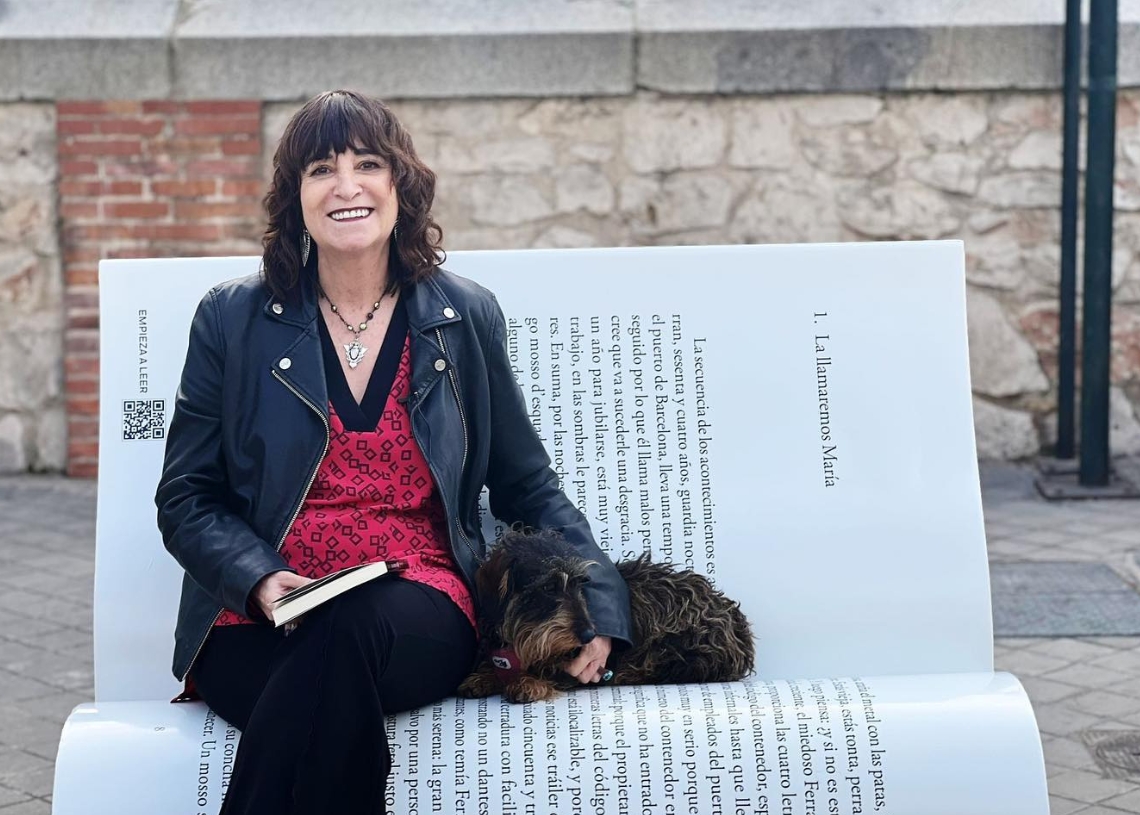
The first thing I did when I finished reading The danger of being rope (2022) was to go to look for the voice of its author, Rosa Montero (Madrid, January 3, 1951), in every corner of the cybermundo where she could find her. My literary arrow had happened years ago, in 2016, with The crazy housethat I devoured at the Kindle while waiting for a flight to Porto Alegre and whose physical edition – today out of circulation – I bought just returned to Rio de Janeiro. But with The danger … I felt that the link had expanded: I needed to give sound to the lyrics that my head had inhabited as a silent narrator.
The book took longer to reach my hands than the time that took me to read it. Returned the specimen that I had asked in the library of my neighborhood, I went through the bookstore to find the one that rests today, of Erect Lomo, in my bookseller. Later, I dared with The ridiculous idea of not seeing you againa text that I avoided for years because I was scared of its main theme: mourning.
Encouraged by the recommendation of a friend and feeling, at this point, half twinned with pink for a sensitivity that I believe we shared, I decided to face it, with the heart to Galope for fear of destruction. It was a relief to discover that it is, in reality, an essay on life, and I am glad to have filled with courage to read it:
As I had no children, the most important thing that happened to me in life has been my dead, and with that I mean the death of my loved ones. Maybe that seems dreary, morbid. I don’t see it that way. On the contrary: for me it is such a logical thing, so natural, so true. Just during births and deaths we go out of time. The Earth stops its rotation, and the trivialities in which we waste the hours fall to the ground as glitter. When a child is born or a person dies, the present is split into the middle and allows us to spy for a moment through the truth gap —Monumental, burning and impassive. We never feel as authentic as when we touch those biological borders: we have the clear awareness that we are living something great.1
In recent months I have immersed myself in the work of Rosa Montero –And now also in his talks on Instagram and YouTube– As I had not done in more than ten years. When I lived in Havana, a copy of Let life be cleared you, Collection of Ibero -American writers, where the first thing I read from the Madrid is indexed, although I no longer remember the title.
Rosa began writing as a child, but it was not until her books began to be published that literature became an antidote for the panic crises she suffered from a young age. The secret: I no longer wrote for themselves, but people read it.
“I wrote fiction from 5 years, but if you don’t public […] It does not have the same structural effect. The saving combination – that is also part of the perfect storm – is to write fiction and publish it, that is, that they read you, ”he says in The danger of being rope The National Prize for Spanish Letters (2017).
From that first published book (Chronicle of heartbreak1979) has rained a lot. With more than 30 volumes out of the printing press until the hands of their readers, including more than 20 novels, I am sure that at this point the panic has lost the track.
In addition to narrator, Rosa is a journalist and has some training in psychology. Ways of livingits column in the country, reaches about 400 thousand subscribers. In Instagramwhere not only books and literature speaks, more than 90 thousand users follow. Her work has been translated into more than 30 languages, and she collects each edition.
Weeks after reading in three sitting that delicious text about the relationship between madness and creativity that I mention at the beginning of this preamble, and seeing all the videos and interviews that I found, I knew that Rosa was closer to me than I imagined: I had come to a neighboring city of Rio de Janeiro, Brazil, as guest of the International Literary Party of Parath (Flip).
In a few minutes I saw myself in front of the computer writing an email that is still surprised to have sent:
Estimated pink […] I would like to know if, in addition to its passage in Parathy, it plans to be in Rio de Janeiro […] I hope we can coincide […]
An affectionate hug, with the crossed fingers,
Deborah
His answer came shortly after:
Oh, my dear, in Parath I am up. But if you want to send me a few questions, not too many, and I answer them in a few days with an audio. A big kiss.
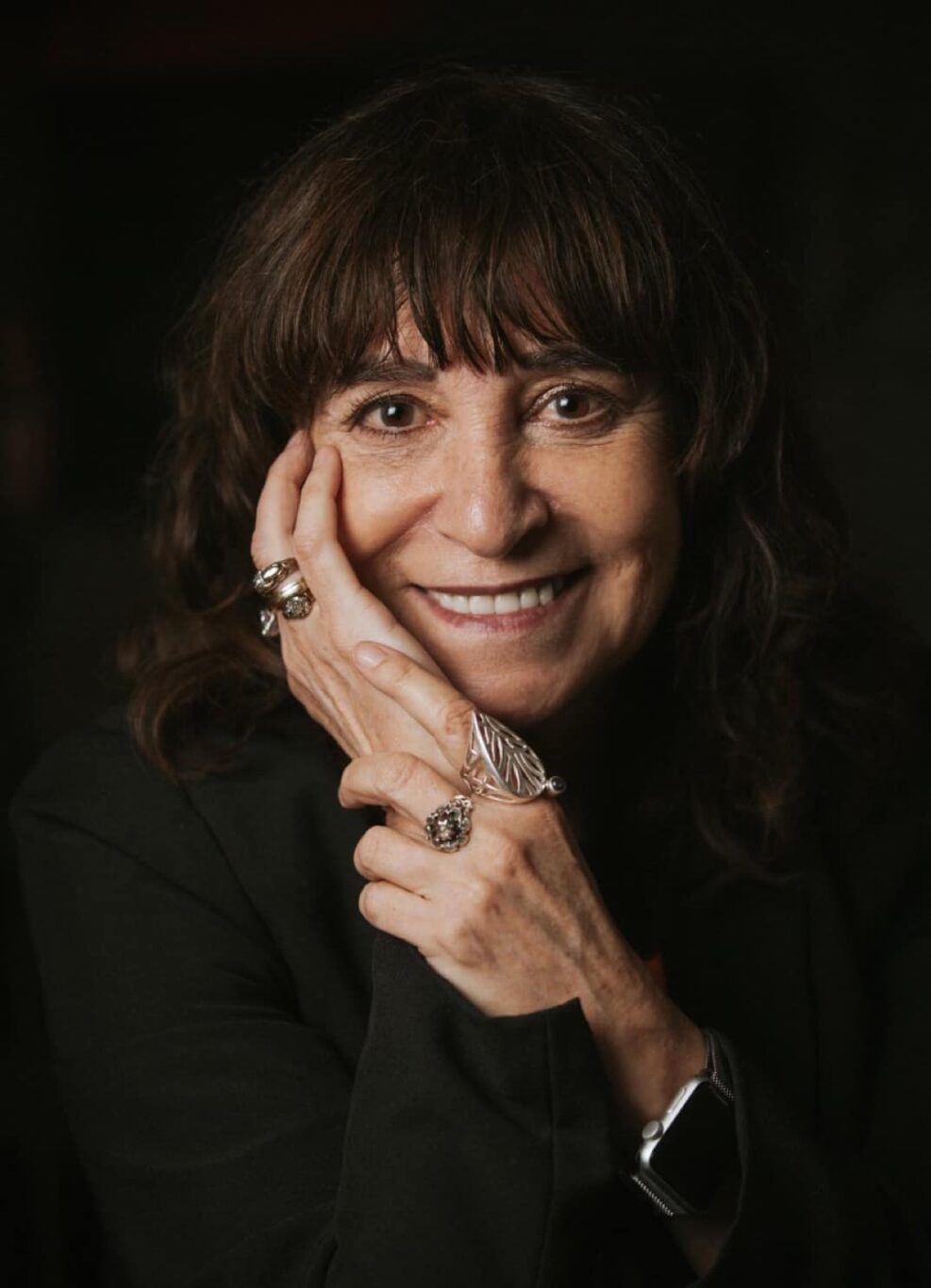
Then I reproduce, with its authorization, the six responses that I consider a first approach to this fascinating woman, who does not care about the immortality of her work but because literature remains her means of expression, and that she knows that immersing himself in life with fullness – as a humpback whale in the vase of the ocean, as she herself tells in a passage of The danger of being rope– and then lost in it, it is as ridiculous as it is essential: “Life is a tiny dream, a mirage of light in an eternity of darkness. And that is nothing, and it is everything.”
What role can fiction play in our lives?
Well, fiction is still totally essential. It is what saves us. The French painter Georges Braque said that art is a wound made light. And indeed, what are you going to do with the wounds of life but try to turn them into light so that they do not destroy us? So art is what allows us to survive the darkness, fear, death, terror, horror.
The worse the world is, the more we need art. And the novels in particular are collective dreams. So fiction is absolutely essential to continue surviving.
How do you imagine the relationship between human intelligence and artificial intelligence?
Precisely my latest novel, Difficult animalsdeals with artificial intelligence. The most powerful technology that the human being has so far invented is brutal; The change that can be supposed for human life is tremendous and favors and facilitates life. It’s a kind of magic, right? That is why we are entering it without realizing how dangerous it is, because it is very dangerous. That is what I explain in my latest novel.
I am going to focus on two main dangers. The first is tremendous: the manipulation capacity of the human mind that artificial intelligence has. Through it, humans can end up becoming Pelles, who handles these tools can decide what we have to think, what to buy, what to say, what to be.
The most important neuroscientists in the world have been asking for years to include neuro rights in the Charter of Human Rights. There are five, and as essential as the right that anyone enters your head without you knowing and authorized. They have been asking this for years, but no one is legislating anything. We are helpless in the face of the manipulation of our heads by artificial intelligence. That is one of the great dangers.
The other is the extermination of the human species, because artificial intelligence can end up deriving in superintelligence. Now we are called weak artificial intelligence; From there, general artificial intelligence will be achieved, which is like ours, and from there it will shoot a superintelligence that can be much smarter than us, which will also be inhuman. By this I just want to say that it is not human, therefore we will not know what it is, we will not understand it, and it can be infinitely smarter.
We can become the ants of that intelligence, as well as ants are for us. Can ants understand what the human being is? Well no. Can ants control the human being so that the anthill is not trampled, for example? Neither. So that superintelligence, which will go to your own convenience in life – and we have no idea what convenience will be and we will not be able to control it – it can suddenly say: “I will use these carbon atoms for something else”, and the carbon atoms are us.
I don’t have this fear alone, people have as important as Geoffrey Hintonthe last Nobel Prize in Physics (2024) and one of the parents of artificial intelligence. Geoffrey left his job on Google two years ago to denounce that artificial intelligence can exterminate humanity.
So it is a certain danger.
In The danger of being rope He mentions that his panic crises disappeared by publishing his first novel. Can extreme lucidity threaten our ability to create or imagine? Why writing fiction is a healing path for the most sensitive minds?
I don’t think there is extreme lucidity. On the contrary, I believe that normality does not exist, that normality is nothing more than a lie, that it is a convention, which is nothing more than a statistical average. And I think what is normal is weird, right? And everyone has its oddities.
Imagination and fiction are one of our most powerful weapons to fight pain and against the nonsense of the world.
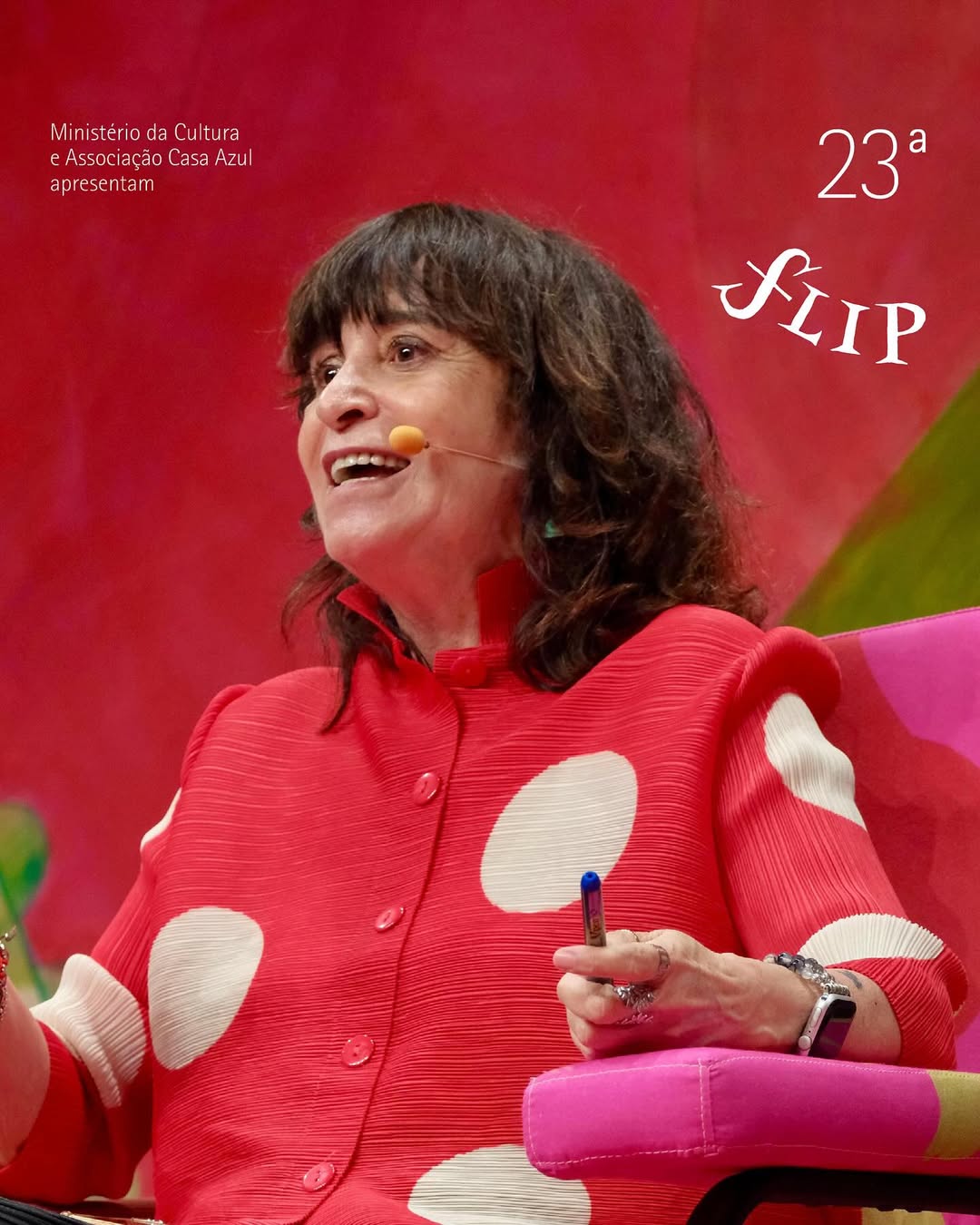
Death crosses a good part of his essay and narrative work. Bruna Husky herself (Difficult animals) He is a character that reminds us of the finitude of life despite how obsessed that we are with eternity and the ridiculous that we find to die and lose those who love. Can death be transcended when written?
For me, writing has always meant writing against death. I have written trying to lose the fear of death, not transcend it. That would seem to say that when writing you acquire a certain type of immortality or that your books will remain when you die. None of that cares, I don’t think about it. Nor do I think my books will remain after I die. You write simply because fiction and art comfort and give some sense, as I said, to the nonsense of the world.
I write to try to lose the fear of dying, that is, to try to find harmony to life and death.
The truth is that it has helped me a lot. I am very afraid now to die than when I was 20 years old.
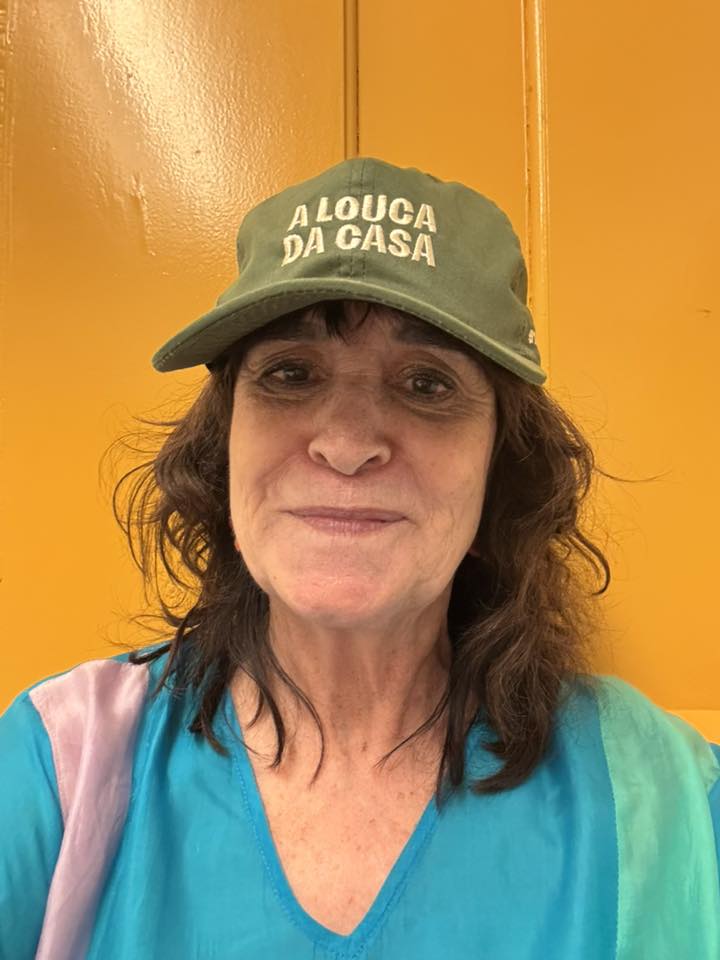
As a journalist and writer, how do you perceive the future of journalism and fiction in an era taken by immediacy and artificial intelligence?
As I said, the future of fiction does not see it at risk because we continue to need art to survive. But journalism is something else; Journalism is in a bestial crisis and it is no accident that coincides with the credibility crisis of the democratic system.
Democracy is also in crisis and journalism at the same time. And I say that it is not accidental because a democracy needs strong journalism, strong media.
So the crisis of the democratic system and the crisis of journalism I think they are joined; Even so we need to continue fighting for journalism, because it is the only thing that can defend us from Fake News and of total manipulation.
What drives her to write today?
Like most novelists, I started writing as a child. I wrote my first story with 5 years and they were about a little while they talked. Since I remember as a person, I remember writing. For me it was a game, but essential at that age. At that age, the game is everything. So, writing is my way of living, it is my way of facing the anguish of life. I keep writing because I don’t know how you can live without writing. I hope this resource never fails.
Author’s note:
1 The fragments of the cited books have been freely translated from Portuguese into Spanish.