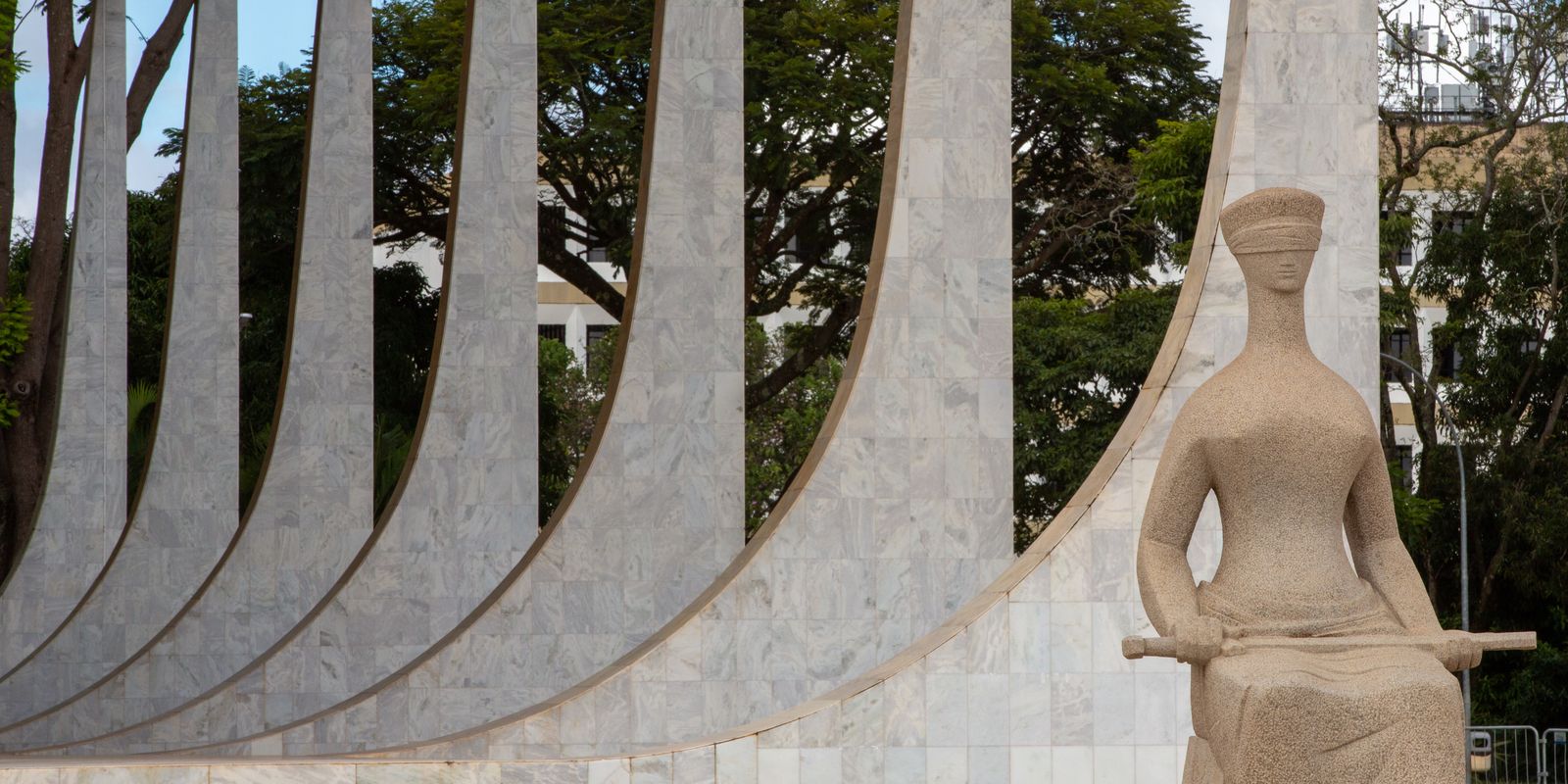
Most ministers of the Supreme Federal Court (STF) voted for the National Institute of Social Security (INSS) to pay temporary benefit, analogous to sickness benefit, to women victims of domestic violence who need to stop working. 
The Supreme Plenary judges an appeal in which the INSS tried to overthrow the right obtained by a Paraná worker, in a decision in the second instance of the Federal Justice, to receive social security benefit analogous to sickness benefit for the removal of work due to the Maria da Penha Law.
The right to remove work for victims of domestic violence, without prejudice to the salary, for up to six months, is guaranteed by the Maria da Penha Law, but the INSS argues that it cannot be required to pay for the payments, for lack of legal provision.
Maria da Penha Law
In the present case, in view of the indefinition of the legislation, the judge responsible for the decision of removal determined that the INSS would pay the benefit to the insured, in order to guarantee the effectiveness of the measure provided for in the Maria da Penha Law. This decision is now confirmed by the majority of the Supreme.
By vote of the rapporteur, Minister Flávio Dino, the payment of the benefit may be determined by the State Court depending on the Maria da Penha Law, in order to guarantee the application of the protective measure to the victim of violence. “The normative system must be interpreted to give greater protection to women victim of domestic and family violence,” explained the minister.
Once the benefit is released, it is up to Social Security – regressively – triggering the Federal Court so that the values can be reimbursed to the municipality by those responsible for the violence, voted the majority of the Supreme.
Payment
For this majority, it is the duty of the Union to guarantee the immediate effectiveness of the removal of the work provided for in the Maria da Penha Law. For this, the payment may be a social security nature, in the case of workers with a formal contract, or assistance, when the source of income is informal, provided that the impossibility of working.
“In addition to the remuneration itself, it is important to highlight that the land and social security collection should also be maintained, the counting of time of service and all the consectaries of the labor relationship signed, so that the victim of domestic violence is not doubly harmed by the situation in which he is by circumstances alien to his will,” wrote the minister.
So far, Flávio Dino has been followed by ministers Alexandre de Moraes, Cristiano Zanin, Cármen Lúcia, Luiz Fux and Dias Toffoli. The others have until 11:59 pm on Monday (18) to vote in the virtual plenary.
The decision of the majority should be confirmed if there is no request for a view (more time of analysis) or highlight (referral of the case to the physical plenary).