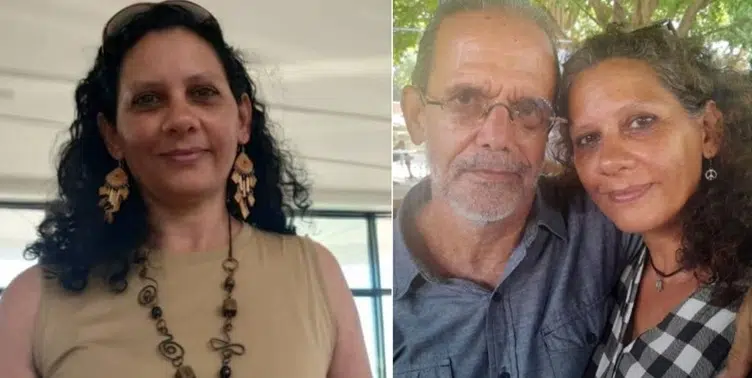
Laideliz Herrera Laza, wife of Jorge Fernández Era, accuses the organization of covering up repression and silencing critical creators.
Madrid, Spain.- The Cuban writer Laideliz Herrera Laza announced her departure from the Union of writers and artists of Cuba (UNEAC), a decision that she attributed to the lack of support from the institution against harassment against independent intellectuals.
“I presented my resignation […] by dignity and principles […] UNEAC is still quiet […] sometimes they roller publicly against those who disagree, ”he explained in statements to Martí News.
One of the reasons that precipitated her decision was the case of her husband, the narrator and humorist Jorge Fernández was, hit in July by the police in Havana. According to Herrera Laza in a publication in Facebook, When he asked UNEAC legal advice, the answer was evasive. Fernández was abandoned the organization in 2024, accusing her of being “a paramilitary force at the service of dictators.”
The author denounced that, far from complying with her own statutes – who talk about freedom of expression, debate and creation – the institution has become an instrument of censorship. “They have transmitted collective letters that try to kill the reputation of those who feel with the right to express ourselves,” he said.

The UNEAC “is committed to a state policy that constantly censures what is not convenient, that imposes silence, that listens only to those who, by maintaining their positions and benefits, tell them what they want to hear, that it persecutes the intellectuals who denounce through their works, social networks and independent media, since there is no possibility of doing so, the moral, social and economic crisis that we suffer,” reads.
In his testimony to Martí NewsHerrera Laza also criticized the complicit silence of many of his colleagues: “Most people shut up. Calla they shut up, shut up for keeping their positions, shut up for their benefits […] I can’t be in an institution that is supposed to represent me and not. ”
The UNEAC, created in 1961 by Nicolás Guillén, has been historically questioned by its subordination to official cultural policy and marginalizing writers and artists who express opinions contrary to the regime.