Edmundo González said that the general elections in Bolivia are “decisive” for the future of that country and democracy the region. More than 7.5 million Bolivians are enabled to vote by president, vice president and legislative members
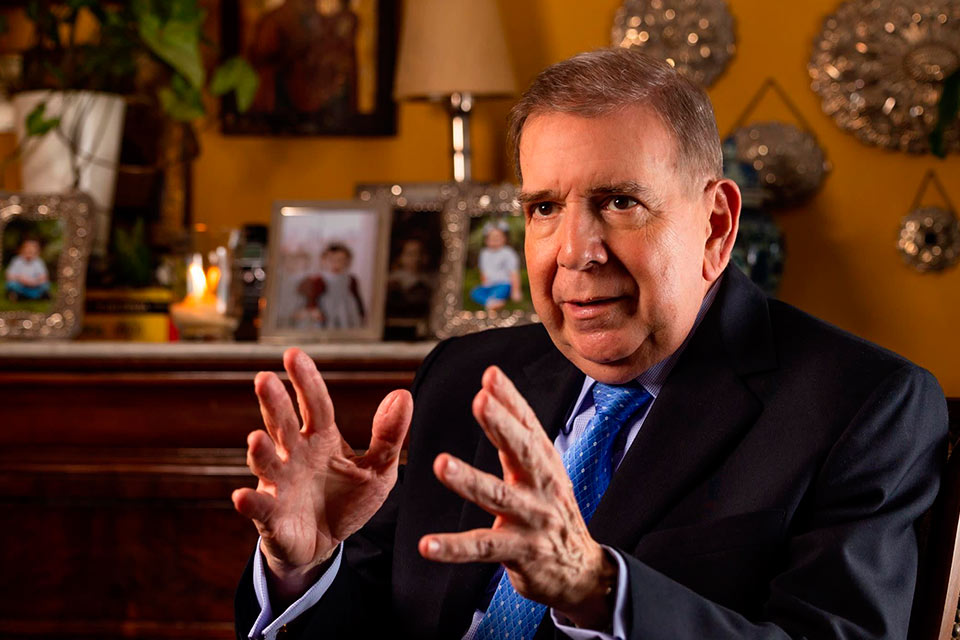
Edmundo González Urrutia referred this Sunday 17 to the general elections in Bolivia, and pointed out that they are “decisive” elections for the democracy of the region.
«Today Bolivia lives a decisive day for his future and for democracy in our region. Whole Latin America is attentive to what happens, because each free choice strengthens peace and integration between our nations », wrote González Urrutia in his official account in the social network X.
The ambassador, whose victory in the presidential presidential ones claims the Venezuelan opposition led by María Corina Machado, recalled that “sovereignty resides in the will of the peoples, and their respect is the basis of democratic coexistence.”
He also reiterated his commitment “with transparent elections, with the peace of nations and with the right of citizens to decide their destiny freely.”
Today Bolivia lives a decisive day for his future and for democracy in our region.
Whole Latin America is attentive to what happens, because every free choice strengthens peace and integration between our nations.
Sovereignty resides in the will of the … pic.twitter.com/clxbfw4Br4
– Edmundo González (@edmundoge) August 17, 2025
The general elections held this Sunday in Bolivia take tranquility and with “isolated” facts that do not “distort” the electoral process, the acting president of the Supreme Electoral Court (TSE), Oscar Hassenteufel, reported.
He affirmed that there was “some isolated event” that “cannot be avoided”, although he insisted “that in general it has been a quite quiet day” and expressed his desire to “continue like this.”
The isolated events were recorded mostly abroad, as in Geneva, where a citizen tried to take the voting urn, but “he was quickly controlled by the jurors and the Local Police,” said Hassenteufel.
In Spain there was a problem with a group of citizens who registered in Seville, but who had to vote in Granada, to which the Bolivian consul managed the transfer of these people so that they can suffer where they correspond to them, he added.
In Bolivian territory, some politicians voted in the midst of boos, such as the president of the country, Luis Arce, the mayor of Santa Cruz and presidential candidate, Jhonny Fernández, and the official contender Eduardo del Castillo.
The most critical case was that of the president of the Senate, Andrónico Rodríguez, who was stoned after casting his vote in the political and trade union bastion of former president Evo Morales in the center of the country, where he is considered a “traitor” for moving away from the former governor and applying on his account to these general elections.
More than 7.5 million Bolivians are enabled to vote in general elections to choose president, vice president and legislative members, while 369,308 citizens will exercise their right to suffrage abroad.
The opponents Samuel Doria Medina and former president Jorge ‘Tuto’ Quiroga (2001-2002) lead the surveys and could dispute an unprecedented second round, which would open the possibility of the return of the right to the Executive.
The official Movement to Socialism (MAS) concurs for the first time divided to elections, with former Government Minister Eduardo del Castillo as a candidate, although surveys grant him less than 3% of voting intention.
With information from Unitel Bolivia
*Journalism in Venezuela is exercised in a hostile environment for the press with dozens of legal instruments arranged for the punishment of the word, especially the laws “against hatred”, “against fascism” and “against blockade.” This content was written taking into consideration the threats and limits that, consequently, have been imposed on the dissemination of information from within the country.
Post views: 487