The social policy of the past administration – ordered by Andrés Manuel López Obrador – dragged those challenges for the way he operated. On the one hand, he opted for the universalization of social programs, which allowed support to more homes. But, on the other hand, he neglected the poorest population.
Therefore, experts see urgent to improve the social development strategy and the distribution of programs, so that they maintain universality, but without sacrificing the most disadvantaged.
If this was fulfilled, extreme poverty could be reduced significantly, they coincide. Because, although the federal government quadrupled the public budget for priority programs, of 150,000 to 700,000 million, Its effect is not reflected in the most vulnerable, due to the cast without focus.
“We already have the budget to reduce the population in extreme poverty, but we do not do it for the decisions we make of how to distribute social programs,” says Máximo Jaramillo, director of the Institute of Inequality Studies.
The effect of social programs
Unlike what is thought, social programs do not contribute so much money to families. Paulina Gutiérrez, operational director of Citizen Action against Poverty, details that Only 13 out of 100 pesos of the poorest households They are monetary transfers of the government.
In addition, the increase in monetary transfers concentrated towards the houses with greater income, while 10 million households with less resources did not receive them.
This measure caused the support to decrease among the poorest. Eight out of 10 households in few resources (Decile I) received a social program in 2018 and last year had only 58%access. In contrast, The richest households increased their coverage from 5% to 20%.
That is why they did not impact extreme poverty. According to INEGI, the level of extreme poverty was only 1.7 percentage points lower thanks to transfers.
“The effect of transfers to reduce extreme and very minimal poverty to reduce moderate poverty is void,” says the specialist.
Change in transfers distribution
For specialists, if the delivery of social support is improved, poverty reduction would be significant. “If these resources are concentrated and a more progressive distribution is made for homes that need it most, imagine the reduction of extreme poverty and poverty in general,” says Gutiérrez.
Maximum Jaramillo coincides with her. The academic of the University of Guadalajara explains that the universalization of the programs had the effect of increasing coverage among homes, including the richest. In them, he observes, lives a higher proportion of adults due to inequality in life expectancy related to the level of income.
The problem was that the strategy focused on the poorest was eliminated when the Prospera program disappeared, that in 2018 attended this sector. For Jaramillo, the universalization of programs is not a mistake, but it should not be done without guaranteeing the inclusion of the most disadvantaged.
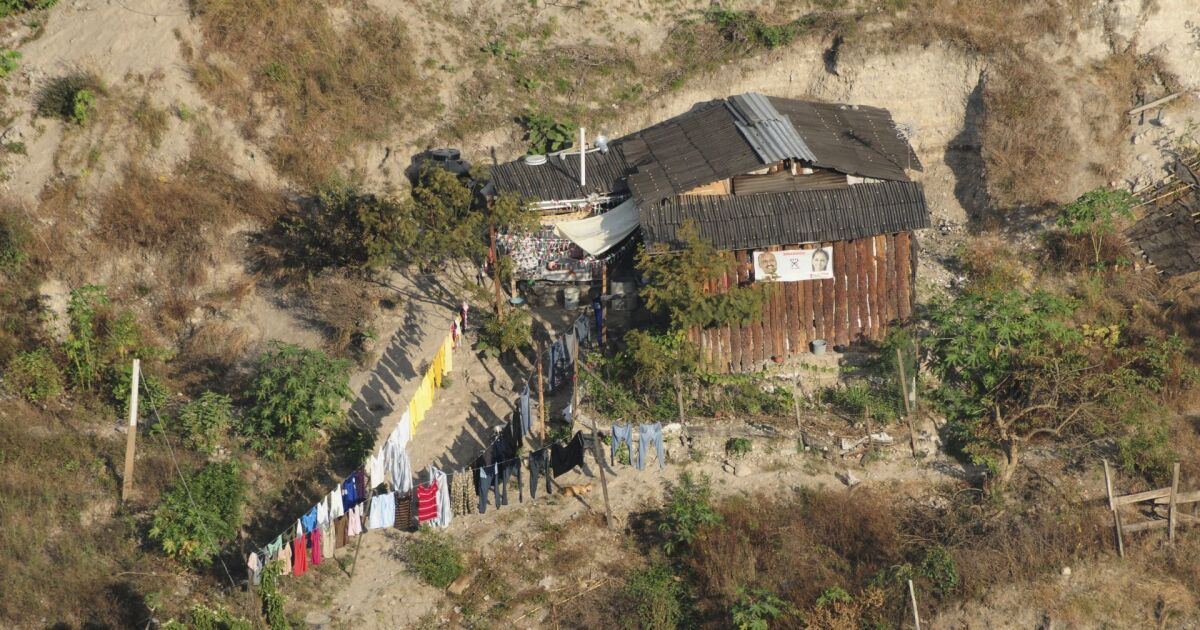
That change in the cast had noticeable effects: the coverage of social programs grew in the high -income states, such as Mexico City, Baja California, the State of Mexico, Nuevo León and Sonora. Instead, it decreased in Chiapas, Oaxaca, Guerrero, Tabasco and San Luis Potosí, the poorest states.
In Chiapas, which concentrates the highest percentage of the population in extreme poverty, the decrease in the coverage of social programs reached 22 percentage points.
“And this is serious. Social programs are intended to give some social protection. And that you are removing that level of coverage to the poorest state, it seems worrying to me,” he says.
The expert considers that, to maintain both distribution schemes, there would be more beneficiary homes and a greater decrease in poverty.