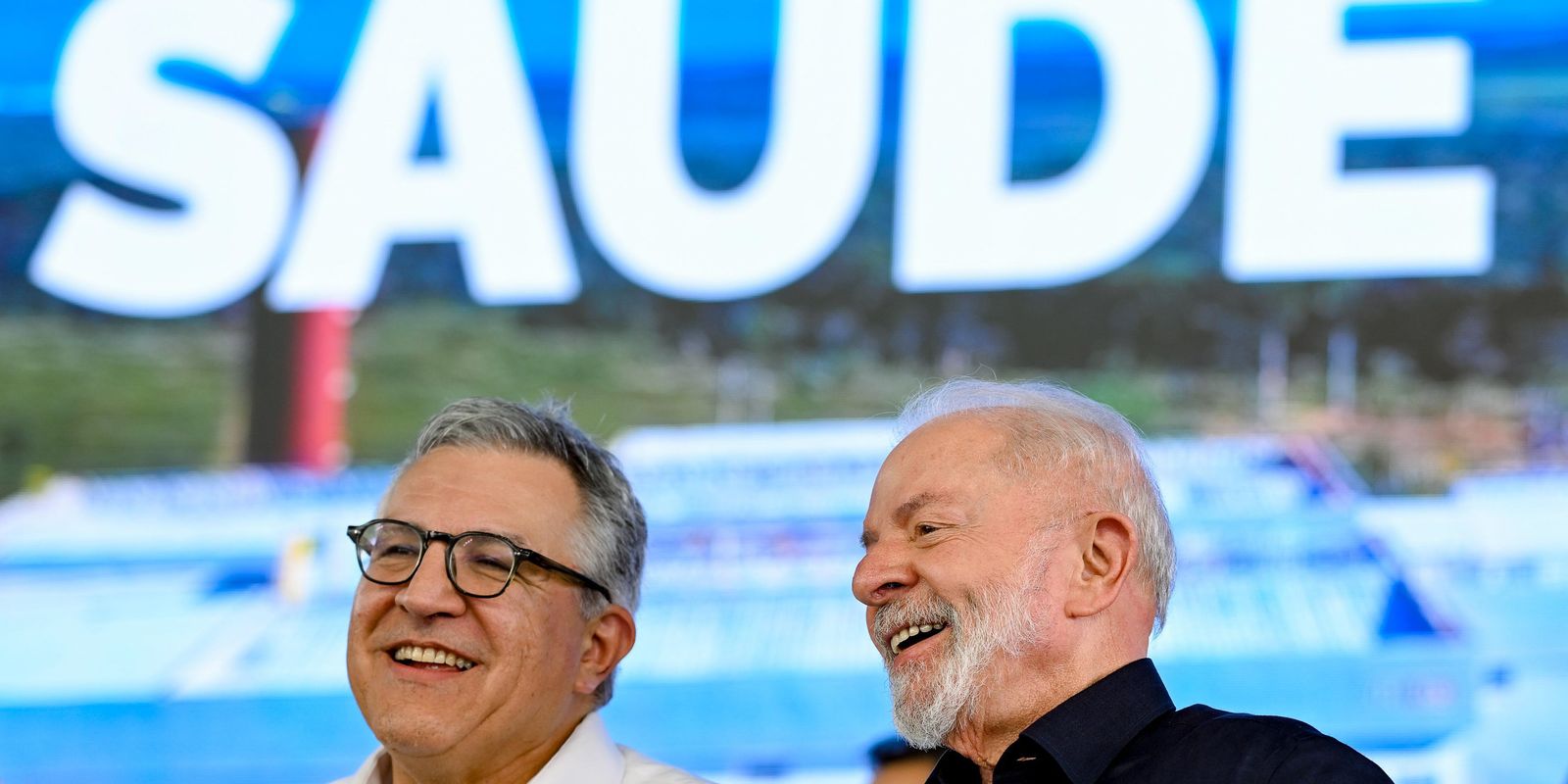
President Luiz Inacio Lula da Silva criticized, on Thursday (14), the United States block against Cuba and defended the Mais Médicos program, implemented in Brazil in 2013, initially in cooperation with Caribbean country. Lula stated that Brazil’s relationship with Cuba is respectful.
This Wednesday (13), the Secretary of State of the United States, Marco Rubio, announced the revocation of the visas of employees of the Brazilian government, former employees of the Pan American Health Organization (PAHO) and their families, who worked with the Cuba Health Cooperation Program.
The visas of Mozart Julio Tabosa Sales, secretary of specialized health care of the Ministry of Health, and Alberto Kleiman, former ministry’s international relations advisor and current general coordinator for 30th United Nations Conference on 2025 climate change (COP30).
“The fact that they hunt Mozart was because of Cuba. So it is important that our relationship with Cuba is a relationship of respect for a people who have been a victim of a block for 70 years. Today, they are needing, in a block that there is no reason. Said Lula at an event in Goiana, Pernambuco.
The US has been imposing, for over 60 years, a hard economic blockade to the Caribbean island with the objective of changing the country’s political regime, established after the 1959 Revolution. As the export of doctors is one of the main ways of Cuba getting resources against blockade, the Donald Trump’s government has been trying, since the beginning of his second term, to embarrass countries that receive Cuban professionals.
Employees from Caribbean countries such as São Vicente Y Granadinas, Barbados and Trinidad and Tobago left Cuba’s agreements after criticism of the US against medical partnerships.
Cuba has been having this cooperation program since the 1960s. Throughout history, 605,000 doctors from Cuba acted in 165 nations. According to data from the Ministry of Health of Cuba, countries such as Portugal, Ukraine, Russia and Spain, Algeria and Chile have received Cuban doctors over 60 years.
The participation of Cuban doctors at Mais Médicos, via cooperation with the Pan American Health Organization (PAHO), lasted from 2013 to 2018 .
Lula stated that the creation of Mais Médicos was necessary to cover the welfare voids that exist in the country. During the government of Jair Bolsonaro, Mais Médicos changed his name and was reformulated and expanded in this third Lula administration.
“When we created the most doctors, what was the scolding of doctors [que criticaram a participação dos cubanos]? It is that it has an elitist part of health in this country that thinks there is no lack of doctor. Now the mayors know that a lack of doctor. Even to take to the most violent periphery, it’s hard for you to have a doctor who wants to go. There are mayor who can’t even pay the doctor’s salary because no one wants to be confined to a small town, if the guy can be in the capital, ”said Lula.
“We need to have the notion of Brazil that does not need [de médicos] and the part you need. And it is the government that has to make the decision, ”added Lula.
Sovereignty in Health
Lula participated in the inauguration ceremony of two more blocks of production of hemodestrivative drugs of the Brazilian Company of Hemoderivates and Biotechnology (Hemobras), in Goiana (PE). The new units will allow Brazil to reach autonomy in the fractionation of human plasma, which is extracted from the blood donated by Brazilians in blood centers spread across the country.
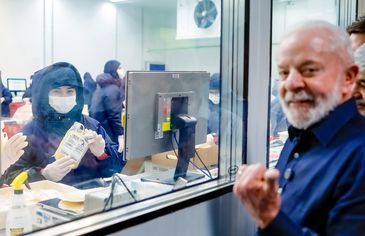
Lula inaugurates hemobrás hemodestrived drugs. Photo: Ricardo Stuckert / PR
Investment result of R $ 1.9 billion, the industrial plant will produce high cost medicines such as albumin, immunoglobulin and coagulation factors VIII and IX. Products are used to treat serious burning, ICU patients, hemophilias, rare diseases and in major surgeries.
The president pointed out that the new unit is also a milestone for national sovereignty in the production of medicines essential to the Unified Health System (SUS) and a step further for the country’s self -sufficiency in the sector.
“THE Hemobras has come to stay and to show that Brazil is sovereign and is not afraid of threat ”said Lula, also criticizing the recent sanctions of the United States against Brazil.
Hemoderivatives
Currently, Hemobras supplies the public system with products obtained through technology transfer agreements. In 2024, he delivered a record of 552,000 vials of hemoderivates and 870 million international recombinating medicines units. THE New factory allows Brazil to produce, in four years, up to 500,000 liters of fractional plasma per year and six types of medicines.
With the inauguration of blocks B02 (plasma fractionation) and B03 (filling and lyophilization) and the delivery of equipment, the new factory begins the qualification of processes, a mandatory condition in the pharmaceutical sector. THE It is expected that next year the company will start to fraction the plasma, a process where the proteins that serve as raw materials are obtained and, after refined, become medicines.
Linked to the Ministry of Health, currently, Hemobras collects surplus plasma of 72 public blood cells and hemotherapy services across the country. This input, which today is sent for processing abroad, now has a larger portion of production in the national territory.
Last year, Lula inaugurated the Biotechnology -produced medicines factory, in block B07 Industrial Complex of Hemobras. THE unit already packs the Hemo-8R, fundamental for the treatment of hemophilia to.
After undergoing all equipment and process qualification phases, the plant received inspection from the National Health Surveillance Agency (Anvisa) in July and certificate of good manufacturing practices. Thus, it is able to perform the First of the three national production stages and will deliver to SUS 300 thousand vials from Hemo-8R until the end of the year.
The next step, still in the second semester, will be the beginning of the second stage, pulling the first batch of medicines. And by the end of 2026, it closes the last step, with the manufacture of the active pharmaceutical input (IFA).
Even today, Lula meets schedule in Recife where he announces actions of the program now has specialists and delivers land regularization titles to the community of Brasilia Teimosa, in the Pernambuco capital.