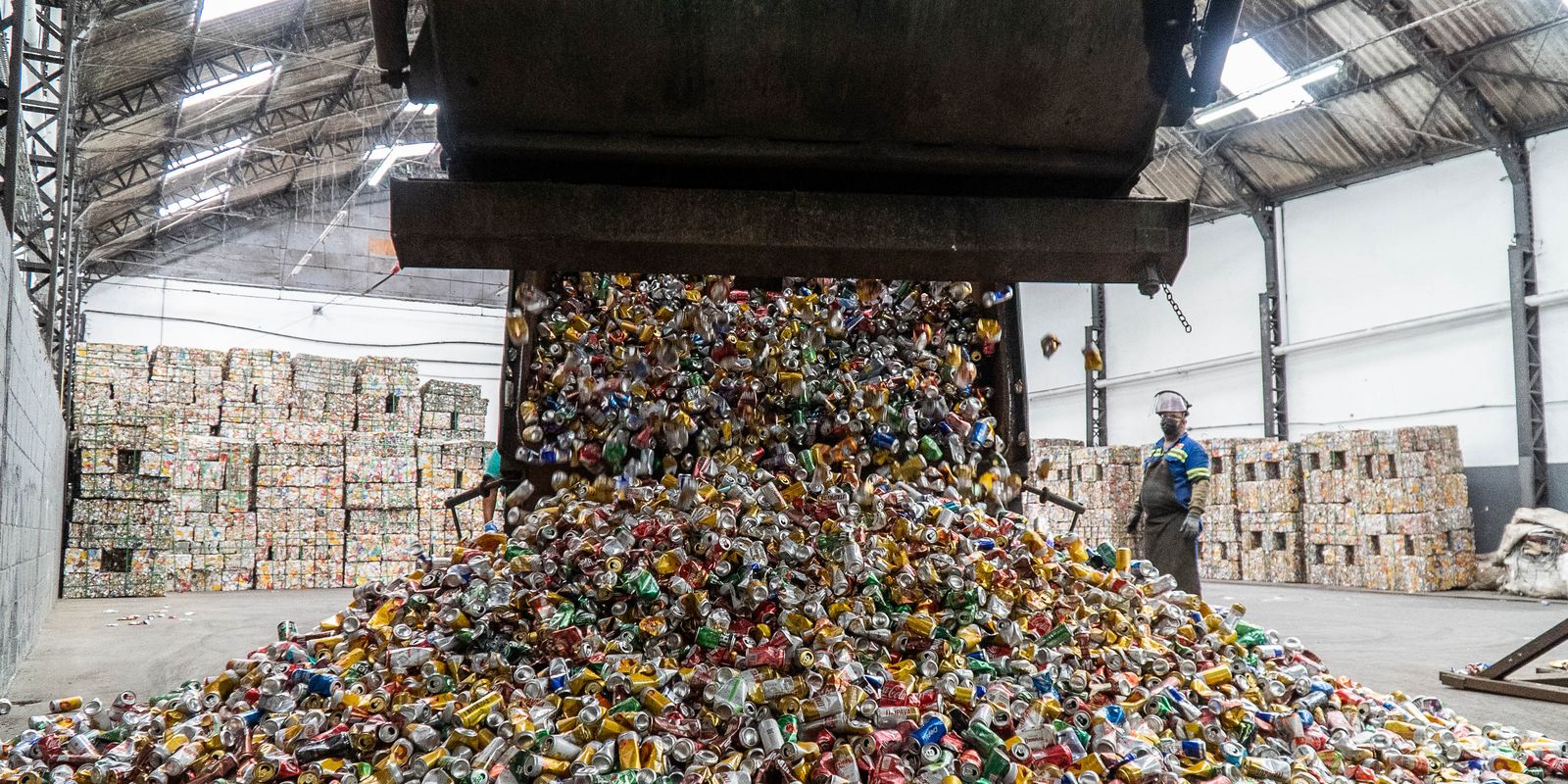
On a game day at the Maracanã stadium in Rio de Janeiro, it is common to see a number of fans who enjoy the last meters before the magazine points to consume drinks in beer and soda cans, prohibited items to enter the stadium. Even before people do the job of throwing the can on the dumpsters, practically an army of waste pickers already collects the residue.
This concentrated effort of the pickers, many of them in a situation of socioeconomic vulnerability, makes the country reaches, for years in a row, very high level of cans recycling. In 2024, the level was 97.3%according to data released on Thursday (14).
The balance is from Recicla Latas, a non -profit association created and maintained by aluminum cans manufacturers and recyclers, which seeks to improve the recycling industry. According to the institution, the Brazil reached 16 years in a row with reuse rate above 96%.
By 2022, the index reached 100.1%i.e, In the year more cans were recycled than the number marketed. In 2023, the level was 99.6%.
Last year, 33.9 billion of the 34.8 billion cans were reused. After they go to the trash, These containers are back on the shelves in 60 days.
Reverse logistics
According to the Executive Secretary of Recicla Latas, Renato Paquet, the Brazilian reverse logistics system stands out for its consistency.
“Even in challenging years, we have been able to maintain high rates, which demonstrates the strength of the articulation between the various links in the jail,” he says.
THE reverse logisticsi.e, manufacturers are responsible for the return of waste generated by their productsis provided for in Law 12.305/2010, also called the National Solid Waste Policy.
Recicla Latas operates in partnership with the Brazilian Aluminum Association (Abal) and the Brazilian Association of Aluminum Tin (Abralatas).
The president of Abal, Janaina Donas, says that the Brazil is a global reference in circular economy and that manufacturers see in recycling more than just an environmental solution“But a strategy of competitiveness, supply security and an essential path for the decarbonization of our sector.”
For the president of Abralatas, Catilo Cândido, it is also “a structured chain that generates income and opportunities in all regions of the country”.
Picker
The National Movement of Writers estimates that the Country has about 800,000 collectors of recyclable materials.
In 2020, a term of commitments between Abralatas, Abal and the Ministry of Environment and Climate Change (MMA) was signed. In addition to initiatives to keep the high level of recycling, the document determines producers’ investment to improve the income and life of the pickers.
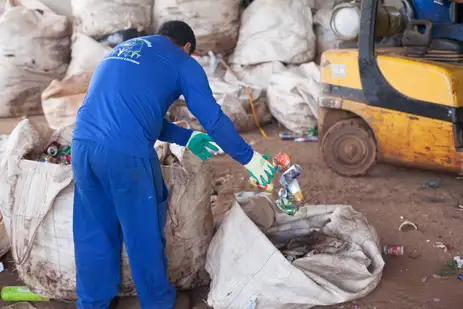
Waste pickers. Photo: Disclosure/Recycle Cans
The president of the National Paths Association (Ancat), Roberto Rocha, told the Brazil agency that one of the ways to improve the quality of life of waste pickers is that, in addition to the remuneration for the material delivered to recyclators, the pickers are also paid for the collection work itself.
“No one pays for recovery or collecting this disposal of cans,” he explains.
THE Association proposal is that the Municipalities cost the activitywith the participation of the private initiative.
“What is missing to improve and dignify, improve the quality and service of waste pickers is that we can have a large payment program for the service provided by collecting aluminum cans,” Rocha, who also asks autonomous waste pickers – not bound to cooperatives – also benefited by policies proposed by reverse logistics law.