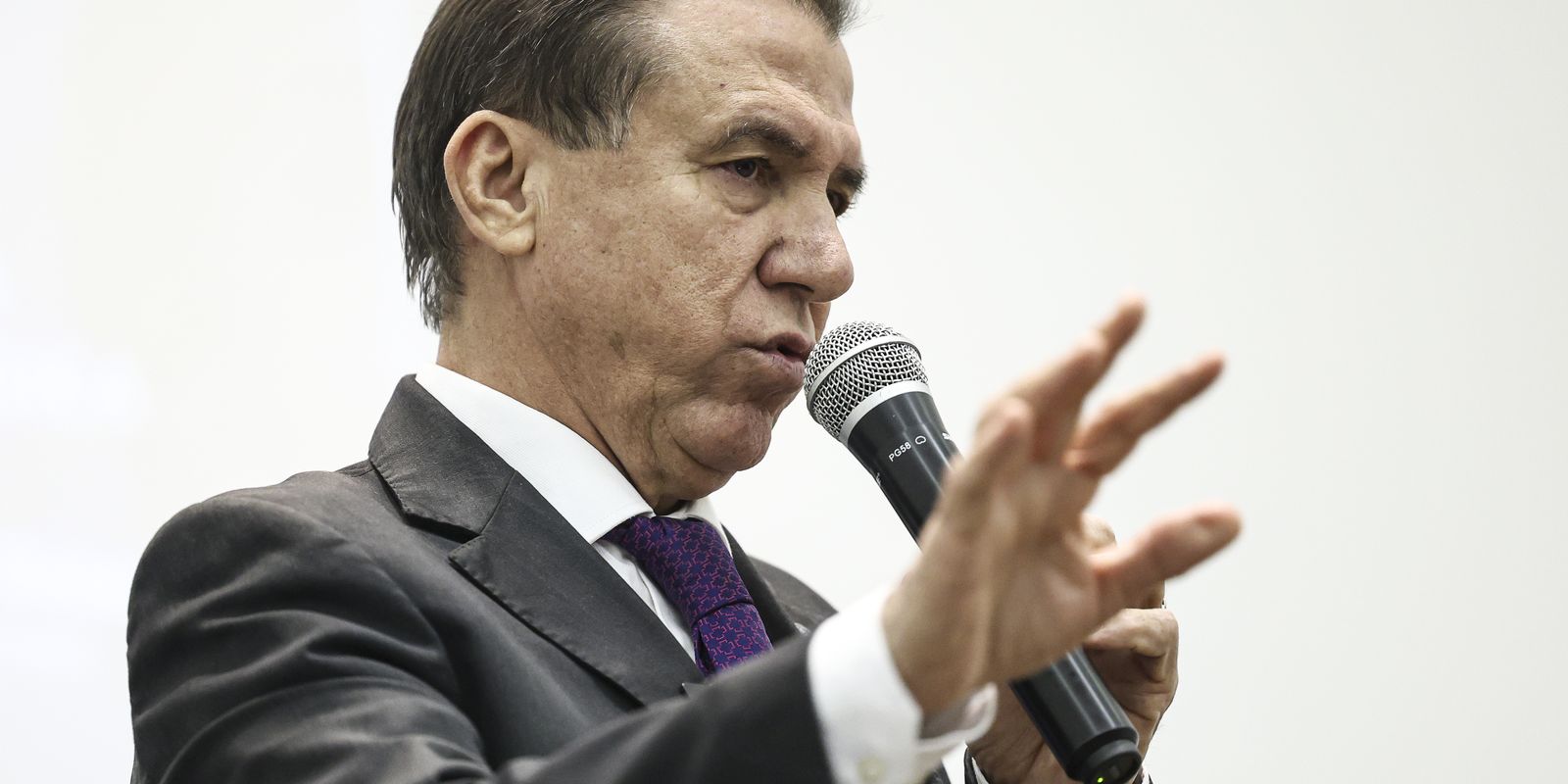
The Minister of Labor and Employment, Luiz Marinho, said, on Wednesday (13), that the country should not despair because of the 50% tariff Brazilian exports, imposed by the president of the United States (USA), Donald Trump.
In live With leaders of the seven union centrals (CUT, Força Sindical, UGT, CTB, NCST, CSB and Intersindical), Marinho recalled that USA are an important commercial partner, but the country is responsible for 12% of exports from Brazil to the domestic market.
“In 2023 it was 25%, and it is not that exports to the US diminished. We are the one that increased the trade balance, including. But in these two and a half years of government of President Luiz Inacio Lula da Silva, we opened 387 new markets for Brazilian products.”
The minister said that, for this reason, the dependence on the US market has been decreasing. “We want to remain a strong market, but we want to continue diminishing this dependence.”
For Marinho, at the end of the process, the country will surely be stronger and less dependent on the US. He said he believed Trump’s measurements can “Being aiming at one thing and getting it right,” accelerating the consolidation of the BRICS and the exit of the global dollar dependence.
“Therefore, there are many innovations, such as the installment pix, expected to be released soon, and which is practically the replacement of credit card, which can impact the American card flags, which is why Trump throws in the means of payment.”
As for jobs, Marinho said the government is studying measures to facilitate the maintenance of vacanciesmainly stimulating the domestic market to absorb food production through government purchases that would supply schools, prison system, hospitals.
“Another measure is the best structuring of credit tools, financing, the guarantee fund to support companies to survive and gradually find substitutes for their products.”
Marinho recalled that the Consolidation of Labor Laws (CLT) has tools to ensure jobsprovided that they are agreed with the workers, and the planned guarantees are maintained. “All this is maintained, as well as the financing of Banco do Brasil, from BNDES, which were made exactly for it.”
The minister stressed that the main collective agreements should start from September and asked the trade union centrals to be aware of the reality of each company and each sector so that the best negotiations are effective to ensure jobs.
“This episode of Trump puts us obliged to be more attentive, to have each company and not buy ‘cat per hare’. There may be companies that seek to take advantage of an opportunity to avoid giving the actual salary readjustment or the relegated increase. The union must have the domain of the foreign market, each company and the employer is critical at this time of negotiation. ”
CUT President Sergio Nobre pointed out that US sanctions are a very strong attack on the sovereignty of our country and which aims to disrupt our economywho, according to him, has been “very strong”.
“President Lula has been reacting very correctly, serenity and also very firmly. We know that the US has more pressure instrument than Brazil has in relation to them, but we are not any country. We are a big nation and we have to treat it with a high head and not be subservient to the US,” said Sergio Nobre.
Ricardo Patah, president of UGT (General Union of Workers), stressed that the question is political and its consequences are worryingbut that the role of trade unions is important, as happened during the pandemic period.
“We managed to recover our image making extraordinary agreements and keeping companies standing. Our role was fundamental at that time, both from a sanitary point of view and on the economic side,” said Patah.
The president of UGT stated that the tariff imposed by the US will have consequences on all sectorsbut for traders even if there is no unemployment like what the industry predicts, there will be a decrease in salary, especially for those who have part or all the gains composed of commissions.
Also participated in the live CTB Secretary-General Ronaldo Leite; NCST President Moacyr Tesch; CSB Secretary-General Álvaro Egea; and the Secretary General of Intersindical, Nilza Almeida.