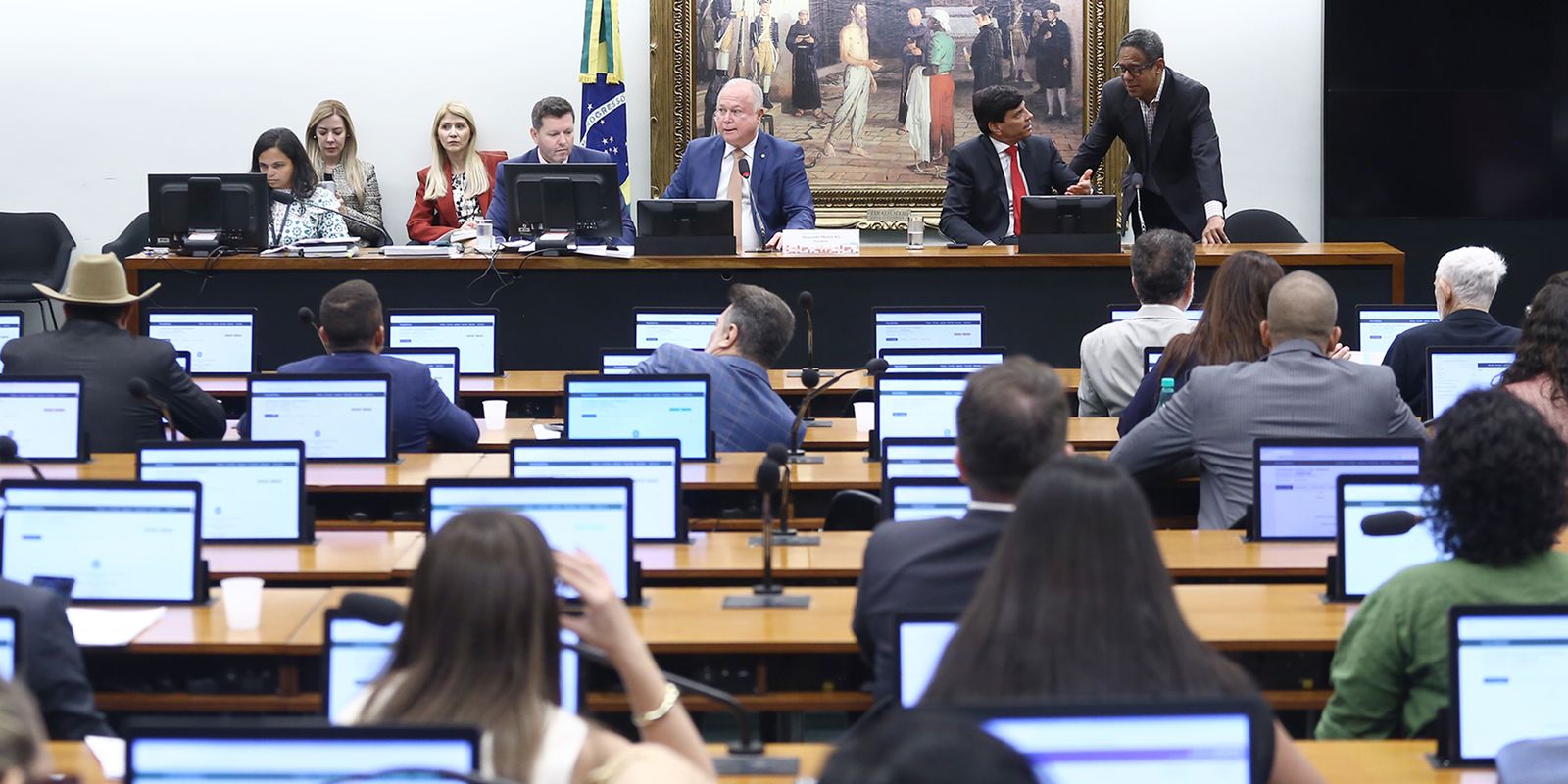
The Constitution and Justice Commission (CCJ) of the Chamber of Deputies approved on Wednesday (13), unanimously, the Bill 2,857, 2019which increases by one third to the crime of enticing children and adolescents through the internet, via applications or social networks.
“The hardening of punishment is necessary, because the technologies currently used to promote interaction between people amplify or facilitate the practice of crimes that previously occurred only in the face-to-face world,” said the report of the text, Deputy Laura Carneiro (PSD-RJ).
Currently, Article 241-D of the Child and Adolescent Statute (Law 8.069, 1990) provides for a penalty of imprisonment of 1 to 3 years, plus fine, to whom to entice, harass, instigate or embarrass, by any means of communication, child, with the purpose of with her to practice libidinous act.
The bill advanced at the CCJ after Repercussion of the denunciation of influencer Felca Bressanim Against profiles that use children and teenagers with little clothes, dancing sensual songs or talking about sex in programs released on digital platforms, with the aim of monetizing these contents, generating money for channel owners.
Given the complaint, the Mayor Hugo Motta, announced the deliveryin 30 days, a bill against children’s adultization, which should be built by a working group of parliamentarians and experts.
Regulation
The possible accountability of digital platforms for allowing the monetization of content exploiting children and adolescents causes divergence among deputies.
Opposition parties criticize the possibility of regulating networks arguing that it is censorship. Already deputies linked to the government base justify that the regulation of networks is necessary to reduce abuses against childhood in Brazil.
In Wednesday’s discussion at the CCJ, Deputy Captain Alberto Neto (PL-AM) stated that the opposition will not allow agendas that create rules for the functioning of social networks.
“We will be aware that they are wanting to put jabuti to regulate and censor the social network. We will not allow us to use such a precious theme for us, which is to defend our children, to regulate social networks,” said the deputy. The term jabuti is used to refer to the inclusion of topics that have nothing to do with the object of the bill under analysis.
Deputy Helder Salomão (PT-ES) evaluates that increasing the penalty for criminals is not enough, and defends the liability of platforms that profit from content that exploits children and adolescents.
“Those who do not want to regulate social networks, digital platforms, big techs, are conniving with this type of pedophilia crime, sexual violence, sexual exploitation and sexual abuse against children and adolescents. It is a logical issue. If I think the digital environment should be no one, I am contributing to the practice of crimes against children and childhood and the adolescents of our country,” he said.