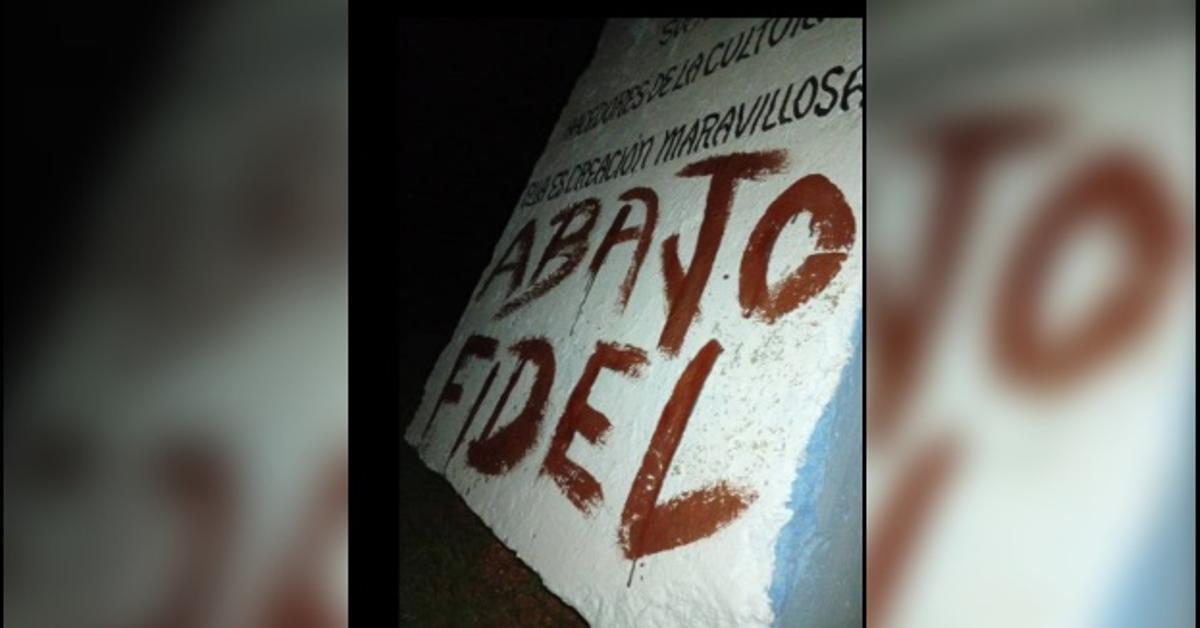
Madrid/This August 13, in the streets of San Antonio de los Baños, they appeared Several posters in which “Fidel”, “Martí is not communism”, “homeland and life” or “freedom” could be read. It is no accident that, in the same place where the spark that originated the social outbreak of July 11, 2021, the 99th anniversary of Fidel Castro Ruz originated.
The Cuban government, aware of the low popularity of current leaders, has tried to dust off the figure of Castro. In a calculated maneuver, the electricity generation deficit was reduced by a few days – guaranteeing that almost two thirds of the population were exempt from the usual blackouts. In addition, juvenile camping, book presentations, photographic exhibitions and other activities with which it was sought to revive an admiration that no longer exists beyond official circles was organized.
What abound are Castro’s photomontages in ridiculous situations and mocking comments about his legacy
In New York, a huge light sign with the image of the bearded adorned a downtown street. It was not a spontaneous initiative of nostalgic emigrants, but a service paid by The People’s ForumOrganization led by prochastrist activists Claudia de la Cruz and Manolo de los Santos. Already known for his photos with the president designated Miguel Díaz-Canel, and for campaigns to support the ball team Team Asereboth have been indicated for receiving financing from billionaire Neville Roy Singham, resident of Shanghai and linked to the Chinese propaganda apparatus. The operation, more than a tribute, resembles an expensive reminder so that the official Cuban story is not forgotten abroad.
However, the celebration has not raised enthusiasm on the island. Most Cubans reacted with sarcasm on social networks, turning the anniversary into a memes festival. Instead of tears and reverences, what abound are Castro’s photomontages in ridiculous situations and mocking comments about his legacy.
None of the great international media dedicated relevant space to the anniversary
Among the rows of the ruling party, confusion was evidenced. Some militants believed that it was already the centenary of the birth, not the 99th anniversary. The error reveals the historical ignorance even within the militancy and the overload of activities with which the regime saturated its bases. More than one official suggested, quietly, that something was left for 2026, when the fifth is really fulfilled.
Outside the island, silence has been the protagonist. None of the great international media dedicated relevant space to the anniversary. In related countries such as Venezuela and Nicaragua, laudatory notes were published, but without greater resonance. Even when asking several artificial intelligences about the most influential figure born on August 13, the most frequent response was: Alfred Hitchcock.
Citizens stopped seeing it as the “uniformed and threatening leader” to perceive it as a fragile old man, badly dressed and obsessed with the moringa
The island’s own political career helps explain disinterest. During the period in which Raúl Castro took the reins, the Raulism He struggled to separate orthodox fidelism, betting on an image of greater pragmatism. The thaw with Barack Obama and the shy economic openness required a symbolic break with the uncompromising discourse of his older brother. The Reflections that Fidel published in the press became anachronistic already often uncomfortable for the new course. Citizens stopped seeing it as the “uniformed and threatening leader” to perceive it as an old man fragile, badly dressed and obsessed with the moringa.
The result was a gradual replacement of symbols, perhaps drawn from Raúl’s own office. Presenting Fidel as a foolish and delusional grandfather served to soften the transition and to justify the idea that the future depended on a change of style, not on system. In contrast, Raúl Castro has struggled to be much more vital – at 94 – than the last images we saw of his demacrated brother. And that remarkable difference between both nonagenarians is not a coincidence for a regime with so many communicative filters.
But the raulist experiment also wrecked loudly. The ordering task, conceived as a decisive economic adjustment, sank further purchasing power and citizen trust. This failure gave new life to fidelist sectors who had remained in the shadow. Figures such as Iroel Sánchez and other defenders of the most rigid Marxism again occupied media spaces, insisting that Fidel’s orthodoxy was the only way.
In contrast, Raúl Castro has struggled to be much more vital – at 94 years old – than the last images we saw of his demacrated brother
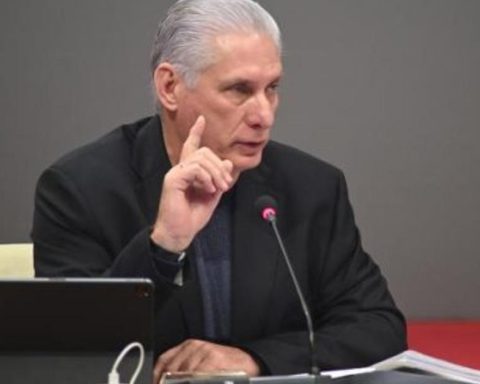
In that ideological vacuum, Miguel Díaz-Canel clung to the slogan of “continuity”, but without a clear plan or sufficient charisma to sustain her. Massive Internet access ended up eroding informative control. The authorities, who for decades presumed to “win the battle of ideas,” they publicly admitted that they were losing it.
The attempt to use the 99th anniversary as an act of political reaffirmation has encountered a reality that can no longer be reversed. The figure of Fidel Castro has emptied content for a good part of the Cuban population. The new generations know him more for family stories of deficiencies and repression than by speeches on sovereignty. For many, it is the symbol of immobility, the molar and the cause of the problems that continue to suffocate the country.
The anniversary, far from strengthening the official narrative, has served to measure the distance between myth and reality. The cult of personality that once worked as an ideological cement is now perceived as a ballast. Propaganda fails to reverse accumulated fatigue or conviction, increasingly widespread, that the country needs a radical change.