The gender gap is extended in the poorest homes in Latin America, where they can dedicate up to 14 hours more per week than children to these tasks
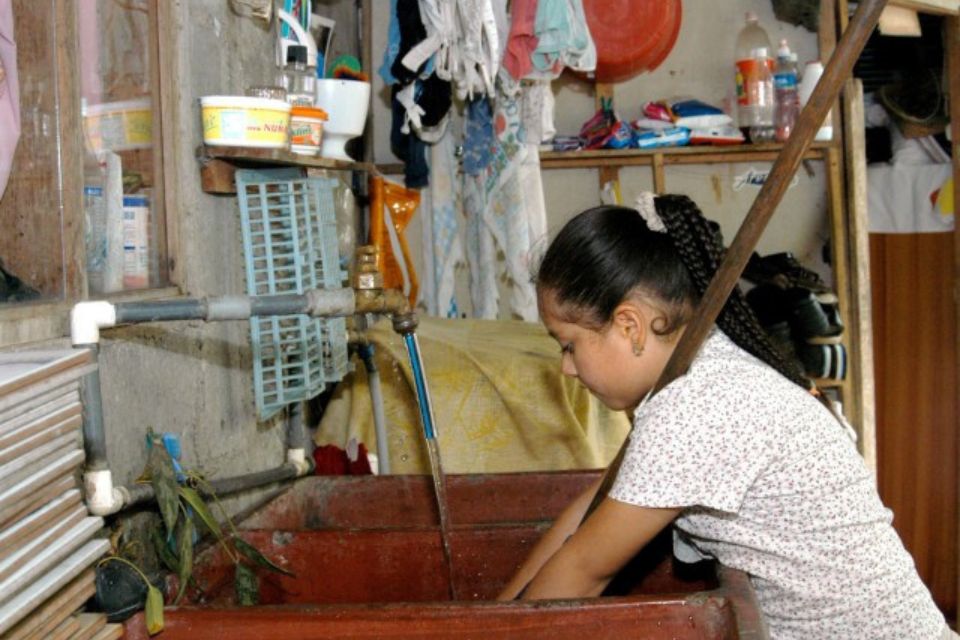
Adolescent girls in Latin America average at least an hour a day for more than their male peers to domestic work and unpaid care, which is equivalent to additional seven hours a week, according to a study of the United Nations Childhood Fund (UNICEF) on the use of time in adolescents from five countries in the region.
“From a very young age, many girls and adolescents of the most vulnerable households already disproportionate domestic and home care responsibilities that limit their right to study, play and develop fully,” warned Roberto Benes, regional director of UNICEF for Latin America and the Caribbean.
The study, conducted in Argentina, Chile, Colombia, Mexico and Uruguay, points out that inequalities take over the girls to develop as such “and condition their opportunities in the present and the future,” said Benes.
In addition, it shows that the participation of girls in care tasks begins from very early ages and intensifies during adolescence.
The gender gap is extended in the poorest homes, where they can dedicate up to 14 hours more per week than children to these tasks.
Meanwhile, male adolescents allocate more time to recreational or recreational activities, which highlights an unequal distribution of unpaid work from an early age, with long -term implications for gender equality.
Structural factors and inherited patterns
The study also points out that the time that girls and boys dedicate to care is associated with various factors, including the presence of children under five years in the home, the lack of child care services and the behavior of their own parents, which perpetuates intergenerational patterns of inequality.
“The unequal distribution of care work that impacts even girls is a reflection of social structures that continue to assign these tasks according to gender,” said María Noel Vaeza, Regional Director of UN Women for the Americas and the Caribbean.
He pointed out that to change this reality, “we need public policies that redistribute care from the State, guarantee their own time for girls and adolescents and promote a cultural transformation.”
Towards public policies with equal approach
Within the framework of the XVI Regional Conference on Women, in Mexico, UNICEF and UN Women will present a report with public policy recommendations.
Among the proposals include expanding the coverage and accessibility of child care services, for older and disabilities, strengthening social protection with transfers and benefits programs that relieve care charges.
In addition to promoting cultural campaigns aimed at adolescents who promote co -responsibility and new masculinities, collect and analyze data disaggregated by age and gender to design better public policies.
As well as reform the educational system to make it more inclusive with adolescents who face care responsibilities, including flexible curricula, tutorials and psychosocial support.
“Unpaid care constitutes one of the main barriers for gender equality. Ensure fair care conditions from childhood is to sow the bases for girls and adolescents to build a future with more freedom, equality and opportunities,” said Vaeza.
UNICEF’s study is based on official surveys for the use of time and is part of a broader effort to make visible how gender inequalities are configured from childhood and adolescence, impacting multiple dimensions of girls’ lives.
With information from the EFE agency
*Journalism in Venezuela is exercised in a hostile environment for the press with dozens of legal instruments arranged for the punishment of the word, especially the laws “against hatred”, “against fascism” and “against blockade.” This content was written taking into consideration the threats and limits that, consequently, have been imposed on the dissemination of information from within the country.
Post views: 103