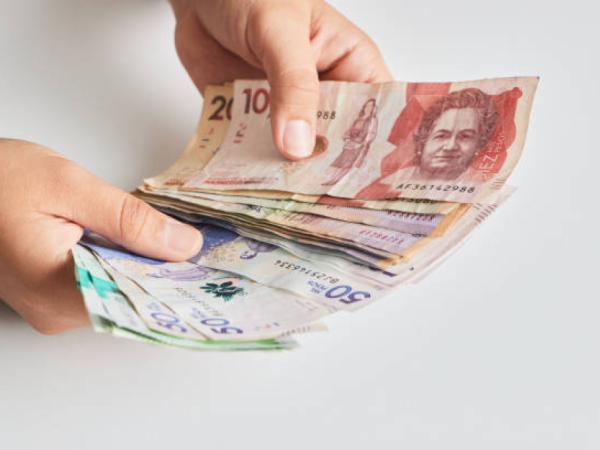
The Minister of Finance, Germán Ávila, began the week defending the policy of real increases of the minimum wage that the Petro government has promoted since 2023, ensuring that the data shows that they have not generated inflationary pressures nor deterioration of employment, as has been warned from various opposition sectors
According to the official, between 2023 and 2025 the minimum wage went from $ 1,160,000 to $ 1,423,500, a 23% accumulated increase in real terms; which is equivalent to an average annual growth of 3.1%, twice the historical average of 1.5% and pointed out that “for the third consecutive year, we have increased the real minimum wage without affecting inflation or employment”, in reference to what it considers one of the economic achievements of the current administration.
See here: ‘We propose that the country resumes the long -term agenda’: Andi
Ávila Plazas also said that this performance reinforces the conviction of the government to continue with this line in 2026 and said that “it will be a decision to maintain the dynamics of increasing the real minimum wage, and that is planned in the inflation target”, remembering that the official projection for next year contemplates an inflation of 3.2% even with the salary adjustment.
Growth with positive signals
Ávila took the opportunity to emphasize that the Colombian economy maintains a recovery rhythm and said that in the first quarter of 2025, the gross domestic product (GDP) grew 2.7%, driven by artistic and entertainment activities (+15%), Agriculture and livestock (+5.9%) and trade, transport and accommodation (+4.7%).
The minimum wage debates for 2026 will begin at the end of the year.
Chatgpt image
The monitoring indicator to the economy (ISE) shows that, until May, the accumulated growth is 2.6%, with a good performance of services and the agricultural sector; While stating that “all this tells us about an economy that moves, that finds engines on different fronts and continues to progress.”
These new statements from Ávila occur in the midst of the differences between the Executive with the Bank of the Republic; After last July 31, the board of directors of the issuer decided, by majority, to maintain the monetary policy interest rate by 9.25%; Since four members voted to leave it stable, two to reduce it by 50 basic points and one for a cut of 25 basic points.
It may interest you: Six months down completed hydrocarbons in Colombia
On that occasion, the minister expressed his disagreement with the decision, arguing that a reduction would have been convenient to stimulate sectors such as manufacturing and give positive signals to the microcredit and the popular economy and pointed out that annual inflation to June had dropped to 4.82%, compared to 5.1% in May, and that expectations pointed to 4.5% for the end of the year.
Ávila warned that the real interest rate, when discounted inflation, was 4.6%, two points above what the bank itself considers appropriate, and called to review the position in the next three meetings of the Board in 2025 (September, October and December).

The minimum wage debates for 2026 will begin at the end of the year.
Chatgpt image
A debate that will continue in 2026
For the Government, the evidence of the last three years is that the real increases in the minimum wage have coincided with a reduction in inflation and unemployment, while contributing to reduce monetary poverty. Faced with this point, Minister Ávila aligns with the official position, stating that “work is generating value and does not generate unemployment or inflation.”
The combination of salary increases and an economy that, according to the ministry, It is in recovery will be part of the official narrative in the negotiation of the minimum wage by 2026. However, the position of the Bank of the Republic and the behavior of basic inflation will be key factors in the discussion.
Other news: End of the respite: Inflation in Colombia would start new rebound after the data of July
For now, the government insists that the growth of the real minimum wage is not a threat to macroeconomic stability and that the challenge will be to maintain that dynamic in a context in which the projected growth of GDP by 2026 is 3% and the margin to stimulate the economy through monetary policy remains the subject of debate.
Daniel Hernández Naranjo
Portfolio journalist