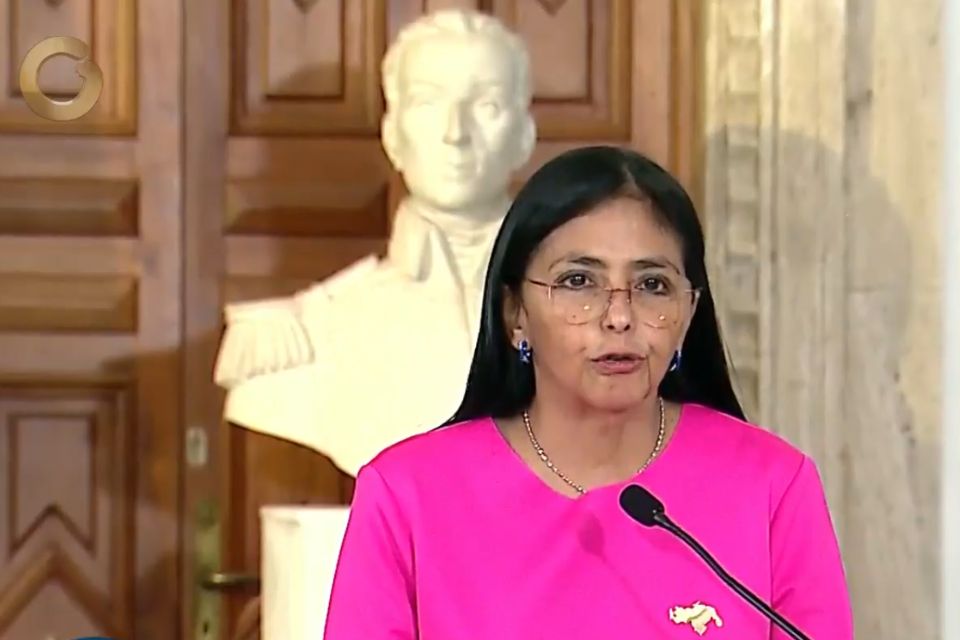
Delcy Rodríguez insisted that it is “fully demonstrated” that the Geneva Agreement, signed in 1966, is the only legal document that “forces Venezuela and Guyana to the resolution of the territorial controversy, through a practical, satisfactory and acceptable arrangement for both parties”
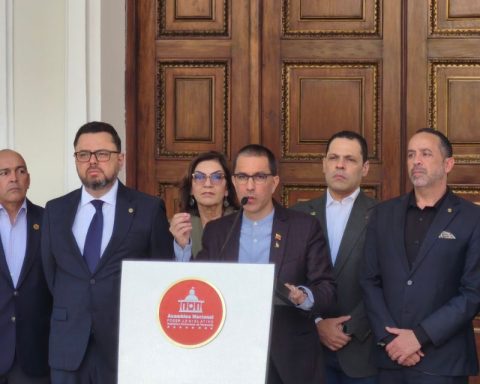
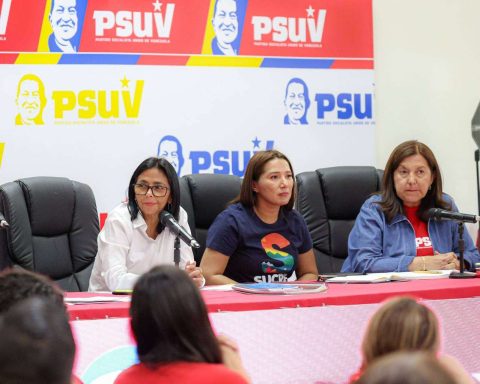
The vice president of the Republic, Delcy Rodríguez, informed that on the morning of this Monday, August 11, he was delivered before the International Court of Justice (CIJ) “a new document with the truth of Venezuela’s rights over the Guiana Estequiba” and reiterated: “We do not recognize under any circumstances the fraudulent judicial process initiated by Guyana or we will abide by any sentence that is issued in this matter.”
Rodríguez said that although the representatives of Venezuela delivered 50 volumes of the document before the ICJ, this action “does not imply the consent of Venezuela or the recognition of the court jurisdiction in the territorial controversy over the Guiana Estequiba, nor the decision it may adopt on this matter.”
Delcy Rodríguez said that Procurator Reinaldo Muñoz; The ambassador to the UN, Samuel Moncada, and the lawyers who defend the cause of Venezuela brought “more than enough” evidence of what they qualify has been a dispossession of the territory.
In that same sense, Delcy Rodríguez insisted that it is “fully demonstrated” that the Geneva Agreement, signed in 1966, is the only legal document that “forces Venezuela and Guyana to the resolution of the territorial controversy, through a practical, satisfactory and acceptable arrangement for both parties.”
Delcy Rodríguez added: “The Cooperative Republic of Guyana has the unavoidable obligation to fulfill its international duties and sit down to negotiate in good faith, peaceful and diplomatically with Venezuela, without resorting to the military threat or the use of force, using extra -regional powers to reissue the structural coercion exercised for centuries against Venezuela.”
For its part, Guyana is based on the 1899 arbitration award and is committed to resolving the territorial conflict through the open process in the ICJ.
*Journalism in Venezuela is exercised in a hostile environment for the press with dozens of legal instruments arranged for the punishment of the word, especially the laws “against hatred”, “against fascism” and “against blockade.” This content was written taking into consideration the threats and limits that, consequently, have been imposed on the dissemination of information from within the country.
Post views: 44