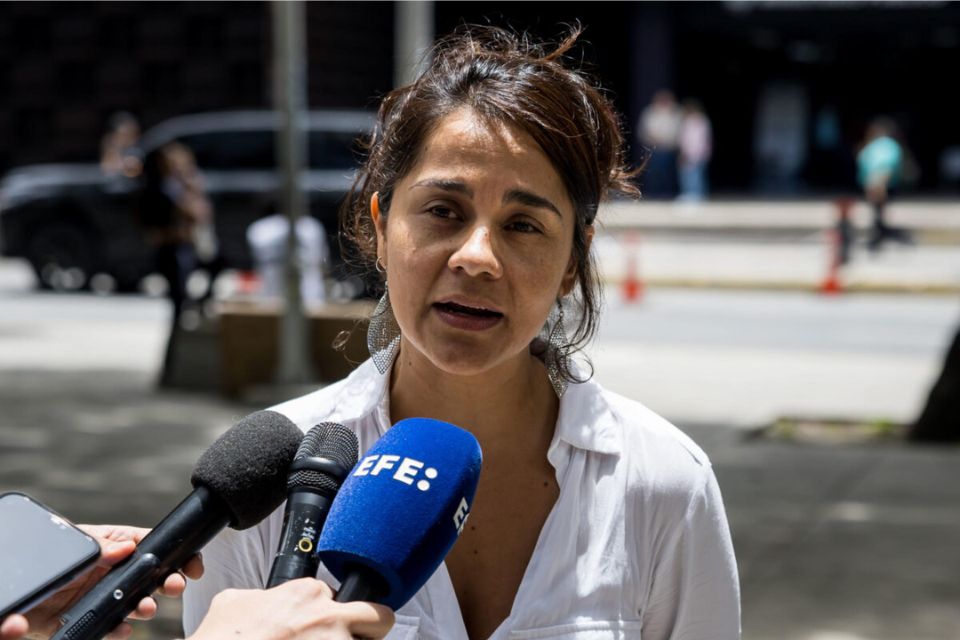
González took a tour of five detention centers assigned to the Criminal Investigation Division (DIP-PNB) this Sunday-in addition to those who have come since Friday-and in none he has obtained information
Antonio González, husband of Martha Lía Grajales, denounced this Sunday, August 10 that the emerging activist is in a situation of forced disappearance since her arrest on August 8.
González took a tour of five detention centers assigned to the Criminal Investigation Division (DIP-PNB) this Sunday-in addition to those who have come since Friday-and in none he has obtained information.
«The situation of Martha Lía is still disappearing. We call on the authorities to report on the whereabouts of Martha Lía, to allow him to communicate with his relatives, to allow him to appoint a trusted lawyer to inform the reasons why he is detained ».
Antonio González, husband of Martha Lía Grajales, denounces that after touring five seclusion centers assigned to the Division of Criminal Investigations (DIP-PNB) during this Sunday, the whereabouts of the activist of the activist of @Surgentddhh.
González reported that from the … pic.twitter.com/wpdewdmvqb
– Prova (@_provea) August 10, 2025
This Sunday, the organization provides that the Supreme Court of Justice (TSJ) did not receive the appeal of habeas corpus in favor of Grajales.
Alvarado warned that the refusal to receive habeas corpus can constitute a crime of obstruction to justice “being an arbitrary measure that prevents inquiring about the situation of a person who is at risk of cruel and inhuman treatment and the justice system refuses to act.” In addition, he said, it generates international responsibility because the Inter -American Convention against Forced Disappearance and the International Covenant on Civil and Political Rights are violated.
Martha Lía Grajales was arrested by members of the Bolivarian National Police (PNB) on the afternoon of this Friday, August 8 after participating in an activity in support of mothers of post -electoral political prisoners who were attacked in front of the Supreme Court of Justice.
*Journalism in Venezuela is exercised in a hostile environment for the press with dozens of legal instruments arranged for the punishment of the word, especially the laws “against hatred”, “against fascism” and “against blockade.” This content was written taking into consideration the threats and limits that, consequently, have been imposed on the dissemination of information from within the country.
Post views: 239