Havana/A traveler from Cuba was recently intercepted at the George Bush airport in Houston (Texas) with a scorpion poison bottle between their belongings. The substance, which the passenger declared as a destined for medical purposes, was seized by the US Customs and Border Protection (CBP), not fulfilling the legal requirements for its importation.
The incident was publicly reported by the CBP operations director in Houston, Jud Murdock, and also served as a warning on the entry of biological materials to the country. The bottle was classified as a “biological substance” subject to regulation and, according to the Federal Agency, lacked the necessary documentation. The institution called to the scorpion poison of “home remedy”, and asked travelers to leave such substances “at home.”
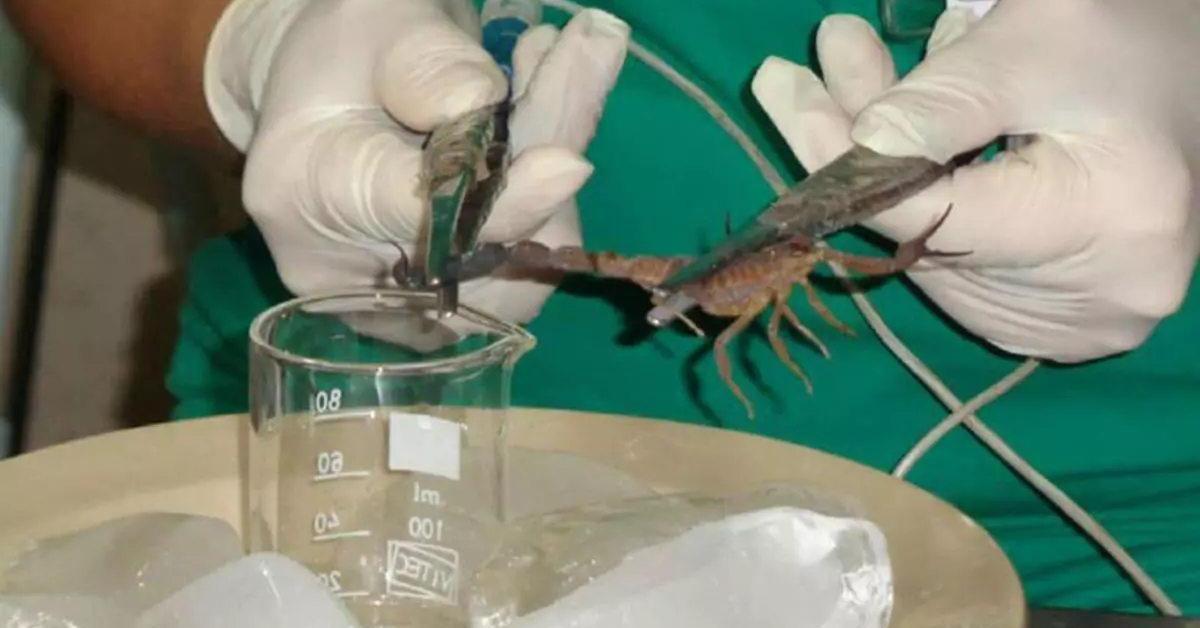
It is not the first time that the poison of Cuban blue scorpion generates headlines and controversies. Within the island, Labiofam markets Vidatox, a drug to which they came to attribute “proven antitumor, analgesic and anti -inflammatory efficacy,” although it is now sold as a homeopathic product – a pseudotherapy – based on water and alcohol solutions. It has also been sold and consumed outside Cuba as a kind of magical cure for chronic diseases, including cancer.
The regime even has facilities for foreign patients to be treated to the island for nothing negligible price of $ 1,200
The regime even has facilities for foreign patients to be treated to the island for the negligible price of $ 1,200 the initial package. This is the La Pradea International Center, founded by Fidel Castro in 1996 and located in Havana.
In February 2024, Biologist Ariel Portal, one of the former Labiofam researchers who, after breaking with the state entity, founded the company Lifescozul In Ecuador to continue marketing remedies based on the scorpion poison, he spoke with 14ymedio. Portal, convinced of the properties of the substance, created an alternative research model outside the island and denounced the scientific deficiencies of Vidatox compared to its own drug, Escozul (whose effectiveness has not been demonstrated either).
He also said that his company is disconnected from the regime of Havana, although he dodged the questions about how he extracted from Cuba the poison of the blue, endemic scorpions of the island, for his investigations.
What should be an alternative supplement, which is not even had concrete evidence of its effectiveness, has been put on an altar
The most thorny point of the matter, however, is not only in the validity or not of the treatment – either from Labiofam or Lifescozul – but in how scorpion has become a symbol of hope for many serious patients, especially in Cuba, where health resources are scarce and access to modern treatments is increasingly limited. What should be an alternative supplement, which is not even had concrete evidence of its effectiveness, has been put on an altar. Around the poison, within the island, even a black market has emerged where the price of one of these bottles can reach prohibitive figures.
Nor is there sufficient evidence that supports its effectiveness as an antitumor treatment, but the recent case at the Houston airport remembers that not everything that “cures” in Cuba passes the medical and scientific filters of the rest of the world. The fact that a federal authority such as the CBP labeled the substance as a “home remedy” is not a simple warning. The confiscation of the poison is a more episode in a broader story that has even resulted in the lives of people. Last year, in Mexico, a “naturist doctor” charged about $ 1,000 For several stuck jars to a patient ensuring that the drops were the definitive remedy. Shortly after the patient ended up dying and the improvised healer was taken to trial.