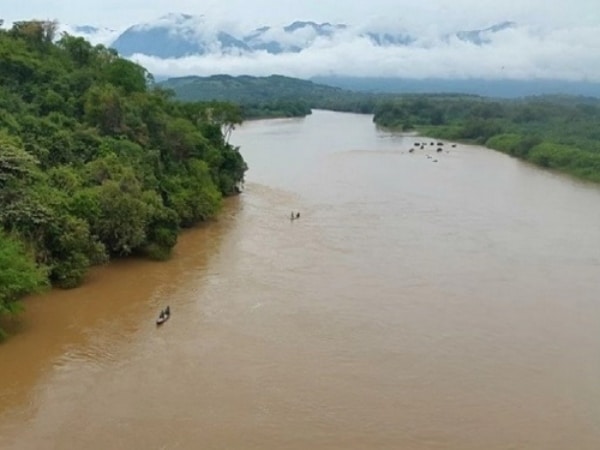
The second most important river in Colombia connects cultures, ecosystems and economies in its tour of Magdalena.
News Colombia.
The Cauca River, considered the main river artery of the Colombian West, is not only a geographical symbol, but also a vital pillar for millions of people, ecosystems and productive activities. After traveling hundreds of kilometers from birth, this tributary flows into the Magdalena River, the country’s water spine that supplies communities along its extensive journey.
Born in the Colombian massif, on the El Español hill, near the Páramo, it will support in the department of Cauca, about 3,200 meters above sea level, the Cauca River starts a parallel trip to the Western mountain range. Its 1,360 -kilometer route crosses nine departments from South to North: Cauca, Valle del Cauca, Quindío, Risaralda, Caldas, Antioquia, Córdoba, Sucre and Bolívar, to finally deliver its waters to the Magdalena River in the department of Bolívar.
In its transit, the river directly benefits 183 municipalities, offering essential environmental services that support the social and economic development of the region: drinking water supply, crop irrigation, river transport and ecological balance.
The upper basin: the heart of birth
According to the Ministry of Environment, in El Cauca, the high basin extends from the Colombian massif to the limits with the Cauca Valley, between the tops of the western and central mountain ranges. This area, which ranges from 4,700 meters from the Puracecé volcano to 950 meters in the alluvial valley, covers 7,368 km², equivalent to 24.15 % of the Caucano territory.
Throughout this section, 23 municipalities depend directly on its waters, highlighting Popayán, Puerto Tejada and Santander de Quilichao as those with the highest population concentration.
The passage through the Valle del Cauca and the life in Cali
In the Valle del Cauca, the upper basin of the Cauca River is delimited by the disrupted river, to the south, and the Timba River, to the north, until it reaches the boundaries with Risaralda. In this journey, there is Cali, the largest city on the banks of the river, which depends largely on its waters: more than three quarters of the Caleña population is supplied with drinking water from Cauca.
Beyond its water importance, the river is part of the cultural and landscape identity of the region, becoming a reference for the economy, gastronomy, tourism and history of its riverside communities.
You can also read: