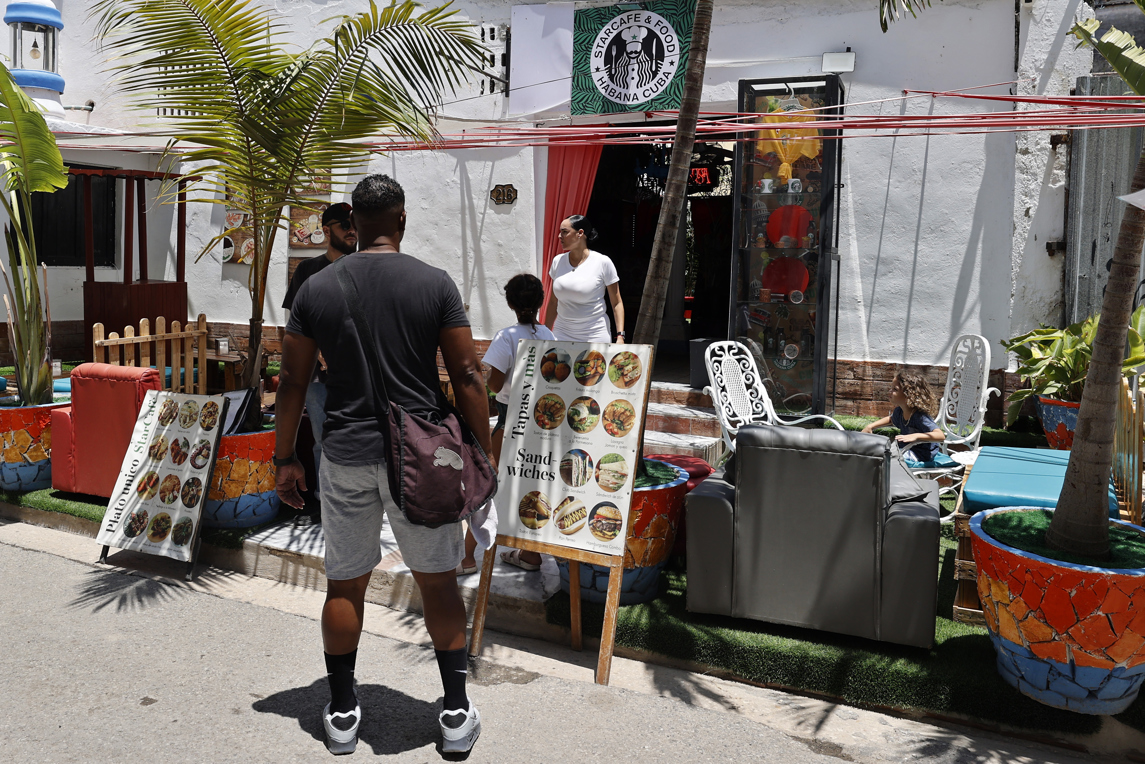
The Barista Melisa García, dressed in a green mandil with the logo of a wavy hair siren in the center, delivers a frappuccino to the client. The glass is named after the latter, but still called it aloud before giving it to him.
The scene is universally distinguishable. But, at least in this case, it is different: it is not one of the many Starbucks coffee shops scattered throughout the world, but of the Starcafé, in the heart of Havana.
Cuban music is heard in the background instead of jazz, cold sandwiches of the counter are replaced by menu food and there are no ‘hipsters’ occupying all seats with their Apple brand laptops.
Although at first glance it is much harder to notice those differences, which makes the site striking is that in the Caribbean island there are no US franchises.
Despite this peculiarity, in recent years they have begun to flourish private establishments inspired by the most famous US chains or with flagship dishes of this type of establishments in their letters.
The Starcafé, inaugurated in 2023 and located in front of the iconic medium winery, is perhaps one of the best known. It is also the most “instagrameable,” as García tells him.
“The videos have been quite viralized (…) know us for the ‘reels’. Many young people, who are influencers, come and make reviews of both cafes and meals,” he says with a contagious smile.
For anyone from the workers of the cafeteria, the tromba of Havaneros under 35 years of age who hastened from the first moment to become ‘selfi’ was surprised with their Starbucks style glass, as their relatives who live in Florida do.
The proliferation of this type of establishments was unthinkable just a few years ago. But Garcia argues that, “like everything, times change.”
Openings
Since the triumph of the revolution in 1959, but, above all, after Washington began applying sanctions against the island, the possibility that great US chains were established in the country was diluted.
However, the arrival of the mobile internet in 2018 and the rise of the private sector – SMEs, prohibited in 1968, were allowed again in 2021 – have led to a shy, although more evident every day, openness towards global trends in the socialist country. Above all, with the participation in some business of businessmen between the United States and Cuba.
Digitized menu and virtual assistant in Habanero Restaurant, which does not believe in electric cuts
Although it has been a change over low heat, in recent years it has ceased to be an anomaly, for example, seeing people disguised in October for “Halloween”, with houses and establishments with phantasmagoric ornaments, or spotting more than one Santa Claus in December.
This opening, after decades of isolation, has raised some ampoules in the most hermetic sectors of the ruling party, who have criticized these trends in the state press. “A practice of cultural colonization outside our idiosyncrasy,” the newspaper titled once Granma
Different experience
Starcafé is not the only site inspired by global brands. In 2024 they also opened a KFC -style restaurant in Havana, with a touch screen to ask for fried chicken combos with soda and french fries, and a hamburger called Burger Queen.
“For the Cuban it is difficult to leave Cuba. And since we have the Internet, we have had much more access to social networks and to consume things outside. And that always creates curiosity (…) in a certain way, this type of businesses that are inspired, to a greater or lesser extent, of those places, offer a possibility to the Cuban to live that experience,” says Andy García, a partner of Burger Queen.
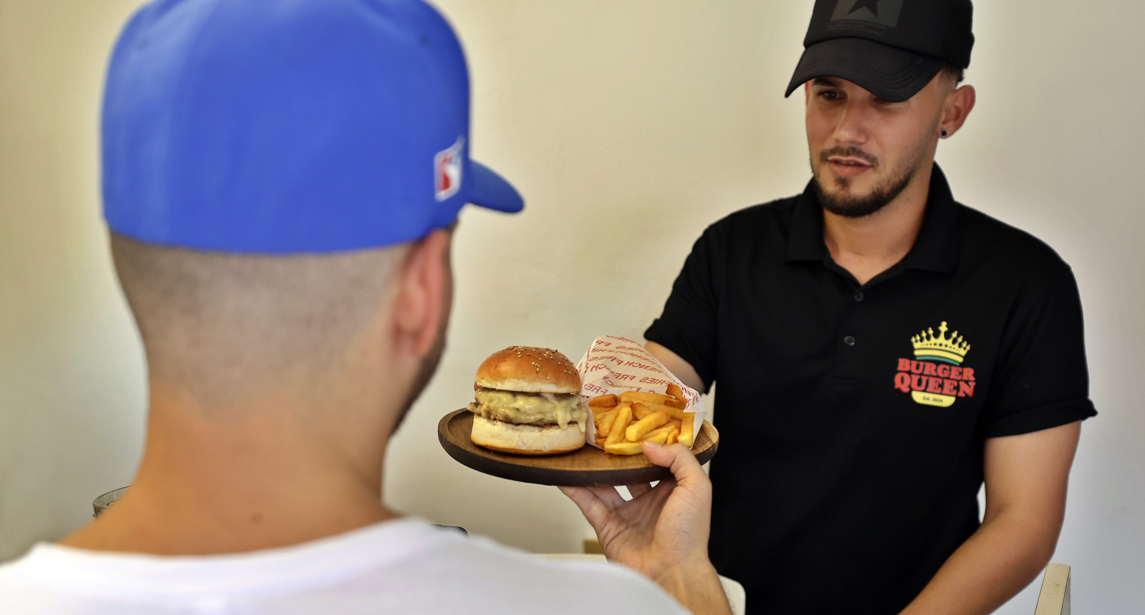
This fast food restaurant started from a simple but effective idea: “We think about what is in the world. What do you think of a hamburger? Of course, is Burguer King,” he says.
Melisa García and Andy García agree that there is also a “aspirational” factor in some of the clients who approach these businesses.
Burger Queen’s partner adds that the change in the gastronomic offer is also something that has made sites like yours win the attention of diners, hungry for a menu other than traditional Cuban food.
Auto: Juan Carlos Espinosa.