The US Commission for international religious freedom described Cuba last March as a “country of particular concern.”
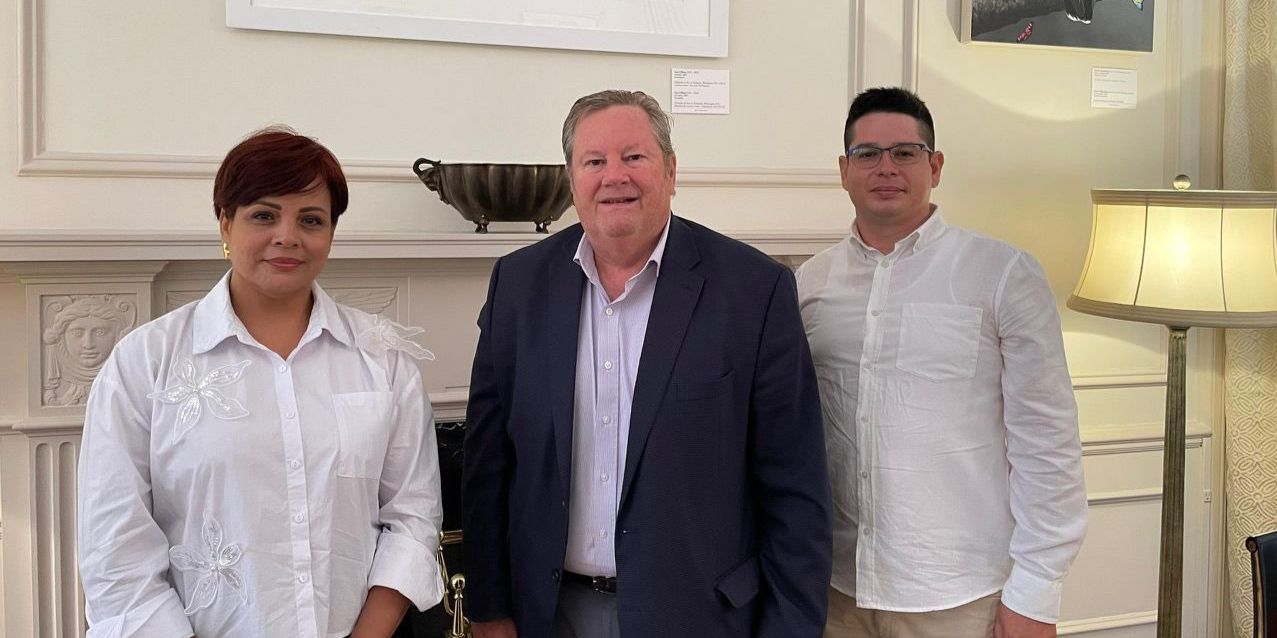
Lima, Peru – The United States Business Manager in Cuba, Mike Hammer, held a meeting this Thursday with Cuban shepherds Vivian Barrero and Joel Cárdenas of the Christian Alliance of Cuba.
In the meeting, he reports The US embassy On the island, both parties talked about the challenges facing the Christian community in the Caribbean country and about the importance of religious freedom.
“The work they do in their communities to support the most vulnerable is admirable,” said the diplomatic headquarters.
At the end of last March, the United States Commission for International Religious Freedom (USCIRF) recommended in Your annual 2025 report That Cuba is again designated as a “country of particular concern” (CPC) due to “systematic, continuous and atrocious violations of religious freedom”, occurred during the year 2024.
The Hammer meeting with religious leaders on the island reinforces its clear public position in favor of fundamental freedoms in Cuba, an attitude that since its arrival in Havana in 2023 has motivated the unpaid of the Castro regime.
In his management, he has denounced arbitrary arrests, repression against independent activists and journalists, and has advocated respect for the rights of expression, meeting and movement, in a political context marked by the social and economic crisis.
According to the USCirf, the Cuban government has reinforced during the last year its repressive legal framework with new laws such as the Citizenship Law, approved in July 2024, which allows to revoke Cuban citizens to individuals who reside abroad and perform acts “contrary to the political, economic or social interests of the country”. This ambiguous definition exposes people involved in peaceful religious activities to the risk of losing their nationality.
Last October the Social Communication Law also entered into force, which severely restricts The right to freedom of opinion and expression, including religious expressions considered by the Government as false or incompatible with its ideology. These laws complement other existing ones, such as Decree-Law 370 and the Criminal Code, which criminalize religious activities seen as criticism of the Government.
The report also highlights that “registration decisions [de grupos religiosos] They are usually arbitrary and discriminatory ”, and that membership or association with unregistered religious groups is considered a crime. As a consequence,“ members of unregistered religious groups, such as the Yoruba Free Association, regularly face interrogations, arrests, prison threats under false charges and confiscation of properties ”.