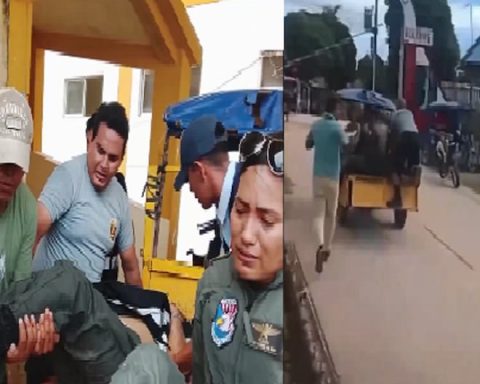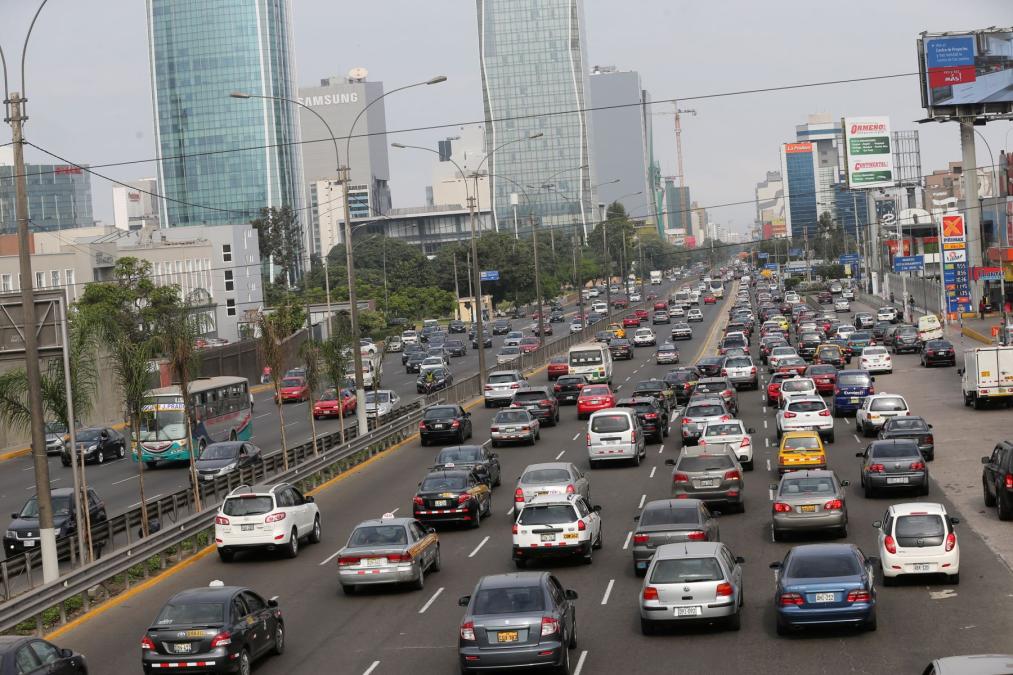
Traffic accidents have become increasingly common and have enled up to many families. The Manager of Economic Studies of the Automotive Association of Peru (AAP), Alberto Morisaki, said that this situation is a consequence of the lack of road culture and education, and control of vehicles that circulate in the country.
The other problem is the age of the automotive park. Thus, while vehicles that circulate in Peru have an average of 14.5 years, in Chile they only reach 11 years.
Morisaki explained that to this it is added that in the national territory about 10% of vehicles should leave traffic each year, but currently only 1.2% do it.
“An old car park generates accidents and high levels of pollution, and that in turn diseases. These cars also take away market competitiveness and generate high levels of congestion. We see how people waste time in their vehicles that do not advance,” he added.
In that line, the AAP representative said that the sale of new cars in Peru is low for the number of inhabitants in the country. Thus, while here 90 vehicles are placed per 1,000 people, in Chile the figure amounts to 334 units, in Mexico 290, in Ecuador 145, in Colombia 130 and in Bolivia 115.
“We are in the tail of the region, and if you look for the cities, the thing does not change. In Lima, for example, 216 vehicles are sold per 1,000 inhabitants, but in Bogotá 280, in Buenos Aires 500 and in Mexico City 270,” he said.
Urgent actions
Alberto Morisaki considered that it is necessary that actions be taken beyond operations that work after a media accident is registered.
“We must boost scrap. In other countries, a scrap bonus is granted that is even greater when the vehicle that is going to buy works with less polluting fuels or is electric,” he said.
In addition, he questioned the payment of the vehicle tax that, he said, discourages the purchase of new cars, as applied for three years, counted from the following year to which the first registration was made in the Vehicle Property Registry. “Who should be charged. Those who have old vehicles that contaminate,” he added.
Something that should also change, as he said, is the collection of the selective consumption tax (ISC) for new vehicles that more expensive prices and limits imports.
“We also need to improve infrastructure (tracks and roads) and road education that is a disaster in the country. It is necessary that technical inspections work and not like now where you pay to go through what we see so many vehicles that pollute circulating,” he said.
Recommended video