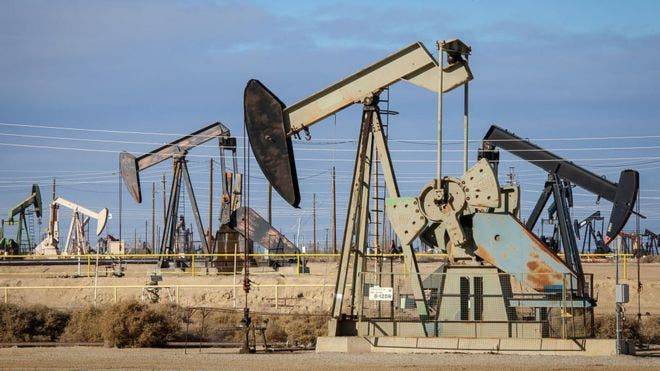
Vienna.- The OPEC+alliance, led by Saudi and Russia Arabia, has decided this Sunday to increase its crude oil offer by 547,000 barrels per day (BD) as of September 1, which completes the restitution of 2.2 million barrels per day (MBD) that withdrew from the market in 2023.
The decision, in line with what was expected in the markets, has been adopted in a virtual meeting in which the ministers of the Saudi Arabia, Russia, Iraq, Iraq, United Arab Emirates, Kuwait, Kazakhstan, Algeria and Oman participated, reported the organization of oil export countries (OPEC) in a statement.
“In view of the stability of world economic perspectives and the solid current foundations of the market, reflected in the low oil inventories (…), the eight participating countries will implement a production adjustment of 547,000 barrels per day in September 2025, based on the level of production required for August 2025,” specifies the note.
The group will meet again on September 7 to assess whether they adjust production levels again.
With the increased increase today, the sixth consecutive monthly, the aforementioned ‘petroestados’ will have reversed between April and September the volunteer pumping cuts that they voluntarily applied in 2023 and that add up to 2.2 MBD, additional to other reductions that total 3.66 MBD and in principle govern until the end of 2026.
The initial plan was to return those 2.2 MBD gradually, within a year and a half, but after a moderate increase in April, they accelerated the process, so that they will have completed it only in six months, despite risking thereby a reduction of “black gold.”
Analysts see a turn in the OPEP+ strategy in favor of recovering market share assuming lower prices, instead of policy of underpinning prices through strong extraction cuts.
This Sunday’s decision is what was expected in the markets, where the perspective of the increase was reflected in a marked decrease in oil prices on Friday, since it states the fears of an excess of the oil supply.
The price of the Brent crude barrel closed the last session of the week at $ 69.67, 3.94 % -2.86 dollars- less than at the end of Thursday, while that of Texas intermediate oil (WTI) retreated 2.79 %, up to $ 67.33.
The cheaper has also been led by the commercial tensions unleashed by the tariff policy of the US President, Donald Trump, and the persistent doubts about the future of the demand for fossil fuels.
All this in a context of great nervousness in the midst of the uncertainty created by multiple geopolitical conflicts, which has resulted in enormous price volatility this year.
Founded in 1960 in Baghdad by Saudi Arabia, Venezuela, Iran, Iraq, and Kuwait, OPEC is today composed of twelve countries. In addition to the five founders, the United Arab Emirates, Algeria, Nigeria, Libya, Equatorial Guinea, Congo and Gabon also belong to it.
In 2016, after verifying that he could not stop the fall of the ‘petroprecios’ unleashed by the rise of the schista oil of the United States, he agreed an agreement to cooperate with another ten countries, namely Russia, Mexico, Kazakhstan, Azerbaijan, Oman, Bahrain, Brunei, Malaysia, Sudan and South Sudan, creating the OPEP+alliance.
For several years, Venezuela, Iran and Libya are exonerated from the commitment to adjust their production due to the involuntary limitations that face their oil industries for various causes, from sanctions to armed conflicts.