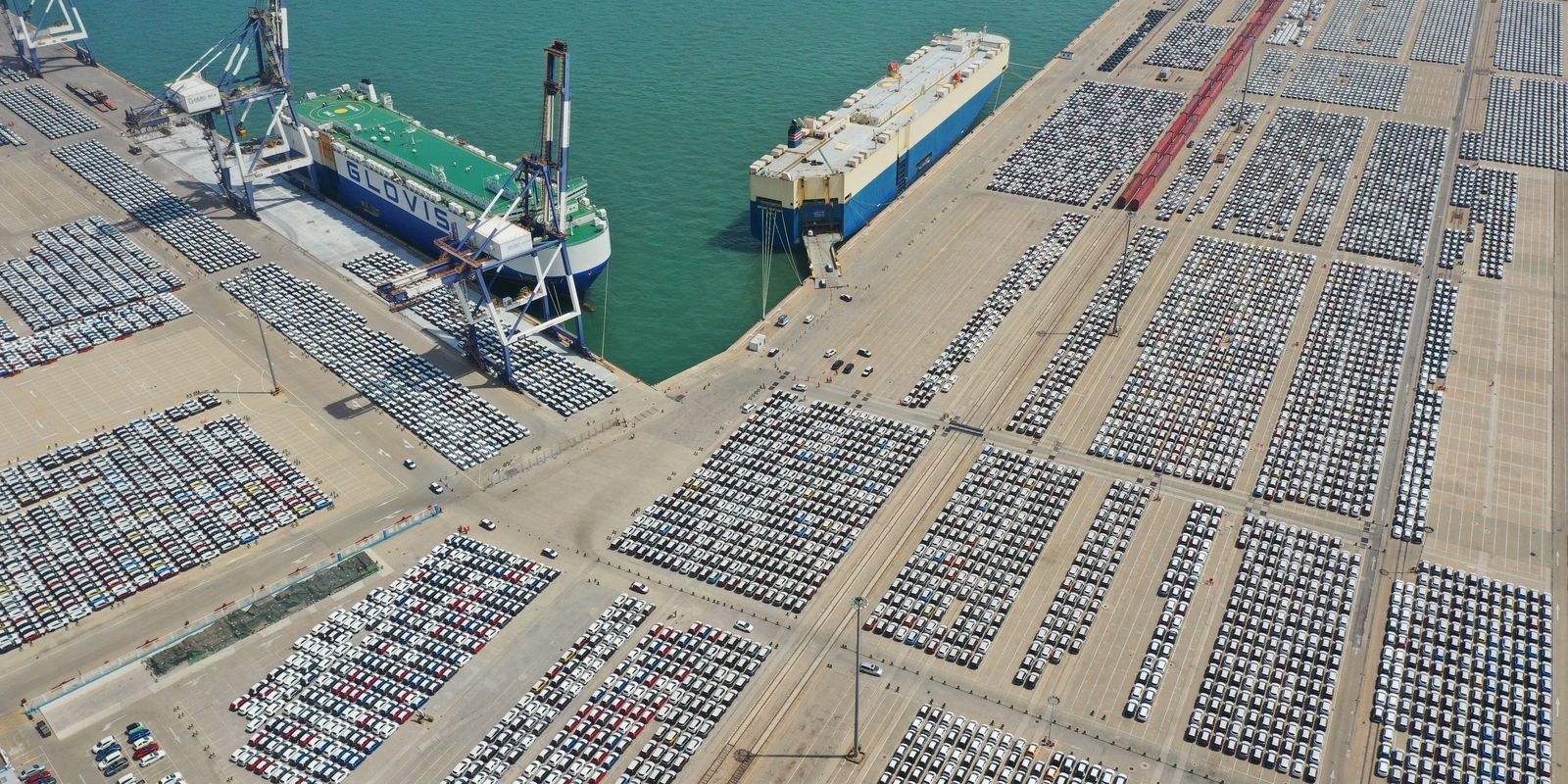
The impact of increased tariffs Importing in the United States from this Wednesday (6) is still starting to draw and causes uncertainty for workers and entrepreneurs who work with the more than three thousand items that will be overwhelmed.
While immediate strategies such as inventory management, accelerated time shipments or production decrease draw the first reactions, one way is to think of new destinations for production. The search for export markets, however, has no immediate results and requires specific preparations.
This journal of companies to new destinations has a whole public-private support ecosystem, with ministries such as Development, Industry, Commerce and Services (MDIC), Agriculture and Livestock (MAPA), the Brazilian Export and Investment Promotion Agency (Apexbrasil), Sebrae, Trade Associations and Trade Promotion Entities.
In a press conference this morning, Jorge Viana, president of Apex, spoke of this joint role. The agency already supports 2,600 of the 9,000 national companies that export to the United States. For him, there will be changes, “this has no return”, with the new strategies of the companies.
“Sectors such as honey producers will need to receive urgent support because the only export destination of these small farmers today is the United States. We will include them in all support policies,” Viana explained during the press conference.
According to Viana, this support should be announced soon, directly by the Presidency of the Republic. It is expected to have elements similar to those of emergency support to companies affected by floods in Rio Grande do Sul, in 2024.
Apex will also open an office in Washington to negotiate directly with the US government. This negotiation is added to the dialogue of consular services, which already operate in the name of Brazil, and the direct pressure of local companies.
“This 50% rate has no commercial motivation, it comes from the performance of political groups. What I hope it happens is that, with the entry of tariffs, this taxation materializes and affects the consumer there. Then comes Apex in the work of creating new market alternatives, for Brazilian companies and products that have the United States as a market,” Viana said, to whom strong integration between productive chains should count on negotiations.
APEX should expand its performance in the diversification of suppliers. “The sectors will help us with the knowledge they have. The whole world is doing this, realizing the instability with these measures,” he added.
Apexbrasil data show that between January and March this year, Brazil exported US $ 77.3 billion in goods, less than US $ 77.7 billion from the same period of 2024. The commercial balance signed positively at $ 10 billion. The main exported products were gross oil, soy, iron ore and green coffee, especially the exports of industrialized goods, which were discharged in the period, including items such as machines and electrical appliances.
Regarding the main destination countries of Brazilian exports, we highlight China (US $ 19.8 billion), the European Union (US $ 11.1 billion), the United States (US $ 9.7 billion) and Mercosur (US $ 5.8 billion), especially Argentina, with an increase of 51%.
Diplomacy
The diplomatic path to reducing the rates applied by the United States is still as an option, as the Brazilian government disclosed. The Trump Government retreat upon exempt a list of 700 productsLast week shows that there is also some opening on the part of the US country.
“Flexibility of tariffs is a positive step, and Brazil should take this opportunity to diversify its exports and reduce its dependence on the American market. With a strategic and diplomatic approach, Brazil can minimize negative impacts on tariffs and strengthen its position on international trade. In this context, it is important to highlight that dialogue and negotiations become the best options to avoid a climb of commercial tensions,” Explained lawyer Raphael Jadão, partner of RMM Advogados, who acts with arbitration and resolution of commercial disputes.
Another important element in this crisis is in the concentration of Brazilian partnerships. Some analysts consider that Brazil’s exports have a high rate of concentration. 50% are concentrated in five countries (China, USA, Argentina, the Netherlands and Spain), among 237 business partners. 12% only for the United States.
“This brings us a warning and concern signal. Because as we have had a challenge with the US right now, we can have a little time with China, which represents almost a quarter of everything the country sends abroad. And there is no buyer to replace another so quickly. So, those companies, for example, that export beef to the United States, which is one of the products that Trump has not put on the exception list and that will have 40% tax More. It already had the 10% of April, 40%, ie 50% more than last year. logistics company.
Alternative markets
The search for new markets involves cultural elements, business partnerships and compliance with phytosanitary bureaucracy measures and proof of origin.
This process involves a step by step with some variations compared to each country and merchandise. According to Meurer, in a summary way, after finalizing the negotiation the exporter will produce the goods. With it ready to issue an international documentation, which is the commercial invoice and the Packing List, which is the business documents of the cargo, presented to the importer. This will hire international freight and then the merchandise goes to customs, where it will go through the customs supervision process, go through registration with the integrated foreign trade system and can undergo face -to -face inspection, which is done in part of the cargo. Rates and the inspections are collected in the customs, the goods follow abroad.
“The time that is taken depends on the type of product being exported, those who need the consent of specific organs, such as medicines, take longer, already clothing, such as there is no specific inspection body the time is more fast,” summarizes Meurer.
Specific conditions of markets, such as concern for environmental or cultural certifications, can also mean opportunities. Brazil is one of the major bird exporters to Muslim countries, for example, due to an adaptation of more than a decade to production according to Halal certification, which involves slaughter with different characteristics and respecting precepts of that religion.
“For example, Brazil maintains good trade relations with Middle East countries, such as Saudi Arabia and Dubai. However, exports to these regions often require halal certification, local language labeling, specific packaging and, in some cases, product adaptations, such as differentiated meat cuts. This customization is fundamental to success in these markets. They require similar attention to contract negotiation. When analyzing the fishing market, for example, it is crucial to consider global demand, the types of fish available in Brazil and their respective levels of world consumption. The United States are a important market for Brazilian fish exports. Challenges, “explained Stefânia Ladeira, Foreign Trade Specialist and Product Manager at Saygo Comex, a company specializing in export logistics for the foreign market.
The expert points out that adaptation has very variable deadlines and details, considering elements such as world production and the ability to meet international demand and perceiving production gaps, either for end products or inputs. “The identification and understanding of supply and demand dynamics are crucial for the establishment of new contracts,” he told the Brazil agency.
International trade agreements are also crucial to understanding these opportunities. The recent years have been increased by economic complementation agreements, including old partners such as China and Japan, as well as countries from Africa, Oceania, Central America and the Caribbean. “In these countries there is mutual tariff reduction, but each country has its operational characteristic and legal definition of how products need to be registered for importation, except for the European Union that is a customs union and all countries follow the same procedure for import and export,” explains lawyer Diego Joaquim, specialist in customs law.