Latin America and the Caribbean will star 2025 with moderate growth except in two exceptions: Cuba and Hait. They will be, according to the Economic Commission for Latin America and the Caribbean (ECLAC), the only national economies in the region that will close next year in recession.
According to him document Economic Study of Latin America and the Caribbean, 2025: Mobilization of resources for development financingGDP growth in 2024 and projections for 2025 and 2026 place the island only in front of Haiti in the region.
The United Nations organism analysis provides that the GDP of Cuba contracts 1.5 % and that of Haiti 2.3 %, figures that place both nations as opposite poles against the regional average of growth, which the agency places at 2.2 % by 2025.
The trend contrasts with the positive projections for countries such as Argentina, Panama and Paraguay, which will lead regional growth, while most of the remaining countries will see more discreet advances in their economies.
The table appears as Argentine pointers (5 %), Panama (4.2 %) and Paraguay (4 %), followed by the Dominican Republic (3.7 %), Guatemala (3.6 %) and Costa Rica (3.5 %), according to the report presented on Tuesday.
A more moderate growth is projected for Honduras (3.2 %), Nicaragua (3.1 %), Peru (3.1 %), Uruguay (2.8 %), Colombia (2.5 %), Chile (2.4 %), El Salvador (2.4 %), Brazil (2.3 %) and Venezuela (2 %).
More lagging, although still with growth figures, Bolivia (1.5 %), Ecuador (1.5 %) and Mexico (0.3 %) are listed.
The electrical affectation exceeds 2000 MW due to breakdowns and limitations in the generation
A lust of crisis and without signals of improvements
The Cuban economy is going through its worst time since the 90s, when they implored the Soviet Union and the countries of the communist bloc.
The setback announced by ECLAC by 2025 is just the most recent chapter of a persistent crisis that led the country to experience an accumulated fall of more than 11 % of its GDP between 2019 and 2024.
The Cuban Minister of Economy, Joaquín Alonso, has publicly recognized the magnitude of the crisis, which has manifested in severe currency deficits, chronic shortage of food, medicines and fuels, and dramatic reductions in key sectors such as agriculture and industry.
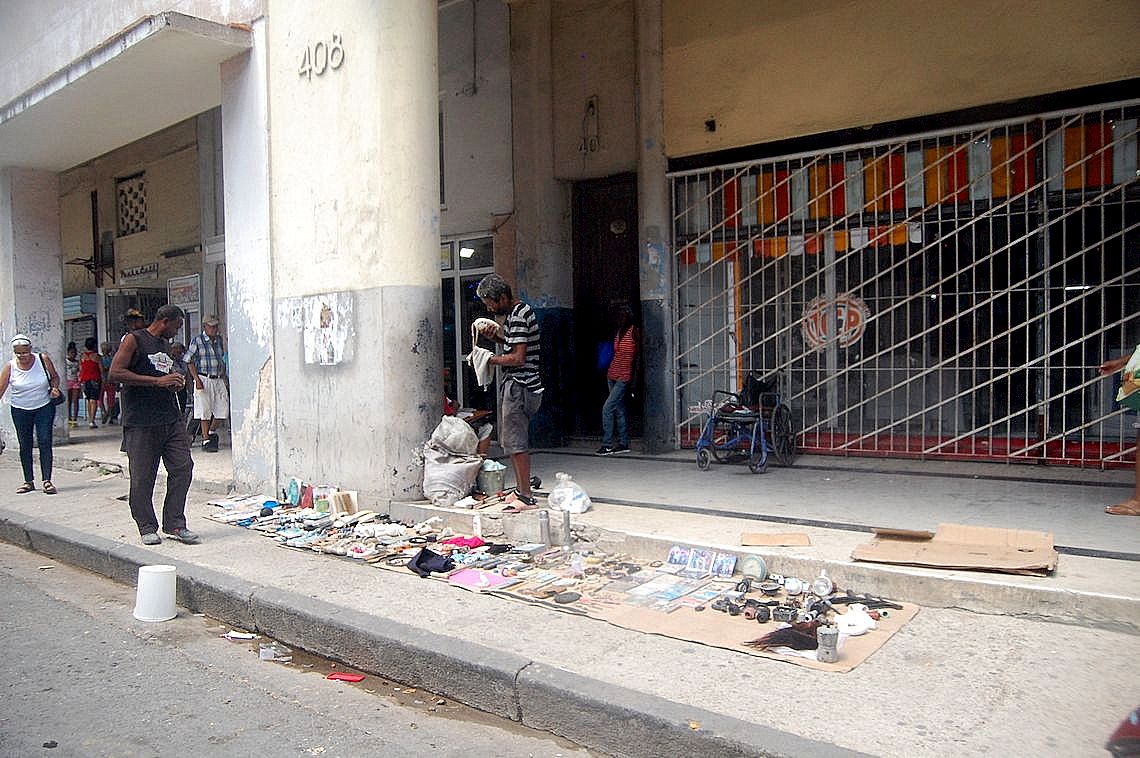
The most visible coup for the population is the deterioration of everyday life: long bundles of blackouts that exceed 20 hours in numerous zones, both city and rural, public transport increasingly poor, lack of basic supplies and unbridled inflation that cars in days the purchasing power of state employees and pensioners and retirees.
Meanwhile, exports and tourism revenues have fallen loudly, while the external debt has become unsustainable and mass emigration reached one million Cubans in just three years.
Chronic inflation and impoverishment
The ECLAC report qualifies Cuba as one of the five countries with “chronic inflation” in the region – taking third place – forced its exclusion from regional averages.
In 2024, the increase in consumer price index was 30 %, and although the Government projects a moderation towards 25-30 % in 2025, independent analysts question the credibility of official figures and indicate that real inflation has maintained a trend between 20 and 40 % in recent months.
In parallel, the social impact is severe, since the abysmal unbalance between salaries and prices, together with shortages, have drastically reduced the purchase capacity of households, leading to unpublished poverty indicators. To this is added the naturalization of poverty, an informal market proliferation and the perception of an economic stagnation without a horizon of immediate improvement.
The embargo and other structural factors participate in economic deterioration
The economic embargo of the United States, which dates from 1962, remains one of the most cited elements by the Cuban government to explain national deterioration.
According to official estimates and international organizations, the embargo has meant losses exceeding 130 billion dollars since its imposition.
According to Figures The Foreign Minister Bruno Rodríguez, exhibited in 2024, the sanctions of Washington represent an approximate affectation of more than 421 million dollars per month, more than 13.8 million dollars daily, and more than 575 683 dollars in damages for each hour of blocking.
American punitive actions limit the ability of the island to access international financing, technological resources and markets, and contribute to more expensive and interrupt the supply of essential goods such as food, medical supplies and energy.
However, independent analysts and multilateral organizations emphasize that the causes of the crisis transcend the embargo.
They point to structural distortions of the Cuban economic model: the lack of foreign investment, limited private participation, low productivity and excessive centralization in decision making.
The collapse of strategic alliances and the partial withdrawal of support from former partners such as Russia and Venezuela have aggravated the country’s external vulnerability, increasing their exposure to global crises and internal clashes.
Close first semester with 25 % tourists less than in the same period of 2024
While ECLAC foresees for 2026 just 0.1 % growth – which is equivalent to stagnation – Havana bets on a gradual takeoff supported by tourism recovery and greater efficiency in basic industries.
However, experts agree that without structural adjustments and incentives to the private sector, the desired recovery will hardly materialize.
Cuban economist Pedro Monreal He pointed out in its account that the ECLACINO study “forecasts two additional years of economic hardship for Cuba: recession with 1.5 % drop in 2025 and stagnation with nyphimous growth of 0.1 % in 2026. Only Haiti would be worse.”
In turn, the expert added that “another interesting data of the ECLAC report is that Cuba is classified as” country with chronic inflation “(the third highest in 2024), that is, among the five countries with such bad data that were excluded from the calculation of regional and subregional averages.”
Apart from the Cuban and Haitian collapse, the Latin American and Caribbean region faces its own “low growth trap”, in the words of ECLAC, so the body urges to accelerate the mobilization of internal resources, fiscal transformation and greater international cooperation
If you want to avoid a lost new decade.