Havana/This August 5, 31 years after the Maleconazo, the Cuban regime activated its repressive apparatus with home arrests, arrests and internet cuts against journalists, activists and relatives of political prisoners. On the anniversary of the historic popular protests, which occurred on the Havana coast, the police pattern of other sensitive dates for the regime is repeated, such as July 11 and December 10.
The day has begun with complaints from different parts of the island, mainly between human rights activists and reporters linked to independent media.
Escobar remained stopped for almost two hours at the Aguilera station, where he was questioned
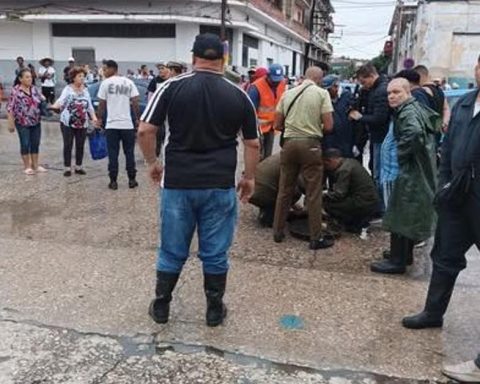
Internet access in writing 14ymedio, located In the neighborhood again, he was cut early. The journalist Reinaldo Escobar was arrested by state security agents when he walked near Berta Soler’s house, leader of the Blanco ladies in Lawton. The headquarters of the organization dawned with a state security siege.
Escobar remained detained for almost two hours at the nearby Aguilera Station, where he was interrogated by political police officers.
The journalist Camila Acosta has also lived again what has already become repressive routine. “Once again, I am besieged by the Police and State Security,” denounced on social networksaccompanying his publication with a photograph of the civil agent stationed in front of his house: “Although it looks like a common criminal, he is an official state security. He presented himself last week for another operation and told me that he could not leave, without showing legal order or justification. If he did, they would stop me and impute me some common crime,” Acosta concluded.
“Although it looks like a common criminal, he is an official State Security”
Another of the whites of this day has been Manuel Cuesta Morúa, activist, political scientist and vice president of the Council for the Democratic Transition in Cuba, who also dawned in his home in Havana. The organization that represents denounced that this act constitutes A new episode Systematic harassment, and recalled that last July Moorúa and activist María Mercedes Benítez were victims of similar actions.
“The arbitrary home arrest policy attentive directly against fundamental rights such as freedom of movement,” warns the organization, which alerted the international community about the “attempt to silence one of the most recognized voices of Cuban civic activism.”
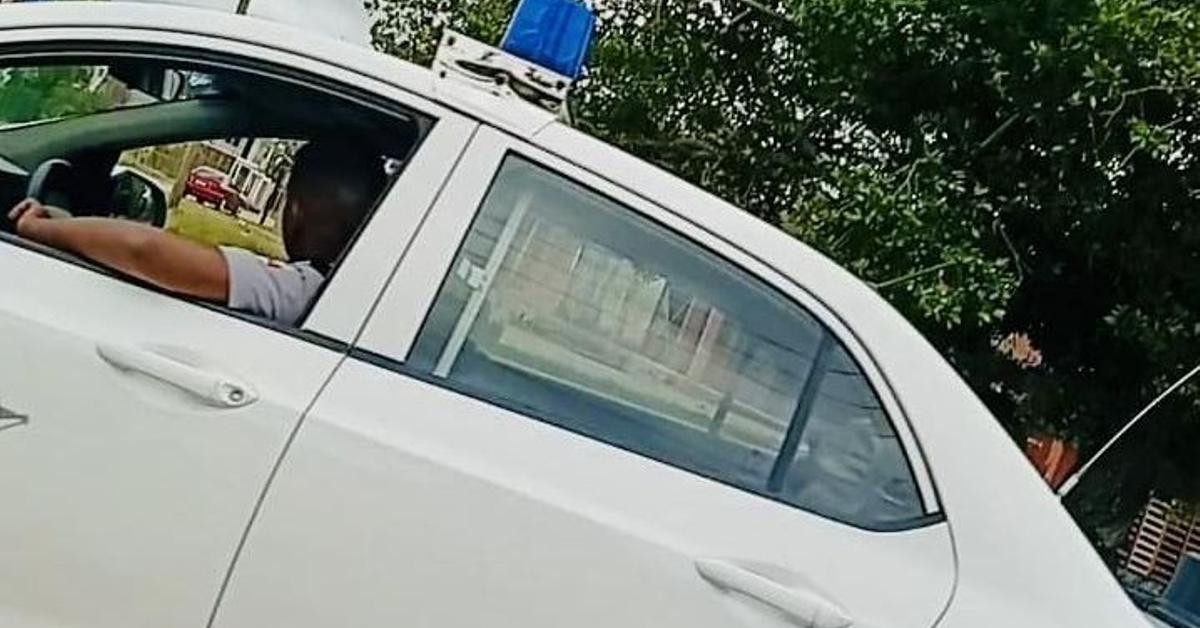
Wilber Aguilar Bravo, father of the political and state prisoner of July 11, 2021 (11j), Walnier Luis, also denounced surveillance in front of his home. Aguilar accompanied its publication With an image of the patrol parked at the door. “Defending children is living. There is no law in this world that prohibits defending a child. Walnier’s freedom is worth more than my life,” he wrote.
The first massive and spontaneous protest that the Cuban regime has lived since 1959
The Maleconazo of August 5, 1994 was the first massive and spontaneous protest that the Cuban regime has lived since 1959. Hundreds of people, fed up with hunger, the long blackouts and the despair caused by the so -called special period, threw themselves into the streets of Havana with shouts of “freedom” and “below Fidel.” Although the protest was contained quickly and repression, it marked a before and after in the popular imaginary: the wall of fear had begun to crack.
Three decades later, the causes of the social outbreak are not only maintained, but have aggravated. Food scarcity, energy collapse, mass exodus and brutal repression after 11J have shown that the Cuban model is not renewed or improved, but is entrenched. And that fear, increasingly, changes side.
In 2021, tens of thousands of Cubans again went to the streets in more than 40 locations in the country. The repression was more fierce than in 1994, with thousands of arrested, hundreds of convictions (many for “sedition”), and a judicial system turned into a political instrument. But the message was clear: citizenship has lost their fear.
In July 2025, Cuba lived the most repressive month of the year, with at least 357 documented shares
The repression unleashed on Tuesday does not happen in a vacuum. It arrives in the middle of one of the worst socioeconomic crises of Cuban history, with daily blackouts, uncontrolled inflation, chronic shortage, isolated protests and a historical exodus that exceeds that of the 80s and 90s.
In July 2025, Cuba lived the most repressive month of the year, with at least 357 documented actions against the civilian population, according to the Cuban Observatory of Human Rights. Of these, 68 were arbitrary arrests and 289 corresponded to other forms of repression, such as raids, harassment, threats and police citations, especially in provinces such as Havana, Matanzas, Villa Clara and Granma.
The regime intensified its repressive actions to avoid the participation of opponents in the celebration of July 4 in the residence of the US diplomatic chief in Havana and to prevent commemorations for the fourth anniversary of the 11J protests. This Tuesday, the story is repeated.