“Indigenous massacre in Tacuarí surpasses Salsipuedes,” says Historian
In an interview with Professor Marcos Hernández he revealed that, on the coast of Tacuarí, near the passage zone of Los Carros in Cerro Largo, a slaughter of indigenous people took place even greater than the sadly famous Salsipuedes.
The historian emphasizes that this event, which occurred in 1751, involved the extermination of entire indigenous communities, identified as the Genoaas-Minuanes; by the colonizers. Hernández’s research sheds light on a dark and little known chapter in local history, and will culminate with a book in the near future.
“Indigenous massacre in Tacuarí surpasses Salsipuedes”, Historian Marcos Hernández affirms
It is a brutal and silenced episode of oriental history begins to come to light thanks to the work of the historian and teacher Marcos Hernández, who states that, in 1751, in the passage zone of the cars, on the ban “It was much more violent than Salsipuedes was.”
In dialogue with the professional, Hernández remarked that what happened was not simply a battle, but an act of extermination: “The historical title is Battle of the Tacuarí, but I consider that it was more than a battle: a massacre, a slaughter of indigenous people by the first colonizers,” assured.
The investigation – which will be published soon in a book – exposes a planned military offensive and executed with brutal efficacy by a contingent sent from Montevideo and Buenos Aires. “We are talking about 1751, and Montevideo was founded in 1724. That is, the founding process started in 1724 and culminated in 1730. Colonia del Sacramento was already founded in 1680, but what was known as the Eastern Band was very little populated,” Contextualizes the researcher.
The conflict broke out after an indigenous attack on one of the King’s caleras in the jurisdiction of Montevideo. “Everything that was at that time belonged to the king, the fields, everything was from the king. These Indians attacked the calera, killed some people and was the drop that spilled the glass. The governor of Buenos Aires gave the order to exterminate them, which was received with great approval by the people of Montevideo,” story.
In response, a contingent of approximately 220 men was quickly organized. “Montevideo was a small little town at that time, but more or less most men in a position to walk and combat joined that little army that came out in search of the natives. They came out with six horses per man, very well ammunition,” detailed.
The persecution culminated in the current department of Cerro Largo. “Finally they end up here in Cerro Largo, on the coast of Tacuarí. It was a fair Hernández pointed out.
What followed, he says, was an act of extermination without contemplation: “On the shores of the Tacuarí is that that, in quotes, battle, which was nothing other than a killing, a very barbaric massacre, very violent,” affirmed. “The order was to exterminate them, literally. Then they killed the children, killed the women, killed the elders. All passed to slaughter or chuses, as it was said at the time, with spears or with bayonets.”
The professor recalls a particularly cruel episode within this operation: the capture of an indigenous chieftain that served as an explorer of his community. “They captured a firefighter ‘cacique – the one who pumps, the one who spies. Hernández revealed.
According to the researcher, these types of facts deeply marked the beginnings of colonization in the Eastern Band, where relations between native and colonizing peoples were markedly violent from the beginning. “From the first moment of the arrival of the settlers or colonizers to these lands there were rispideces with the indigenous people, because unlike the indigenous people of other regions of America, ours were quite warm. And in those rispideces there were deaths of colonizers and also retaliate against the indigenous people,” explained.
GUENOA-MINUANAS
The community that inhabited this area at the time of the massacre belonged to the Guenoa-Minuan, a group that wandered for what today are the departments of Cerro Largo, thirty-three and Maldonado. Their way of life and resistance to the progress of the colonizers made them blank of this campaign.
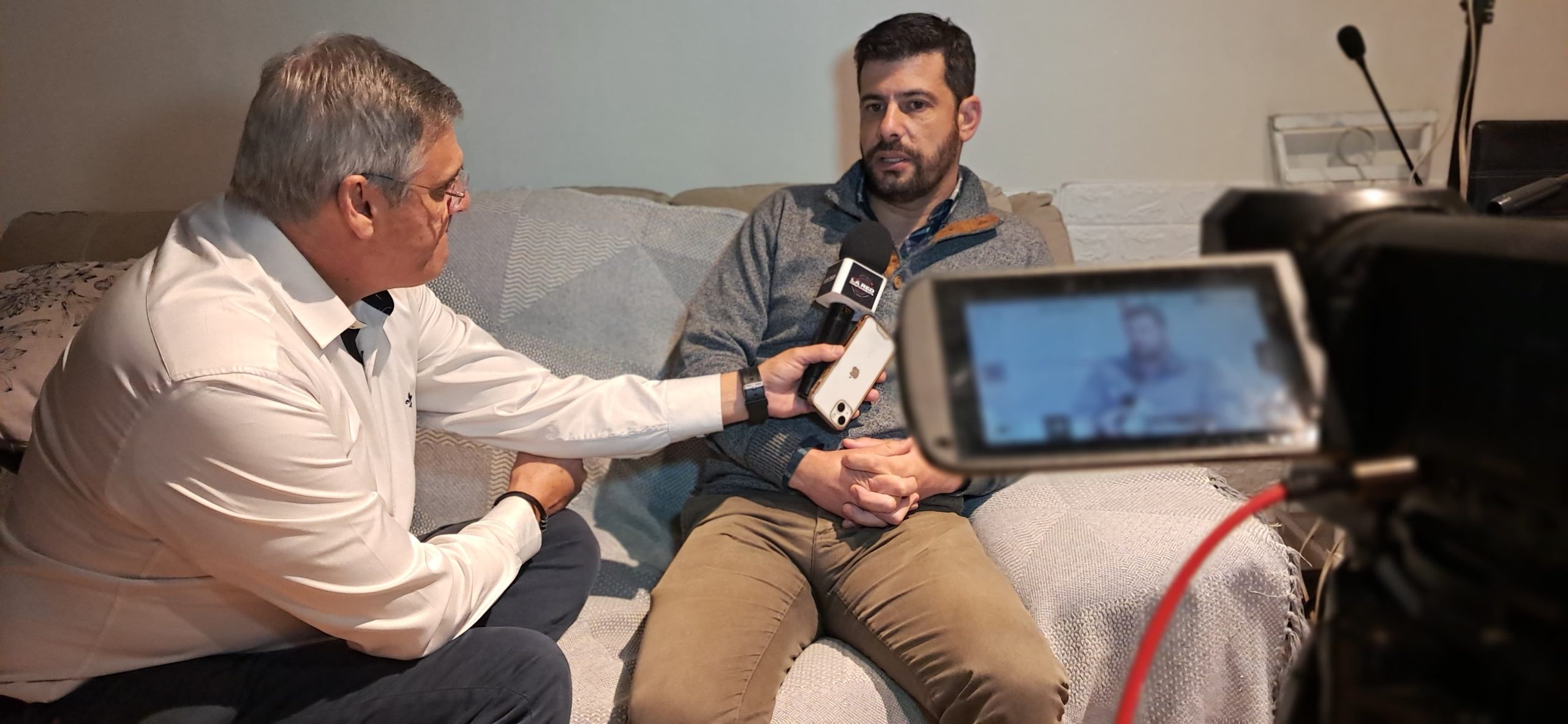
From his home in Cerro Largo, where he received the journalists of the weekly Search, Hernández showed part of the land where the facts would have taken place and explained that his investigation is based on official documents of the time, including military records and indirect testimonies of colonizers.
“The eastern band, for a better administrative organization, was divided into three jurisdictions: that of Montevideo, which was the area where today is the city and the farms; the dependent of Buenos Aires, which went from the Limit of Montevideo to the Black River, that is, the territory that we inhabit; and finally the jurisdiction of Yapeyú”, Hernández said. The episode in Tacuarí took place on the border between the jurisdictions of Montevideo and Buenos Aires, which, according to the historian, motivated a joint response of both colonial authorities.
The case once again debates the official narrative about the treatment of native peoples in the current Uruguayan territory. While the Salsipuedes massacre – used in 1831 under the command of Fructuoso Rivera – has been recognized as one of the most bloody facts against indigenous people in the country’s history, Hernández maintains that what happened eighty years before in Tacuarí was even more serious in terms of magnitude and cruelty.
“For you to have an idea, it was much more violent than sarsipuedes,” insisted. Hernández’s work not only recovers a forgotten fragment of local history, but it challenges idealized visions of the origins of the Republic and forces a critical rereading of foundational processes.
His next book, even without a publication date, will collect in depth the details of this fact that, until now, remained hidden in the margins of the archives and on the banks of the Tacuarí, where, according to Hernández, according to Hernández, “A massacre was committed that must be recognized as such, out of respect for the memory of the peoples that were exterminated.”