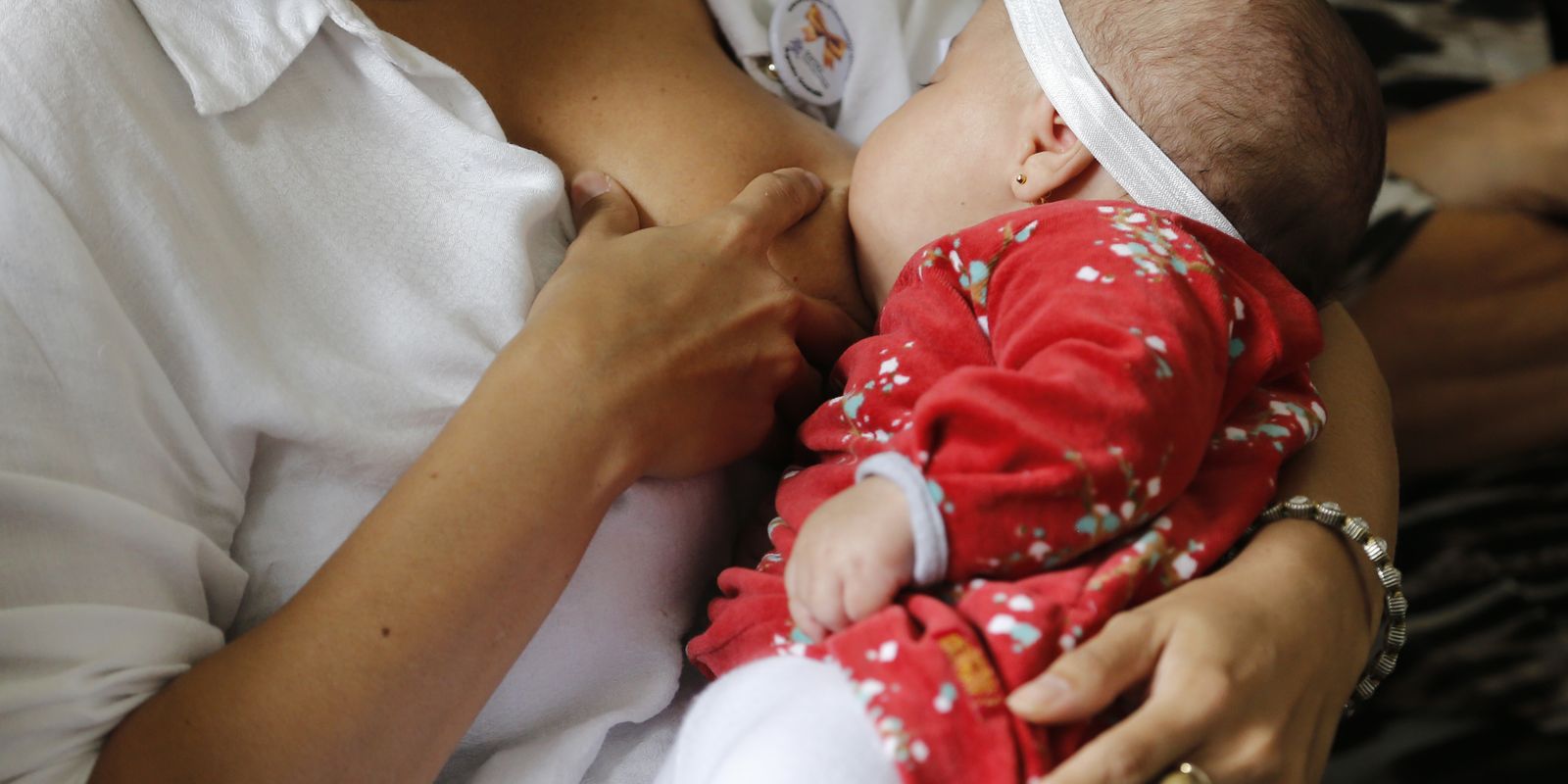
This year’s campaign of the World Breastfeeding Week (SMAM) highlights the importance of breastfeeding support for the construction of a more sustainable environment and the reduction of environmental impacts associated with artificial food.
The Oswaldo Cruz Foundation (Fiocruz) points out that breastfeeding is a natural, renewable and environmentally secure practice that does not generate waste, it does not depend on polluting industrial chains and contributes to reducing the climate impact caused by the production of children’s formulas.
“When we promote and protect breastfeeding we are investing in care systems that respect the environment, preserve life and reinforce the global public health commitments. We need to join efforts to ensure continuous and effective breastfeeding support through the construction of solid and lasting support networks,” says the coordinator of the Human Milk Banks Network (RBLH), João Aprigio Guerra de Almeida.
Human milk network
RBLH, articulated through Fiocruz, is one of the most significant initiatives for international public health cooperation, contributing significantly to the reduction of neonatal mortality on a global scale. The network also acts actively in international technical cooperation projects, aimed at strengthening neonatal public health policies.
This model of solidarity cooperation, developed within the Unified Health System (SUS), has become a global reference in social innovation, equity and public health.
Incidence in Brazil
The campaign started on the last day 1. In 2024, the 234 Human Milk Banks and the 249 network collection stations performed more than 2.3 million assets to nourishes across the country. The national survey also points out 460.5 thousand group calls and 281,300 home visits, reinforcing the capillarity and the importance of service in confrontation to early weaning. All calls are free and integrate SUS actions.
In addition to the reception and individualized or group orientation, the network also coordinates and stimulates the donation of human milk, an essential practice for the survival of newborns admitted to neonatal intensive (use) intensive units, especially low weight premature. In 2024, 245,800 liters of human milk were donated to human milk banks in all regions of Brazil.
Quality of life
Promoting breastfeeding is to guarantee rights and quality of life. For the baby, the benefits include the reduction of the incidence of respiratory and gastrointestinal infections, as well as lower risk of metabolic and cardiovascular diseases.
For women, breastfeeding favors postpartum recovery and helps reduce the risk of breast cancer, among other conditions.