The revelations about the former president of CNE Tibisay Lucena arise while the smartmatic co -founder Roger Piñate faces criminal charges related to a bribery scheme of one million dollars in the Philippines
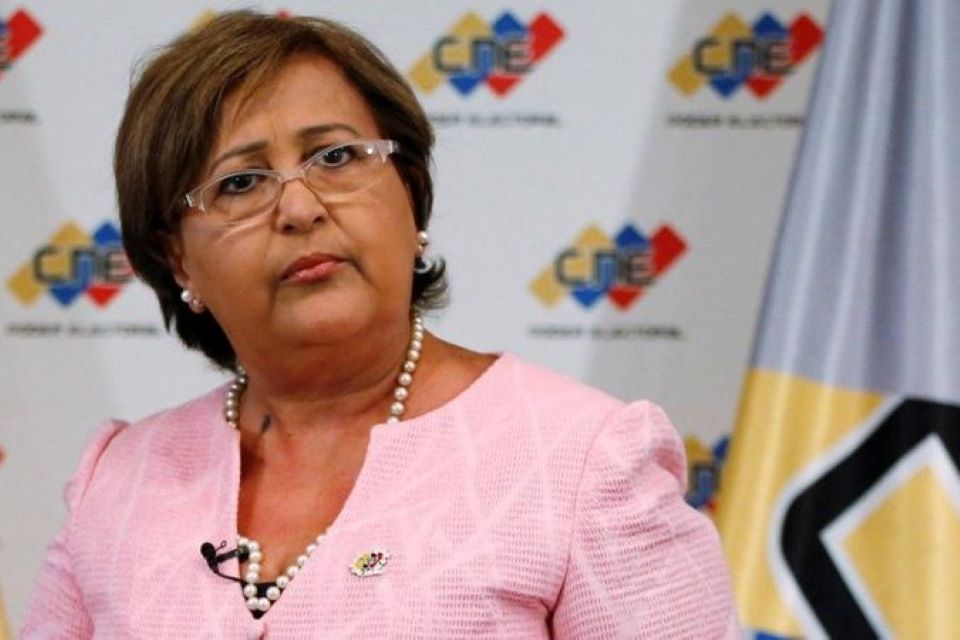
Federal prosecutors in southern Florida claim that the Venezuelan-American technological executive Roger Piñate-a confounder of the Smartmatic electoral technology company-secretly bribed the then president of the National Electoral Council of Venezuela, Tibisay Lucena Ramírez, transferring control of a luxury residence in Caracas in exchange for political favors.
According to prosecutors, the alleged bribe was aimed at obtaining Lucena’s help in a commercial dispute with the Venezuelan government, after the accusation of Smartmatic in August 2017 that Nicolás Maduro committed fraud in the election of the constituent, which led the company to cease its operations in the country.
The accusation, detailed in a new judicial presentation, plans to be used by Federal Miami prosecutors as evidence against Piñate, who is accused of multiple positions of money laundering and bribery related to contracts in the Philippines.
The Prosecutor’s Office plans to present photographs, testimonies of witnesses and encrypted text messages to demonstrate that Piñate, 49, orchestrated the transfer of a upper middle class house with Pool to Lucena Ramírez between April and July 2019.
Prosecutors affirm that housing was offered as a bribe to obtain a favorable treatment of Lucena, who, as president of the National Electoral Council of Venezuela, had broad authority over the controversial electoral system of the country and its private suppliers.
In response to the accusations, Smartmatic said that the prosecution’s statement is “full of misrepresents.” «As an example, government mention to an alleged bribery in Venezuela in 2019 is completely detached from reality. Smartmatic ceased all its operations in Venezuela in August 2017 after denouncing the government and has never tried to do business there, ”the company to Miami Herald told an email. «We have always operated legally, ethically and transparently. We support our history of two decades of integrity ».
According to the judicial documentation, the residence in the center of the alleged scheme was controlled by Piñate through a foreign ghost company. Prosecutors say he worked with others – including the “individual 1”, an unidentified coconspirator mentioned in a broader accusation – to hide the origin of the property and prevent the transaction from being tracked to him or to Smartmatic.
Text messages between the group, according to prosecutors, show that they planned to transfer the title of property through a third to hide the true purpose of the transaction: a bribe. Finally, Lucena assumed the control of the property, which prosecutors say was compensation for their support to resolve a commercial dispute between Smartmatic and the Venezuelan government.
Judicial documents cite rule 404 (b) of the federal rules of evidence, which allows the introduction of evidence of other crimes, illicit acts or actions not accused in the accusation if they help prove the reason, intention or a pattern of conduct.
The Department of Justice argues that the alleged bribery in Caracas sheds light on piñate methods and supports the broader statement that systematically used illicit payments to obtain or maintain contracts with electoral officials in several countries.
The alleged bribe to Lucena occurred for a turbulent period in smartmatic relations with Venezuela. In 2017, a public break between the company and the Electoral Council on the results of the constituent elections arose.
Smartmatic accused Maduro’s regime of manipulating participation figures, inflating them at least one million votes, and announced that it would cease its operations in the country.
From 2004 to 2017, Smartmatic had been one of the most important technological partners of the Venezuelan regime, providing voting machines, electoral software and logistical support through contracts for tens of millions of dollars. Piñate, as operations director and then president, played a key role in the management of the company’s relationship with the leadership of the Electoral Council.
Revelations about Lucena arise while Piñate faces criminal charges related to a bribery scheme of one million dollars in the Philippines. In August 2024, a Federal Grand Jury in the South District of Florida accused Piñate and Jorge Miguel Vásquez, 62, a resident of Davie, Florida, to conspire to bribe Juan Andrés Donato Bautista, former president of the Philippine Electoral Commission.
To read the full note, do Click here
*Journalism in Venezuela is exercised in a hostile environment for the press with dozens of legal instruments arranged for the punishment of the word, especially the laws “against hatred”, “against fascism” and “against blockade.” This content was written taking into consideration the threats and limits that, consequently, have been imposed on the dissemination of information from within the country.
Post views: 460