Argentine investor will buy school
Visturio SA has pledged to cover backward payments to producers, corresponding to the milk delivered in April, May and June, an estimated amount of about US $ 300,000. In addition, a fundamental point of the agreement is the maintenance of the current work workforce of approximately 30 employees, a measure that seeks to cushion the social impact of this difficult transition for the local dairy industry and the regional economy of Cerro Largo.
Given this unsustainable reality, the Coleme Producers Assembly has approved the sale of its industrial plant to Visturio SA, a Uruguayan firm with Argentine capitals, led by Osvaldo Spataro. The agreement, far from being a monetary transaction for the infrastructure, stipulates that there will not be a direct payment for the plant.
However, Visturio will assume all the significant financial liabilities accumulated by Coleme, which are estimated at around US $ 800,000 with the Republic Bank, in addition to debts with private banks, suppliers and carriers, which represents a crucial relief for the cooperative.
Workers
According to search, beyond the absorption of debts, the commitment of the Argentine investor, Osvaldo Spataro, includes vital measures for the maintenance of the chain. Visturio SA has pledged to cover backward payments to producers, corresponding to the milk delivered in April, May and June, an estimated amount of about US $ 300,000. In addition, a fundamental point of the agreement is the maintenance of the current work workforce of approximately 30 employees, a measure that seeks to cushion the social impact of this difficult transition for the local dairy industry and the regional economy of Cerro Largo.
Discarded options and the desperate previous situation
Before reaching this agreement with Visturio SA, Coleme explored other alternatives to avoid bankruptcy. Among them, a creditors contest was evaluated, an option that would inevitably have meant the total and definitive closure of the plant. It was also considered a possible absorption by Conaprole, the Uruguayan dairy giant, but this possibility was discarded, especially after the recent closure of his own plant in Rivera. The internal situation of Coleme was critical: the cooperative financed its operations with funds initially destined for suppliers, leaving the producers indebted and without basic supplies, which further erodes the already precarious local tambory activity.
The future of dairy production in the Uruguayan northeastern
If this agreement is completed, whose closure is expected between 30 and 50 days, the Colleme plant is expected to receive a new investment injection that allows the production to reactivate and rebuild the hit of the Uruguayan northeast dairy chain. However, certain doubts persist about the ability of the plant to operate at full capacity and sustainably if a real and significant impulse is not achieved to the remaining drums. This rescue is vital for dairy producers of the Cerro Largo basin and to ensure the continuity of a milk tradition of almost a century in the region.
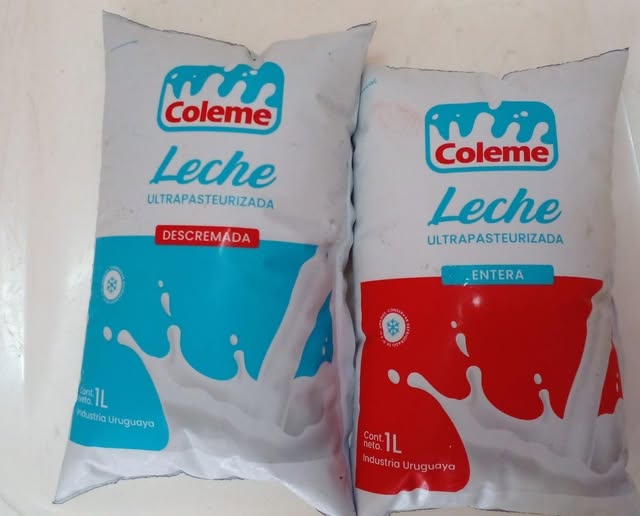
The Melo dairy cooperative (Coleme), founded in 1932 and an icon in the department of Cerro Largo, Uruguay, is in a critical situation that has led to a transcendental decision. After a decade of sustained fall in the number of producers and in productivity, currently only 14 drums send milk to the plant, with daily volumes of just 11,000 to 12,000 liters. This figure is notoriously insufficient to sustain an industrial structure that employs about 30 people, which forced the cooperative to seek an urgent exit to avoid its definitive closure.