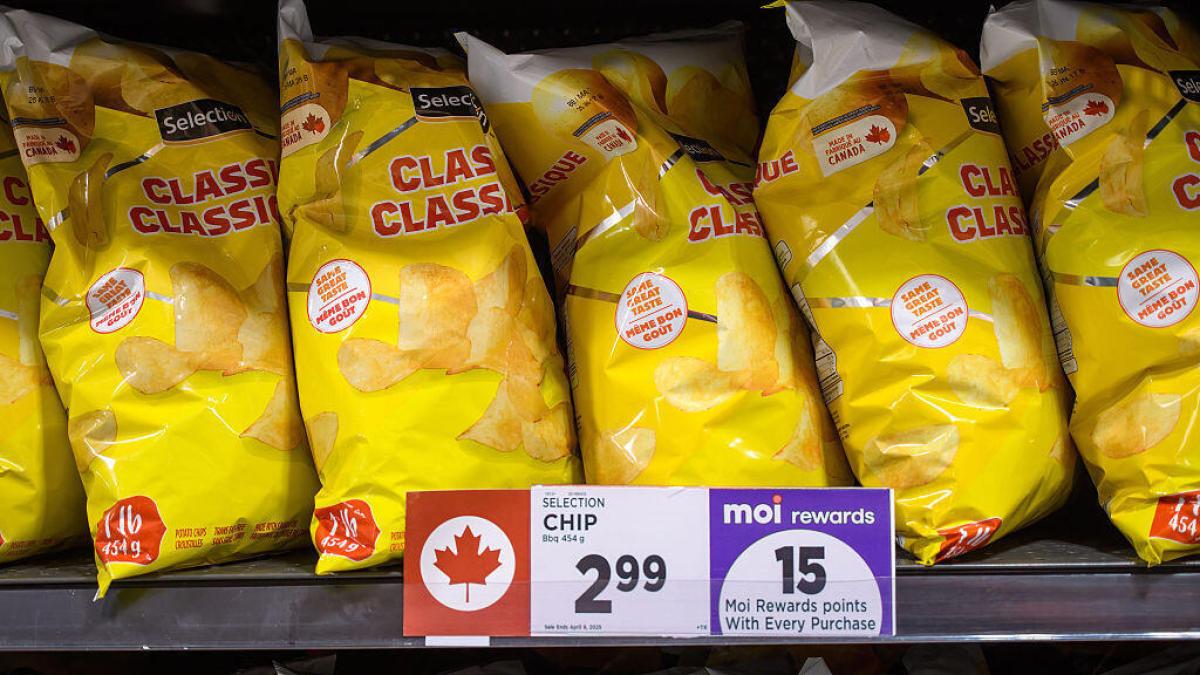
It is the Canada symbol: the Arce, “maple” in English. And it is precisely what has inspired the name of a Canadian commercial practice not necessarily very honest: “The Maple Washing.”
By Nafi Alibert, RFI correspondent in Montreal
The “Maple Washing” is a deceptive form of marketing, based on the same principle as the “greenwashing” practiced by many companies. The objective: make believe that a product is ecological, when in reality it is not. In this new commercial strategy that is practiced in Canada, foreign products are passed through Canadian products.
A new honest marketing form
The objective is the same: sell more a higher price, as Sylvain Charlebois, specialist in the agri -food industry at the University of Dalhouseie explains. “In French it is called ‘Érablanchiment’, that is,” Maple Washing. ”
In essence, it is a practice that allows retailers to use patriotic symbols to inflate prices unfairly. For example, apply an ARCE sheet to products that are not necessarily from Canada. I have seen a case of apples labeled as Canadian apples, but in the apples it was indicated: “Produce of USA”, that is, from the United States. “The trick is not always very elaborate.
And sometimes it is even more evident: an arce leaf or white and red flags is hit in oranges or almonds, when, of course, they do not grow in Canada. Prices are inflated and nobody is expected to read.
The surveillance of Canadians before deceptive labels
But they did not have the sense of observation of Canadian consumers, who pay more attention to labels and are sensitive to the origin of the products, especially in the context of the commercial war with the United States. The origin of the products becomes an economic and political issue.
Although American giants such as Walmart continue to dominate retail trade in Canada, more and more Canadians boycott US products in supermarkets. Therefore, the “Made in Canada” has become an argument of gold marketing. Almost half of Canadians are willing to pay more for “local” products.
But consumers are beginning to realize the deception and react. Complaints have shot at the Canadian Food Inspection Agency.
From organized fraud
The offending brands have been called to order, since the law requires that the labels be truthful: they must allow consumers to make informed decisions. These companies have apologized alleging that it was an error.
But today, six months after the launch of the “Buy Canadian” movement, Sylvain Charlebois no longer believes it is a simple accident. He denounces a systemic problem, even a hoax that resembles fraud.