The prices gap between Uruguay and Brazil grows: what products are more expensive
The Economic Observatory of the UCU Salto Campus presented a price difference report on the Artigas and Quaraí border.
The Economic Observatory of the Salto Campus of the Catholic University of Uruguay (UCU) disclosed a new report on its border price indicator (IPF), which measures the price difference on the Frontera de Artigas and Quaraí.
After analyzing a total of 57 products – nokle and non -alcoholic beverages; alcoholic and tobacco drinks; clothing and footwear; Home products; transport; school articles; Meals outside the home, and diverse goods – and relieve its prices, the observatory said that the gap between Uruguay and Brazil is 67%.
“The indicator shows that, considering the set of selected goods and their weights in the spending of household consumption, that is, the employment pattern observed, acquiring the basket in Artigas is 67.36% more expensive than in Quaraí,” says the report.
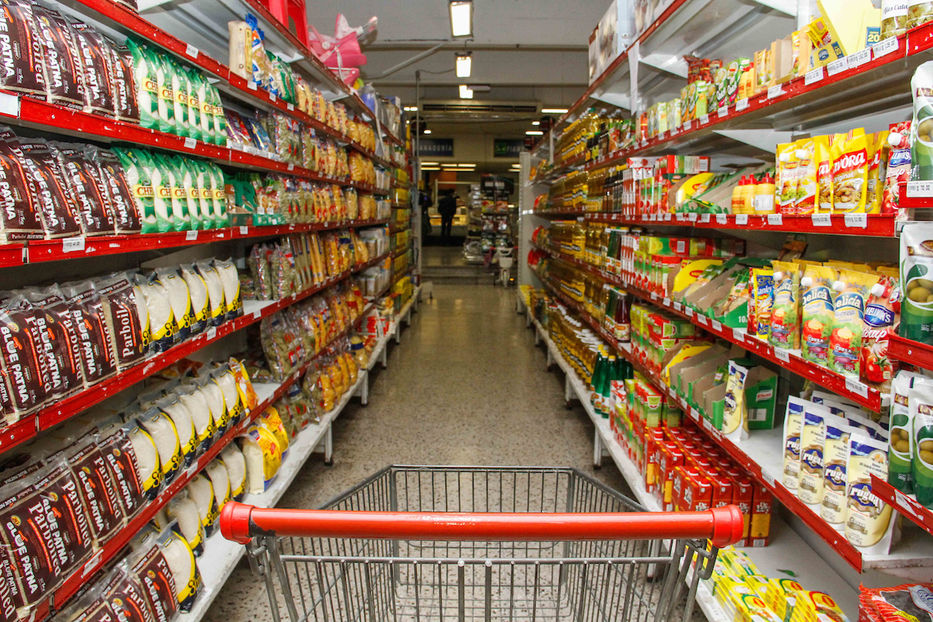
With regard to the Food and Non -Alcoholic Division, the report relieved the price of 29 products, making it the greatest influence in the IPF Brazil, with a relative weight in the 49%basket.
The investigation determined that salt in Brazil comes out of 333% cheaper than in Uruguay. Gallina eggs have a 167%gap, 101%table water, 86%yerba. Meanwhile, butter has -1%; The only product that comes out cheaper in Artigas.
The price difference between alcoholic beverages and cigarettes is “significant.” The lower one is 36% and corresponds to wine; For beer it is 135% and cigarettes, 139%.
The division of clothing and footwear showed a “significant” reduction. In total, the report defined that it was reduced to 33%. The gap is reduced in regard to footwear; The largest is in Jean’s clothes for men (70%).
Households have “great dispersion” differences. The biggest difference can be found in cleaning products (278%), electric lamps (292%) and batteries and batteries (96%).
The transport and fuel gap remains stable. In the diesel, the difference is 13%; in the gasoline, 18%, and tires, cameras and covers, 28%.
With regard to meals outside the home, the report explained that the difference “is extended and is 43%.” The biggest difference is found in water, which marks a 159%gap.
The difference between diverse goods is 97%. The report indicates that the price gap continues high for some articles, and reaches 177% for toothpaste, 105% for toilet paper, 67% for shampoo, 116% for the dresser soap and 64% for the deodorant.
The study concludes that “the relative increase in Artigas with respect to Quaraí continues, but to a lesser extent of the evolution of the exchange rate value in Brazil, which fell 4.02% between April and June.” In addition, he stressed that in Uruguay the price of the dollar showed a decrease of 3.42%.
In Porto Alegre, Río Grande del Sur, prices increased in June, while in that same month a monthly variation of -0.09%was recorded in Uruguay.
During July there will be, then, an average weighted basket more expensive in Artigas than in Quaraí.