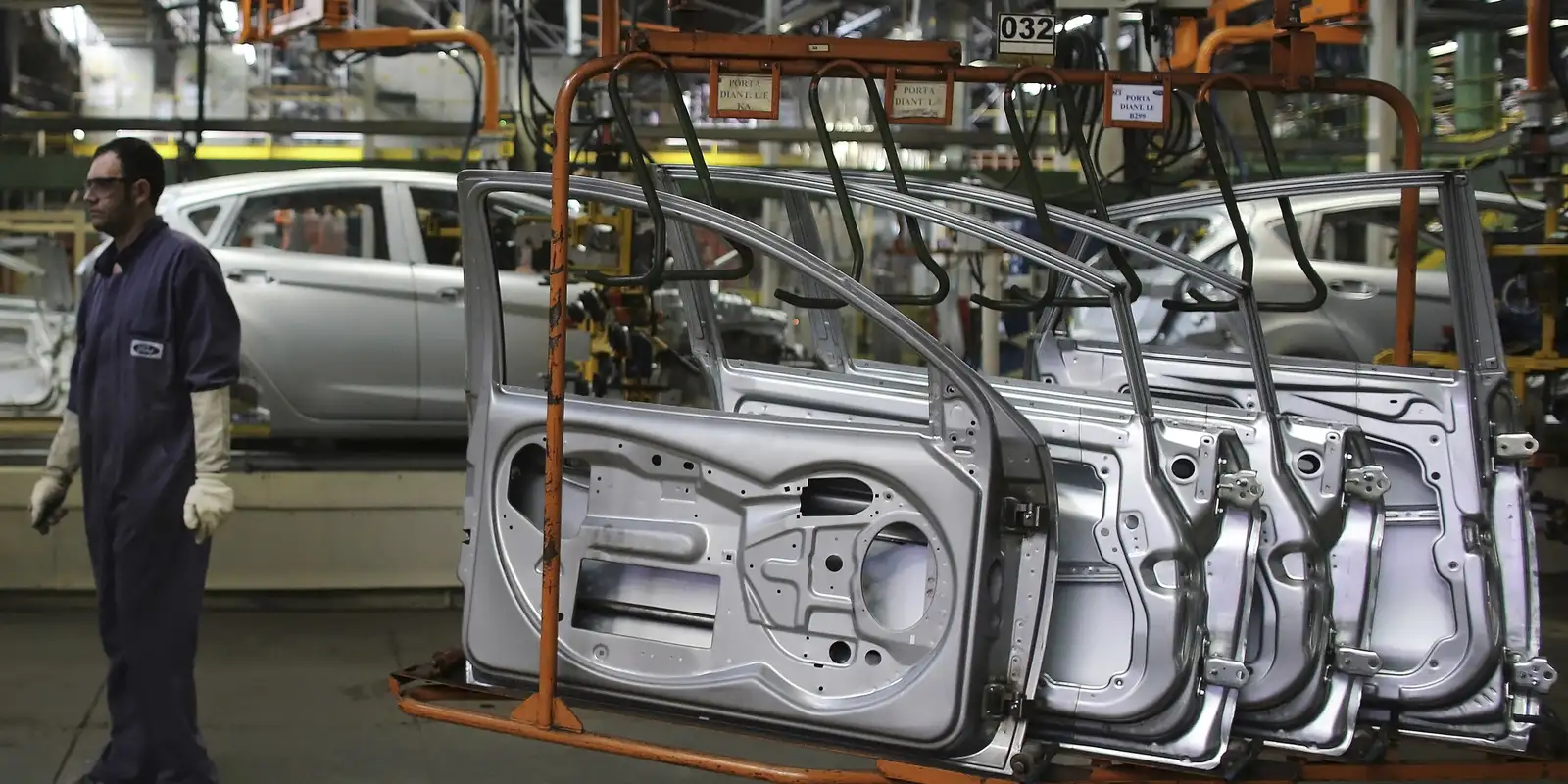
THE Brazilian industry production grew 0.1% from May to June. The result interrupts a sequence of two straight months with a drop of 0.6%. The data was released on Friday (1st) by the monthly industrial survey, Brazilian Institute of Geography and Statistics (IBGE). 
With June performance, the industry has a 1.2% expansion in 2025 and 2.4% in the 12 -month accumulated. Compared to June 2024 is negative at 1.3%.
IBGE reported that industrial production is 2% above the covid-19 pre-pound level (February 2020), however, 15.1% below the highest point ever recorded in May 2011.
The quarterly moving average – which provides a portrait of the industry’s behavior trend – a 0.4% drop in the quarter comparison ended in June compared to the end in May 2025.
Interest -brake
THE Research manager André Macedo pointed out that in the first quarter of 2025, the level of industrial production rose only 0.6% compared to the end of 2024. In his view, there is a rhythm drop caused by the Central Bank’s high interest rate policy (BC) to curb inflation.
“This holds an important relationship with the most restrictive monetary policy, increased interest rates,” he said. “It is evident for the lower intensity that production shows in the latest months,” adds Macedo.
Since September last year, the SELIC, basic interest rate determined by the BCis on the rise trajectory, currently arriving at 15% per year. High interest is a BC “medicine” to cool the economy and try to control inflation. In June, official inflation reached 5.35% in 12 months – above the government’s target ceiling (4.5%).
Tariff
André Macedo also estimates that uncertainties caused by the international scenario, such as the tariff of products imported by the United States, also had negative reflexes in industrial production.
“The fact is that it hinders the planning of companies in the industrial sector,” he explains.
Since early 2025, US President Donald Trump has threatened countries, including Brazil, of taxation of products entering the United States. In the first half, the additional 10%charge began, and now in August will start the additional rate of 40% For most Brazilian products.
Activities
Of the 25 industrial activities surveyed, 17 were discharged from May to June. This diffusion is the most spread since June 2024, when there were 22 activities with positive rates.
“This greatest spreading is very directed to losses from previous months,” ponders the IBGE manager. “I am not saying that there is a growth trajectory of the industrial sector,” he adds.
THE Activity with the highest positive impact was that of motor vehicles, trailers and bodywork, with an expansion of 2.4%. Other positive highlights were:
– Metallurgy (1.4%)
– Cellulose, paper and paper products (1.6%)
– Rubber and plastic material products (1.4%)
– Other transportation equipment (3.2%)
– Chemicals (0.6%)
– Farmochemical and pharmaceutical products (1.7%)
– Printing and breeding of recordings (6.6%).
The main negative impacts came from:
– Extractive industries (9-1.9%)
– Food products (-1.9%)
– Coque (coal-derived fuel), petroleum products and biofuels (-2.3%)
These three activities represent about 45% of the total industry.
The fall in food products was the fourth consecutive comparison between months immediately in a row.
Among the so -called large economic categories, capital goods (1.2%) and durable consumer goods (0.2%) had positive rates in June. On the other hand, semi consumer and non-durable goods have retreated (-1.2%) and intermediate goods (products that will still be transformed by other industries) fell (-0.1%).