“There are already ads, there are already symptoms that it begins to improve some aspects in some aspects,” said UPEC vice president.
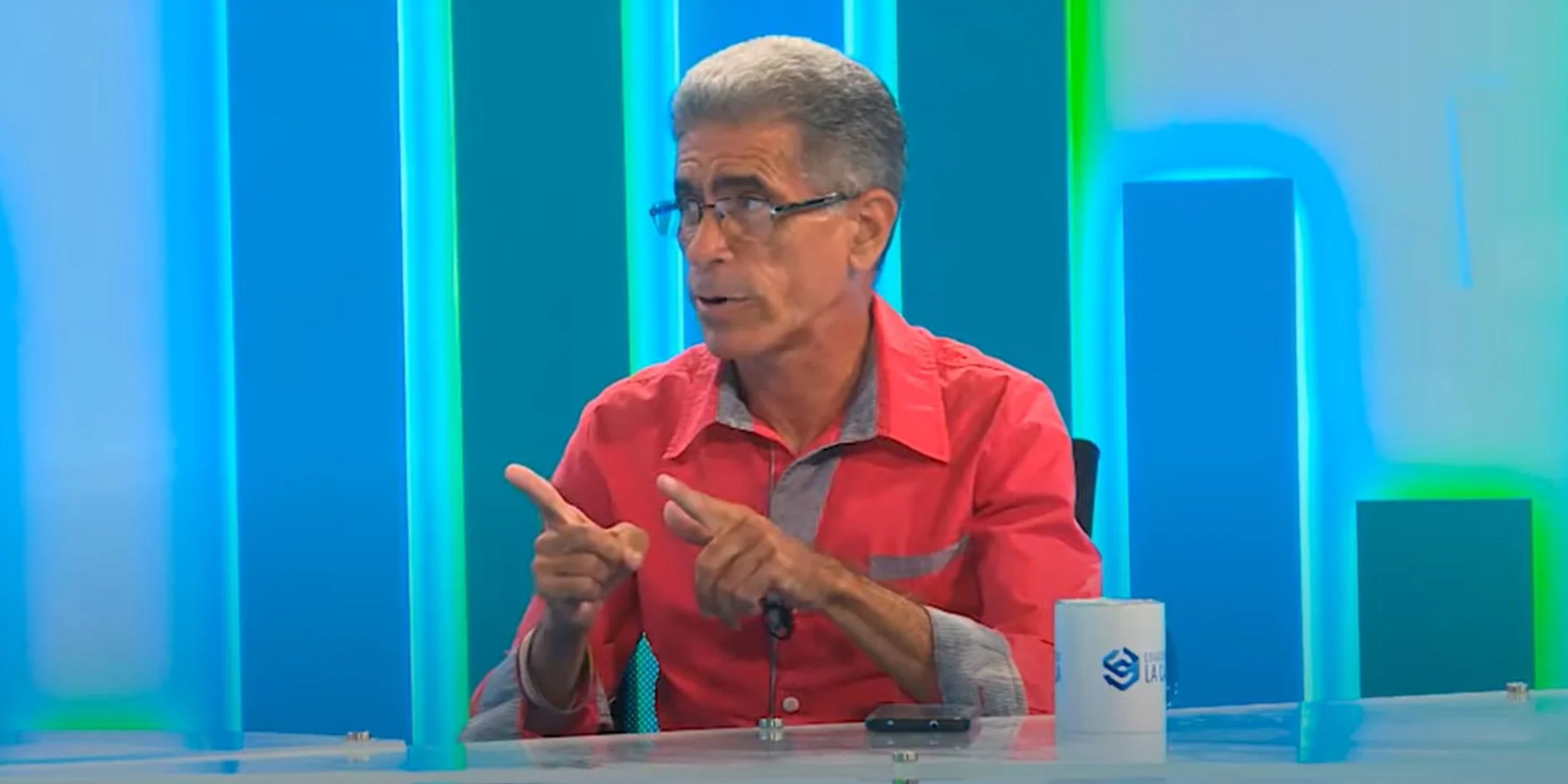
Miami, United States. – Francisco Rodríguez Cruz, vice president of the Union of journalists from Cuba (UPEC)said in the program Blocking the boxof Cuban (state) television, which begin to perceive signals of improvement in the Cuban economy, although it recognized later that these transformations do not translate into tangible improvements for broad sectors of the population.
“There are already ads, there are already symptoms of which begins[n] To improve some aspects in some aspects, ”said Rodríguez, known as Paquito that of Cuba, alluding to indicators such as the reduction of the fiscal deficit, the deceleration of the inflationary rhythm and a partial containment of the excess of circulating.“ People continue to see high prices, the pressure on the pocket, but there are already … symptoms [de mejoría]”He insisted.
Among the measures that, according to him, “people do not perceive” but that would be key to the “health of an economy,” said “the reduction of the fiscal deficit” and “the rhythm in which inflation is growing.” He also stressed that in the first four months of the year “surpassing results” were achieved and that the current account “closes without deficit”, something that, he said, “had not been achieved for more than 10 years.”
However, Rodríguez recognized the limitations of these statistics in the daily life of the common Cuban. “I tell him that there are measures that are seen and others that are not seen… and people would say: ‘Well, how does it affect me?’ And it seems not, but. ”
Later, the official admitted that there are unpopular measures whose application continues to generate social rejection. Among them he mentioned “the partial dollarization of the economy”, although he said that it would have the purpose “to increase the income in currency to cover expectations in certain social services.” He added that “people have to do with it,” that is, how “the dollar she paid in a store was used.”
At another time in his speech, Rodríguez recognized the lack of transparency and communication around government programs. “What do you know about the government program? I have not seen it,” he admitted, and added that it is necessary to “translate it more and more into messages that reach people.”
The journalist also stressed the importance of a more involved citizenship in economic debates: “I believe that the antidote so that we do not happen to us in what has been called popular control, which I like to say more discussion or debate citizen.” In his opinion, “people have to mobilize based on defending what we have been and what we want to be.”
However, the most and revealing statement of the program came when he directly addressed the situation of the most unprotected sectors: “The reality is that these people are there and that we do not always reach them and that there are many people having a very difficult time.” Rodríguez added that “the structures sometimes at the base fail to apply what is conceived to attend them.”
He also mentioned that many of the strategies exist on paper, but do not execute properly. “Many times the strategy is thought,” he said.
Although he highlighted measures such as Decree 127 – which allows to redistribute salary funds not executed to benefit workers who assume additional functions – and the authorization of self -financing schemes for sectors that generate currencies, Rodríguez failed to sustain a coherent discourse between the alleged macroeconomic advances and the deep deterioration of the level of life of the majority.
In their own words, the greatest challenge is “to ensure that people feel that this economy is being discussed is theirs and that they can influence their result.” But the confession that the government program has not been disseminated even among the specialists reveals the limits of the Cuban model: unpopular measures, invisible benefits and a population that still can not pay the most basic services.