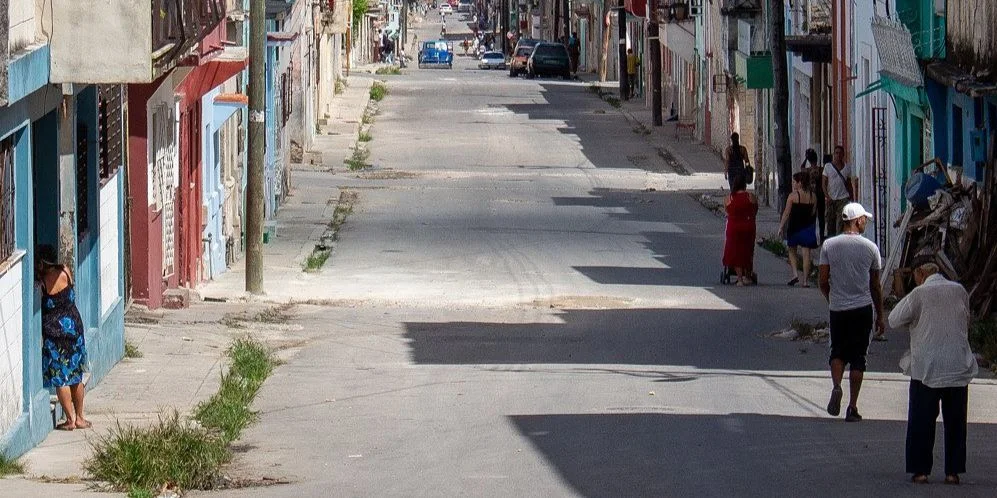
Holguin/“Here the drought is already hitting us, there are areas where the water does not rise or pump more than 20 days ago, and some like the hill of the Caguay 14ymedio. The lack of water, added to the prolonged blackouts, is becoming deeper the crisis suffered by residents in the Cuban East.
Raúl’s testimony reflects a critical reality in provinces such as Santiago de Cuba, Holguín and Guantanamo, where the scarcity of rain has led to an alarming reduction of the levels of the reservoirs and the partial collapse of the supply systems.
According to official data, in Santiago de Cuba More than 80% The population depends on the Quintero system, which has seen its water in between 900 and 1,000 liters per second after the loss of key sources such as Gota Blanca and the reduction of Gilbert’s supply. “Only one of the five system drivers is working … The situation with the water supply is very critical,” said Ludmila Rodríguez Barroso, director of Aguas Santiago.
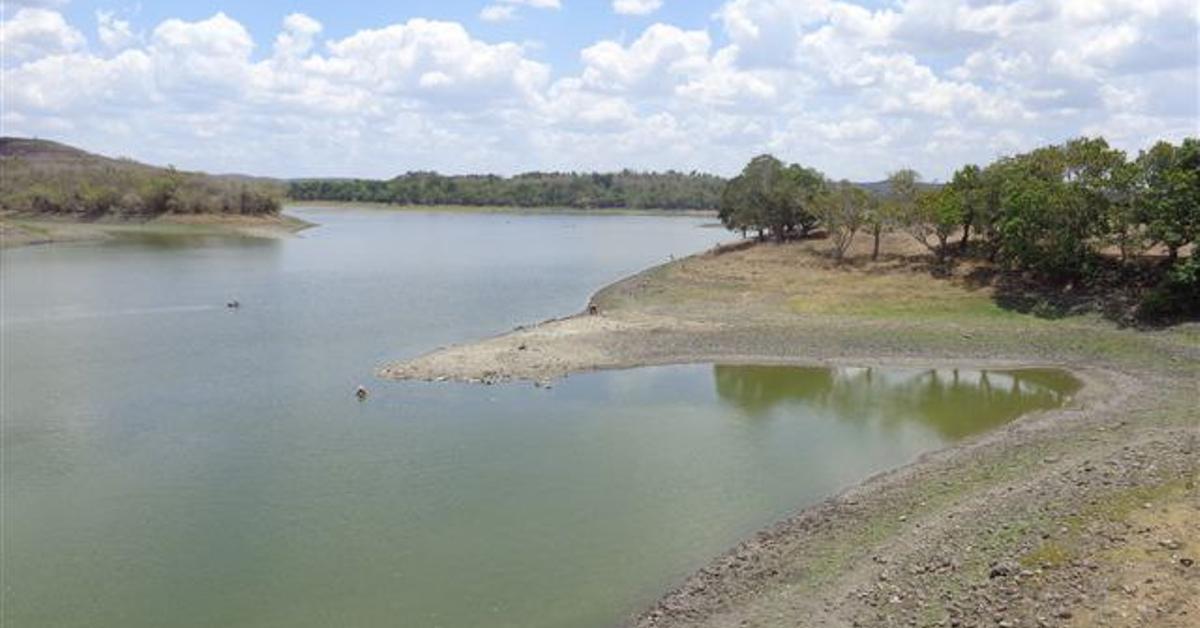
In Holguín, reservoirs and aquifers have reached “alarmingly low” levels “
In Holguín, where almost 48% of the territory presented Meteorological drought At the end of March, reservoirs and aquifers have reached “alarmingly low” levels, as Radio Angulo reported. The flow that supplies the city was reduced from 1,189 to 880 liters per second, forcing a severe rationing. Agricultural production, already deteriorated, has suffered another fall due to the lack of irrigation, aggravating food insecurity and more expensive prices in local markets.
In Guantanamo, the panorama is no less dramatic: the La Yaya reservoirthe main province, is 9% of its capacity, with just one million cubic meters of usable water. This has forced that only one of the pumping engines of the Guanta Canal, especially affecting South communities such as Carreterita and La Jabilla. The provincial government announced emergency measures, such as water transfers from the Caribbean cast and the cleaning of derivatives, while asking the population to take savings.
To this water crisis is added the impact of the deteriorated national electrical system. Junior González Núñez, first vice president of the OSDE Agua and Sanitation, admitted that “approximately 70% of the effects of the service are linked to problems in the electroenergetic system.” After the blackouts, the water takes between six and eight hours to reach homes, which further prolongs distribution cycles and leaves whole neighborhoods without supply for days.
Although the authorities have begun to install solar energy pumping systems – with the importation of 866 photovoltaic equipment – these measures fail to reverse the water deficit or satisfy the demand. In Santiago de Cuba, delivery cycles exceed 20 days, while in critical areas they already reach 60.
The drought, which hits the Cuban East for years, not only compromises domestic supply, but also agricultural production, local economy and public health. In Raúl’s words, the holguinero desperately before the dry pipes, “this is not only lack of water: it is hunger, heat, blackouts and empty businesses … Everything together is sinking people here in the East.”