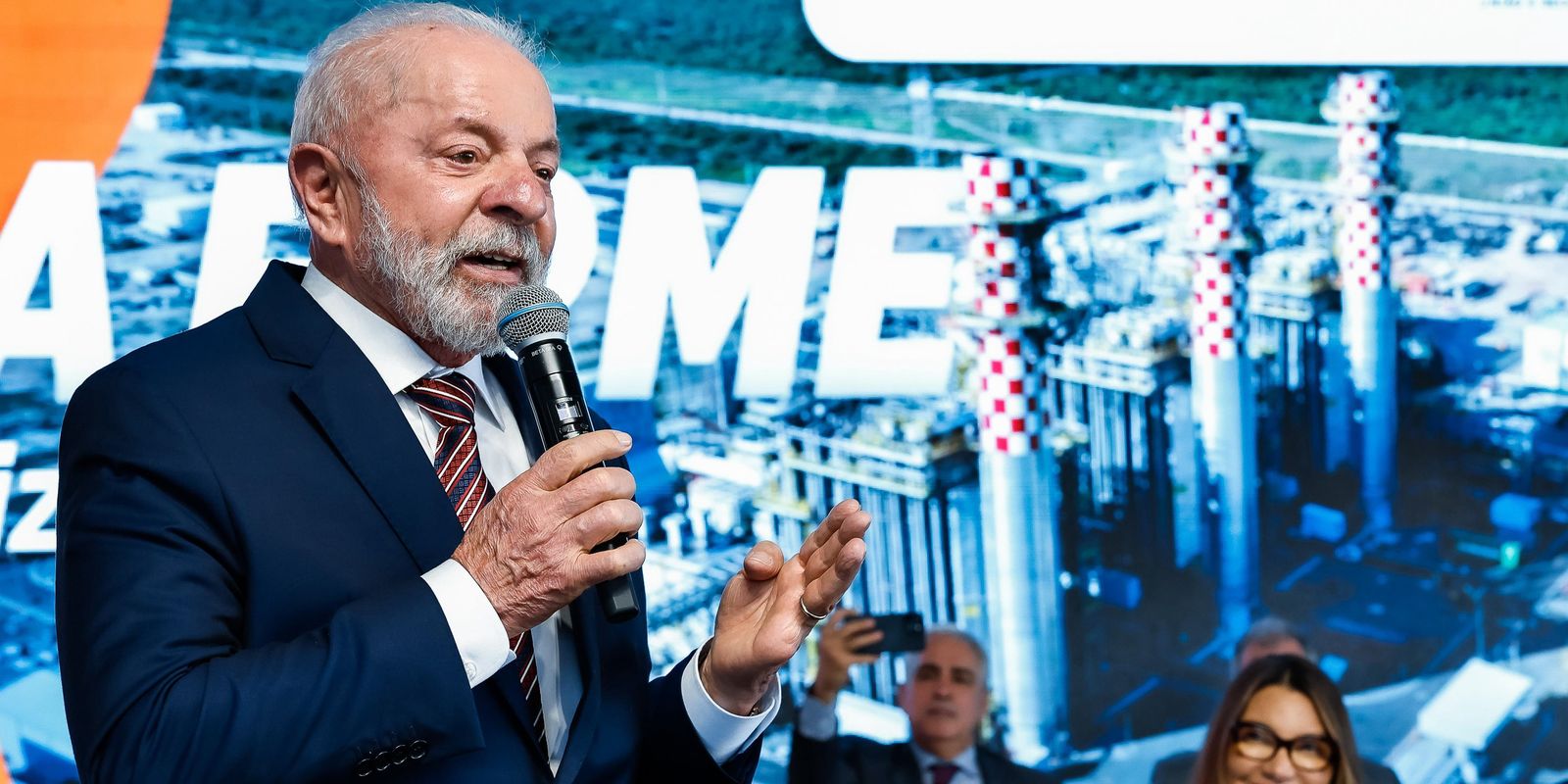
President Luiz Inacio Lula da Silva defended, on Monday (28), the sovereignty of Brazil about his critical minerals and said that the riches of the country will be enjoyed by the Brazilian people. Lula also criticized the growing interests of the United States in these minerals and said that private companies could research the national territory but “under our control.”
“I learned that the United States will help Ukraine [na guerra contra a Rússia]but they want to have a privilege in Ukraine’s critical minerals. These days I read that the United States has an interest in Brazil’s critical minerals. Well, if I don’t even know this ore, and he’s already critical, I’ll take him to myself. Why am I going to get to another? ”Argue Lula, in an event in São João da Barra, state of Rio.
Critical minerals or rare land are those whose current availability is limited, and exploration is considered necessary to ensure the energy transition, as they are essential for the manufacture of parts and equipment associated with the idea of green energy. For example, there is demand for copper in wind power plants, silicon for photovoltaic panels, nickel and lithium for batteries, by bauxite and alumina for transmission cables.
Research indicates that the search for minerals needed for energy transition projects has already caused conflict on new exploratory fronts. Another study shows that, In Brazil, this demand accelerates the climate crisis.
Lula said that The government is establishing partnershipswith the creation of an “ultraspecial commission”, to survey all kinds of wealth in the soil and underground of the country. According to the president, 70% of the territory have not yet been researched.
“We have to allow the company to research under our control. The time we have permission to a company, and she finds it, she can’t sell without talking to the government and, much less, she will be able to sell the area that has the ore, because that is ours,” he said.
“The Brazilian people have to be entitled to enjoy the wealth that these things can produce. It’s simple. We don’t want anything from others, we just want to ensure that what is our can generate wealth so that this country is no longer a country of development and is a highly developed country,” he added.
In this sense, Lula defended the government’s educational policies, expanding the offer and greater access to technical and higher education, with the construction of universities and federal institutes. “The qualification of our people [é] that will ensure Brazil’s competitiveness, scale productivity and competitiveness in quality. Because there is no country in the world that has developed that, before, has not made investment in education. ”
New thermoelectric
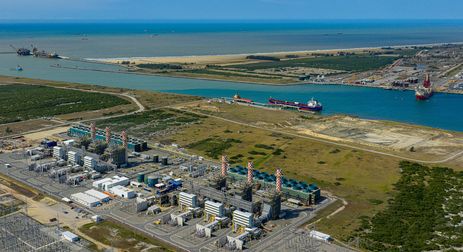
Inaugurated this Monday, GNA II thermoelectric plant has the capacity to serve 8 million homes – Photo: Ricardo Stuckert/PR
This Monday, the president participated in the inauguration of the GNA II thermoelectric plant, in the port of Açu, in São João da Barra.
The new plant was selected as a strategic in the new Growth Acceleration Program (New PAC), attracting $ 7 billion in investments and generating over 10,000 jobs.
The venture is part of Latin America’s largest 3 gigawatts (GW) natural gas generation park of installed capacity, with GNA I plants in operation since 2021, and now GNA II. With 1.7 GW of capacity, the new thermoelectric plant accounts for about 10% of the natural gas generation of the national electrical matrix, capable of serving 8 million homes.
Lula highlighted the importance of the state as a guarantee of stability and predictability to attract investments to the country. “I do not know any foreign entrepreneur or investor who will invest in a country that he does not believe in the country’s politics, the country’s economy and the things that are happening in the country. No one throws money away, let alone those who have a lot of money,” he said.
Açu Natural Gas (GNA), responsible for the plants, is a company created by the Companies Association Prumo Logística, BP, Siemens Energy, Siemens AG and Spic Brazil.
Today, GNA and the government have signed a letter of intent to foster the Brazilian natural gas market, with the development of projects and structuring energy and natural gas. According to the government, the partnership has the potential to attract up to R $ 20 billion in investments to the Integrated National Plan of Natural Gas and Biomethane infrastructures.
“The initiative reinforces the strategy for the energy transition and the consolidation of the port of Açu as a hub of gas and energy in the country,” he said.