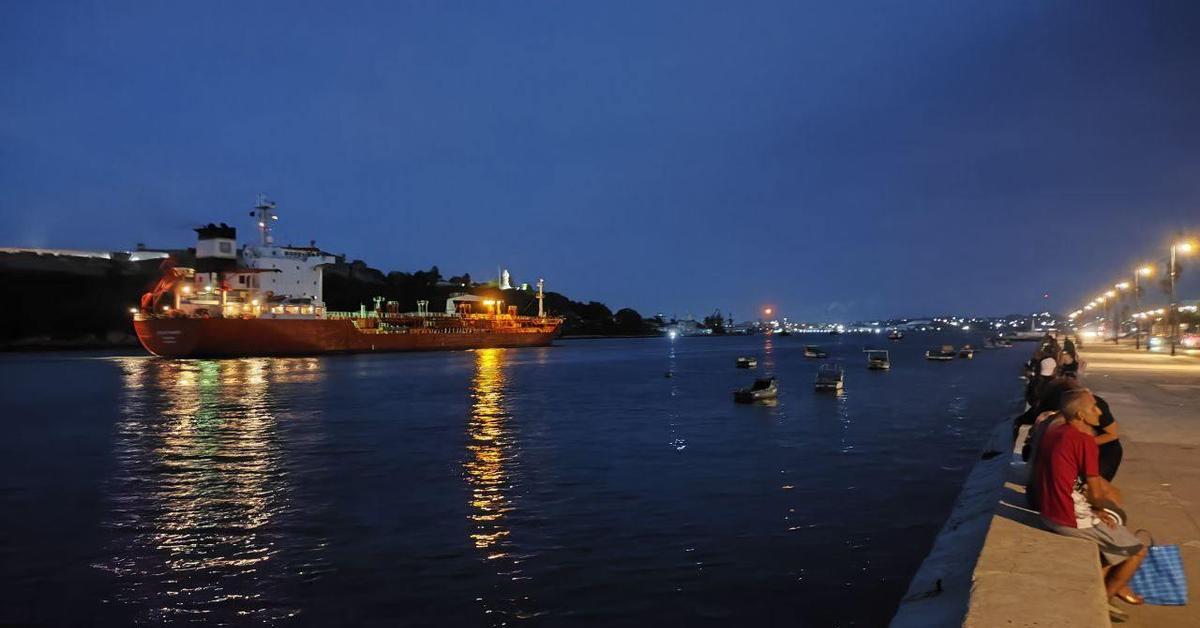
Havana/The ship Ocean Marinerwith Flag de Liberia, he docked at the port of Havana last Friday with 13,000 tons (around 91,000 barrels) of fuel from the Madero City Refinery, in Tampico. Unlike what is reported by monitoring platforms, the cargo may not be crude oil, but refined products of greater strategic value for the Cuban energy system and more expensive for Mexico.
According to the monitoring by 14ymediohe Ocean Mariner It has been one of the most active ships On this route, making frequent trips since mid -2023 to relieve the shortage of fuel on the island, which suffers an energy crisis marked by prolonged blackouts and the deterioration of the National Thermoelectric Park.
The energy support from Mexico to Cuba has been managed through the Pemex Gasolinas Welfare subsidiary, used to formalize shipments avoiding international financial restrictions. In the first quarter of 2025, Mexico exported to Cuba an average of 19,600 barrels per day of crude oil and 2,000 of refined products, equivalent to about 166 million dollars, according to data collected by Bloomberg.
This policy has generated strong criticism within Mexico. Means like The Universal and Reuters They have indicated the lack of transparency, without clarifying whether it is donations, sales on credit or compensated exchanges. The National Institute of Transparency, access to information and protection of personal data, which was dismantled in December 2024, even demanded that PEMEX information on costs and contracts related to shipments, while experts in the sector warn about the political risks of maintaining this type of operations against US sanctions.
In Cuba, Mexican fuel has served to mitigate the effects of blackouts. Prime Minister Manuel Marrero Cruz acknowledged that these shipments have allowed to reactivate key electrogen plants, although the energy deficit persists. However, analysts consulted by this newspaper warn that Cuba’s dependence towards Mexico and the financial burden that this implies for Pemex reflects a support model difficult to support over time.
The shipment of Ocean Mariner It shows how the Energy Alliance between the two countries, promoted by the government of Andrés Manuel López Obrador and its successor in office, Claudia Sheinbaum, functions as a temporary lifeguard for Cuba, but poses serious questions in Mexico about the economic cost and the lack of clarity in the destiny of these resources.
This situation aroused a very critical editorial of the main American economic newspaper, The Wall Street Journalthat accused the president Mexican of being a “leftist who tries to consolidate the government of a single party.” “It is supporting Cuban communists who want to avoid a public revolt in the middle of a collapse of public services,” the media criticized. “The agony of the Cuban people is real, but sending money or oil to its rulers will not relieve their pain. It will simply keep the regime in power.”
For his part, the old Venezuelan ally barely sent 8,000 barrels of oil per day (BPD) the month of June, a historical minimum. The data is far from the average of 55,000 BPD committed to the 2000 agreements – filmed by Hugo Chávez and Fidel Castro – and also pales the previous record downward, which was at 10,000 BPD last January.