But in exports, the papers are invested. Mexico heads with a value of 617.1 billion dollars in 2024, almost double that the 337,046 million registered by Brazil. Both countries share a structural feature: the automotive and agri -food sectors dominate, although from positions that often collide instead of complementing.
In the history of its commercial relationship there are failed negotiations and a competition that slows any deep integration. However, pressures from Washington force to rethink priorities. The United States decision to impose new tariffs – from 50% to Brazilian products and of 30% to Mexican goods – As of August 1, a reunion accelerated that for years was postponed due to lack of political will and sector tensions.
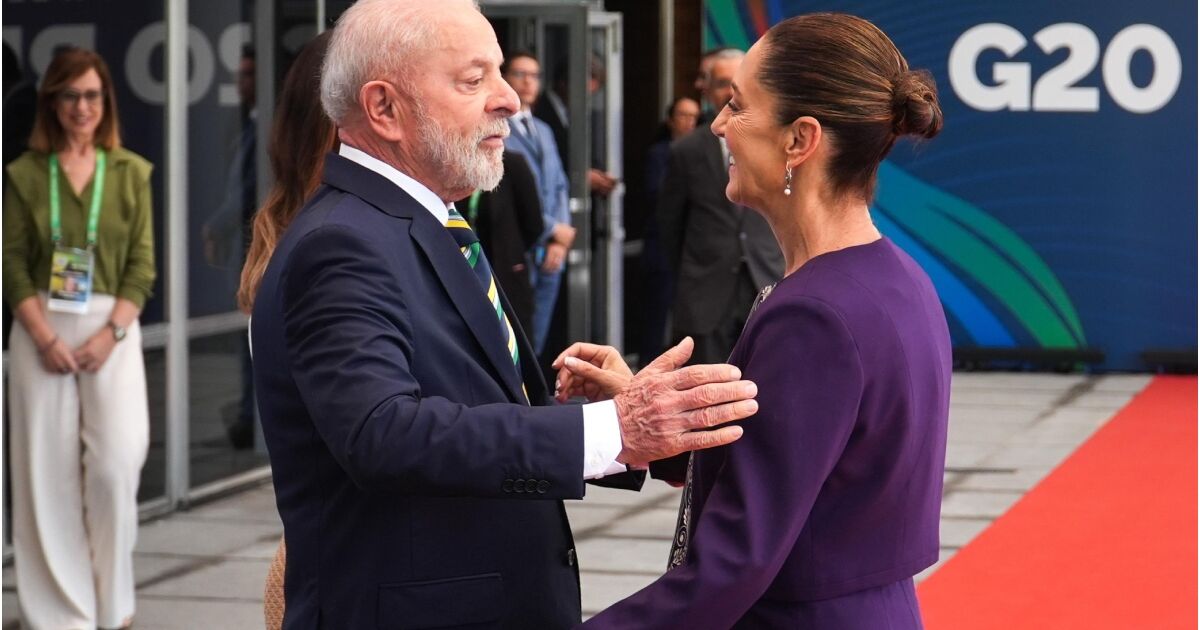
Last week, Brazilian president Luiz Inacio Lula da Silva held a telephone conversation with the president of Mexico, Claudia Sheinbaum. The call was not limited to diplomatic gestures.
Lula proposed to open formal negotiations for Expand the agreements of economic complementation signed in 2002. From the Government and Business Sector of Brazil, the need to strengthen bilateral links in a “moment of uncertainty” is underlined.
The conversation addressed sectors that offer strategic potential. The pharmaceutical industry, agribusiness, ethanol, biodiesel, aviation, innovation and technical education were mentioned. The emphasis was to explore shared opportunities and respond with greater coordination to external pressures. The Palacio do Planalto confirmed that Lula raised the urgency of reformulating the current agreements and adapting them to the new economic reality.
With broad opportunities
The bilateral exchange between Mexico and Brazil still represents a lower proportion of the total trade of each country. In 2024, for Mexico, trade with Brazil reached only 2.7% of the total, a fall against 3% registered in 2023, according to Banxico data.
For Brazil, the proportion showed a slight rise: Mexico represented 5.2% of its foreign trade, compared to 4.8% of the previous year, according to official figures of the Ministry of Foreign Trade.
The commercial balance is tilted hard towards Brazil. Mexico closed 2024 with a deficit of 6,759 million dollars in its exchange with the South American country. This imbalance is not new. Nor is it surprising. Brazil exports more to Mexico than matters, and the conditions of the current agreement do not correct that asymmetry. The update of the commercial framework not only seeks to increase the volume, but to balance the conditions.
From the Mexican side, exnegoacidores of the T-MEC point out that Brazil is a key competitor for Mexico. There has not been an agreement that benefits both. Each attempt to advance ends up for differences in the agricultural or automotive sector. The visions diverge, even how to implement the rules of the World Trade Organization (WTO). Health, phytosanitary measures and technical standards have been break points.
They are that the tables with Brazil, in particular, accumulate ruptures, as there are sectors of both sides that prefer to stop. The relationship is complex. But hopefully this time you will close an update.
From the Mexican Institute for Competitiveness (IMCO), the analysis part of the data. In the last five or six years, imports from Brazil gained weight within the Mexican commercial structure. “Yes there is a strategic importance. Continue with this agreement would bring benefits, even tariff facilities, if a reduction of barriers is agreed.”
Beyond the figures, President Lula since last year made his position clear. He talked about the historical dependence of Latin America with respect to the United States and China. He called to generate greater regional brotherhood.
We must discuss what is good for Mexico and what is good for Brazil. What each can contribute to the growth of our economies. What can be bought and what can be sold, with the greatest possible opening. Thus we could become, not a 4 billion economy, but a 5 or 6
Luiz Inacio Lula da Silva, president of Brazil.
Specific steps
In that tone, the modernization of the agreements is not presented as a mere technical adjustment. The narrative points to a regional reconfiguration that allows consolidating a stronger Latin American position against global actors.
A punctual sample of this new approach occurred a few days ago. The health authorities of both countries signed an operational work plan that will export Mexican hass avocado to Brazil . The Ministry of Agricultural Defense of the Ministry of Agriculture and Livestock (Map) published on July 17 an ordinance that details the phytosanitary requirements for imports of the fruit from Mexico.
Senasica, the responsible Mexican agency, will validate the orchards and packers that meet the conditions. The objective is to ensure that avocado arrives free of quarantine pests, such as bone barers. Authorized companies will be part of the official export program. The Brazilian market offers access to more than 200 million consumers.
Mexico leads world avocado production with about 3 million tons per year. It exports 46% of that production to destinations such as the United States, Canada, Japan, Spain, France and Arab Emirates. Brazil now joins a window of opportunity.
Diplomatic signals do not end in the presidential call. As part of the new approach, the Brazilian government confirmed the official visit of Vice President Geraldo Alckmin to Mexico City for August 27 and 28. It will be accompanied by ministers and a business delegation. The objective is double: explore business opportunities and advance the expansion of commercial flow.
While Mexico and Brazil negotiate separately with the United States to stop tariffs before August 1, including dialogue advances without pauses. The approach accelerates. The urgency seems to have unlocked what for years remained frozen.
The current agreements were negotiated more than 20 years ago, in a very different commercial environment. As Ana Paula Repezza, Business Director of Apexbrasil, pointed out, “the world has changed, global dynamics have changed, economies as well. Integration, however, remains limited.”
Mexico and Brazil seem willing to try again.