The first velocípedo that was known in Havana was imported by the Galician merchant Claudio Graña, it is said that in 1880. There are references, six years later, of the celebration of races of these heavy “artifacts”, organized by Catalan emigrants.
This sport began to consolidate in 1894, when the two societies that existed in the capital, dedicated to its practice, the Sport Club and the Biciclist Club of Havana (the first created in Cuba), opened velodromes in Almendares and El Vedado, respectively.
The press contributed to disseminate the benefits of the novel physical exercise through the dissemination of medical criteria, competency reviews in other countries and on the island; reproduced the article “Triumph of rational mechanics “of the Spanish playwright José Echegaray, where he defended the use of the bicycle, a device with which “man has given a lesson to nature.”
The Hygiene Society, directed by Dr. Juan Santos Fernández, in one of his sessions, announced the conference Cyba hygiene in Cubawritten by Dr. Antonio María de Gordon and Acosta and printed in a brochure for free distribution; In addition, it was reproduced by the magazine Pharmaceutical Medical Repertoire. A newspaper appointed in 1894 The cyclistdirected by Dr. A. Bustille Lisola and was the official body of the Biciclist Club of Havana.
He stimulated the incorporation of women in the practice of sport the establishment, in 1895, by the Sport Club, of an Academy for the teaching of cycling to ladies, ladies, girls and children, in the velodrome he owned in the fields of Almendares. The classes were given by Rita Durán, born in New York, from Camagüeyan ancestry, according to The Figaro. She also offered her services as fencing teacher, English, painting, riding and rifle shot. Anyway, our Coterranean advance, then resident in Reina Street, number 38.
The Biciclist Club of Havana had its Velocípedos Academy at that time; The connoted Rufino athlete was quite in charge of teaching.
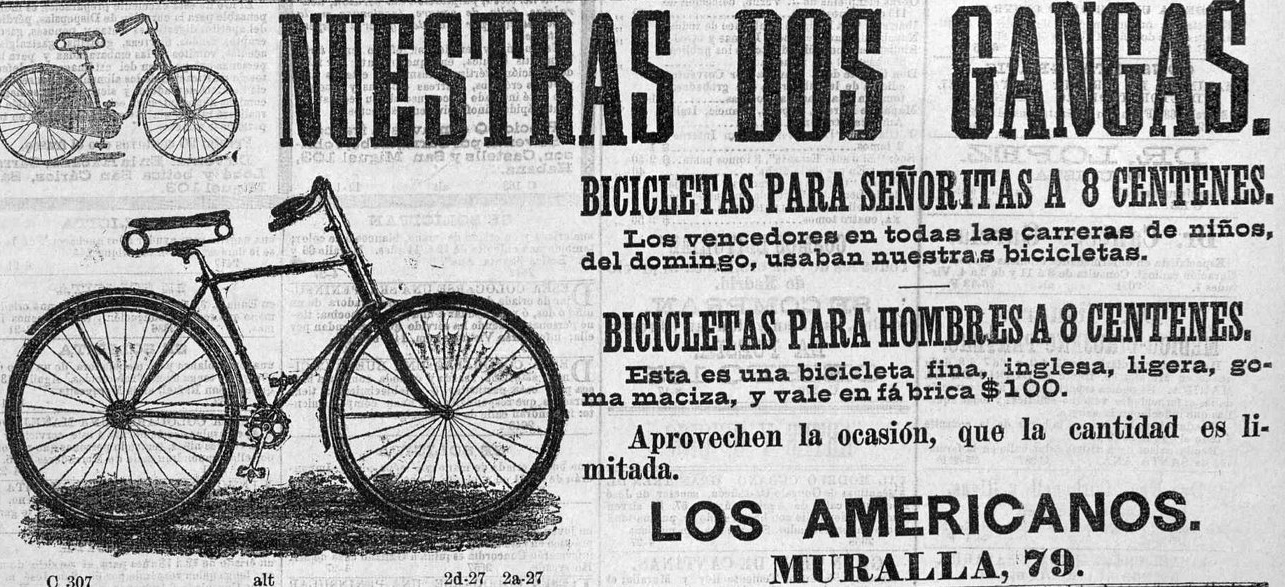
The company Vidal, Graña and Cía, which marketed the Seidel and Naumann brands, stood out in the importation and sale of bicycles. His department stores were on O’Reilly street, numbers 74 and 76. To promote sport he organized various events.
And another horny businessman, Plácido Hernández, opened a business on Trocadero street to rent them. The journalist Federico Villoch would remember years after, if a known child of the neighborhood was interested in leasing one, but he did not have money at that time, the merchant “seed” the service to pay later.
It was frequent that some personalities, such as the popular actor of the Vernacular Theater Regino López, walked by bicycle; And there was even a pioneer in using it as a means of transport to do his job: Rafael Blanco Santa Coloma, photographer of the Illustrated Magazine The Figaro.
Foreigners exhibitions contributed enthusiasm for sport. It was attractive, for example, to see John S. Prince and Albert Morriotte showing their skills in the velodromes, streets or the roads near the city.
Excursions and competitions
In addition to individual practices, club members conducted groups from Havana to different villages such as San José de las Lajas, Güines and Boldoó. These tours, usually concluded with a lunch. If the meeting site was not far away, the guests went in guaguas or horsepower cars.
Sometimes they conferred with the Matanzas Sport Club. On Sunday, October 1, 1893, an express train, where Matancos cyclists traveled to Güines. To receive them at the station, 15 members of the Biciclist Club of Havana, at 2 in the morning. Of these, only four reached the destination, headed by José Carlevaris and Albert Morriotte. The others stayed in the intermediate populations or had to load with the bicycle for having disabled on the road, the Marina Diario.
The delegation went to the city along the road of San José de las Lajas to enjoy a lunch at the restaurant The Swisswhere the creation of the Biciclist Union “was proposed” in order to give life and enhance that sport, as a hygienic measure and as one of the most innocent distractions that will serve most of the time to separate our youth from other kinds of games contrary to hygiene and society. ” It is unknown if the project fructified. Then the cyclists toured the Havana streets and went on an excursion to the Vedado.
The first championship in Cuba was summoned by the Bicicllista club in Havana and took place in 1894, at El Vedado Velodrome. Three prizes were awarded and the competition, 25 kilometers, José Carlevaris de Cevazco. The bicycle brands that competed were Clement, Whitworth, Naumann, Premier and Rudger.
They also made tournaments in their velodromes, which had a roundabout, stands and boxes. Those interested in enjoying the show had to pay the entrance. For example, for the corresponding to March 1895, in the Biciclist Club of Havana, directed by Antonio Valdepares, the tickets were sold in the establishments the forest of Bologna, the novelties, Ricla and in the Albisu Café. As part of the promotion plan, the awards medals were exhibited in advance in the showcases of the Bologna forest. Extra train outputs were coordinated and the show was enlivened by the Santa Cecilia band.
Curious fact is that they competed adults and children, separately. Girls also practiced sports discipline; Adela and Dolores Codina participated in the event. By the way, it seems that almost the whole family was a cyclist because between those enrolled were Manuel, Urbano and the minors César, Jenaro and Francisco Codina. Galician Nicolás Gómez Pego, dependent on trade, won the races.
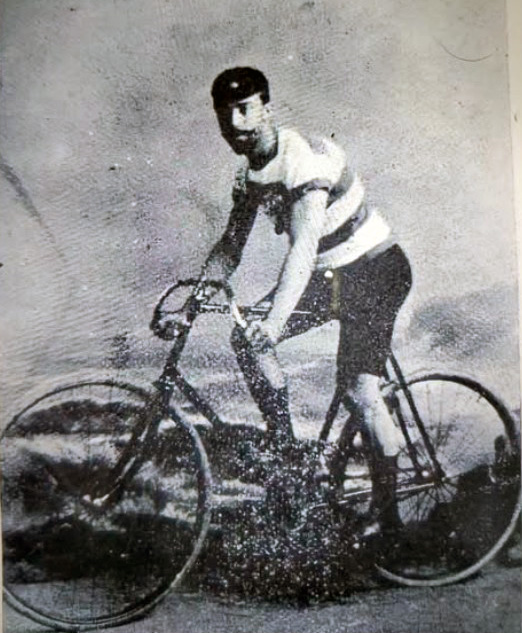
The Sport Club, chaired by José Gómez, organized the races on their lands of Almendares. According to the program corresponding to March 1894, girls and boys competed separately, although the distance of the route was the same: 460 meters.
The confrontation of Mr. Santa Cruz y Menocal established three laps to the track, in total 1380 meters. The Sport Club race, between Montalvo and Codina, five laps (2300 meters) and the Grand Match, with Prince, Carlevaris and Mariotte, 32 kilometers. The latter’s prize was 500 pesos. Prince had to do the entire itinerary without resting; His opponents could be relieved.
Tickets were sold at the headquarters of the Vidal, Graña and Cía company and at the Mascotte Hotel. In that same month, the Sport Club inaugurated the room for the Secretariat, “a spacious local upholstered and whose decoration is very property. By the walls they saw paintings with photographs of cyclists, attributes of that sportclub badges, and ornaments as artistic as elegant. This room will have double object; be used to the office of the Secretary Affairs and Meeting Site of the Sport Club members, ”said the Marina Diario.
Sometimes the leaders were made with exits from the central park, the smooth, the corner of tiles or the corner of Infanta and Carlos III, having as its destination a rural town, although there was a case of returning to conclude the route in the place where it began.
The record in 1899 corresponded to Adolfo Allones, who took 5 hours, 53 minutes and 50 seconds to travel the journey of 100 miles (160.93 km) from the corner of tiles to Artemis and from this place to the starting point. The first trip to Guanajay, Santiago de Las Vegas and Batabanó also happened. Due to the poor condition of the roads, we can say that this seemed like a cross -country tour.
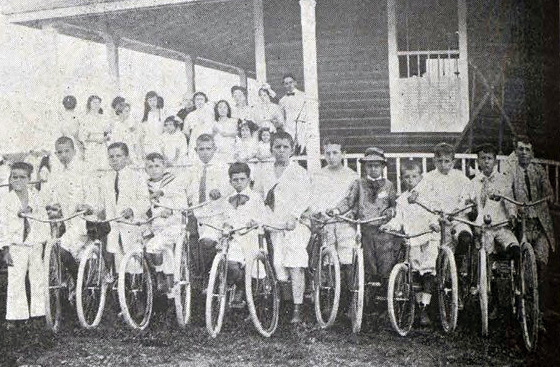
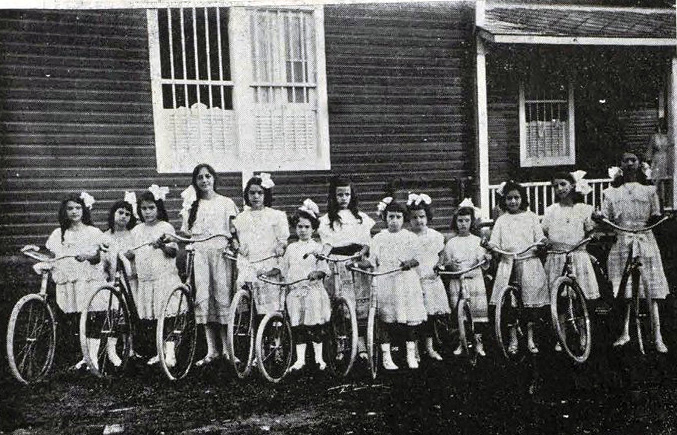
From a Gazetilla of November 1894 I copy this description:
“The clock pointed at six in the morning, one of those lovely mornings with which poets and cyclists dream, when the entourage, composed of 25 cyclists, in airy and brilliant ride, broke the march from the corner of Infanta and Carlos III, a point designated beforehand for the departure of all excursions (…).
After an hour of pleasant day we arrived at the picturesque town of Calabazo, where we were high to refresh the jaws with the classic (among the cyclists) Sangria of red wine, continuing a trip to Santiago de Las Vegas, where we arrived 20 minutes later.
The speakers and timbres of the bicycles, touched in unison by all the streets of the Villa de Santiago, attracted the curiosity of their elegant dwellers, which they tagged endlessly to the tireless hikers.
After touring the town and admiring the magnificent state of its streets, we returned to Calabazo, where we had prepared a sumptuous lunch, in which the indispensable rice with chicken, served in huge saucepan, predominated as a special dish.
There were more daring excursions, such as that one undertaken by Rufino enough – well deserved the last name – who left his house on Ricla Street, corner of Christ, in Havana, on Sunday, January 6, 1895, and arrived in Sagua la Grande on the 11th.
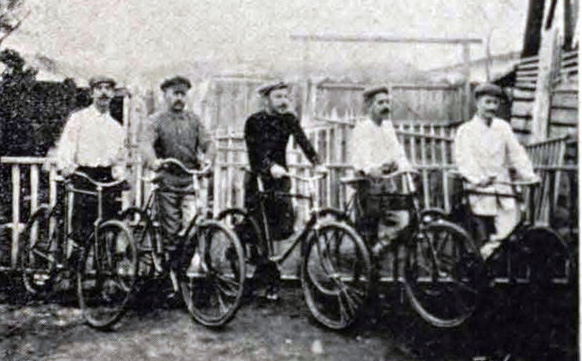
The most popular
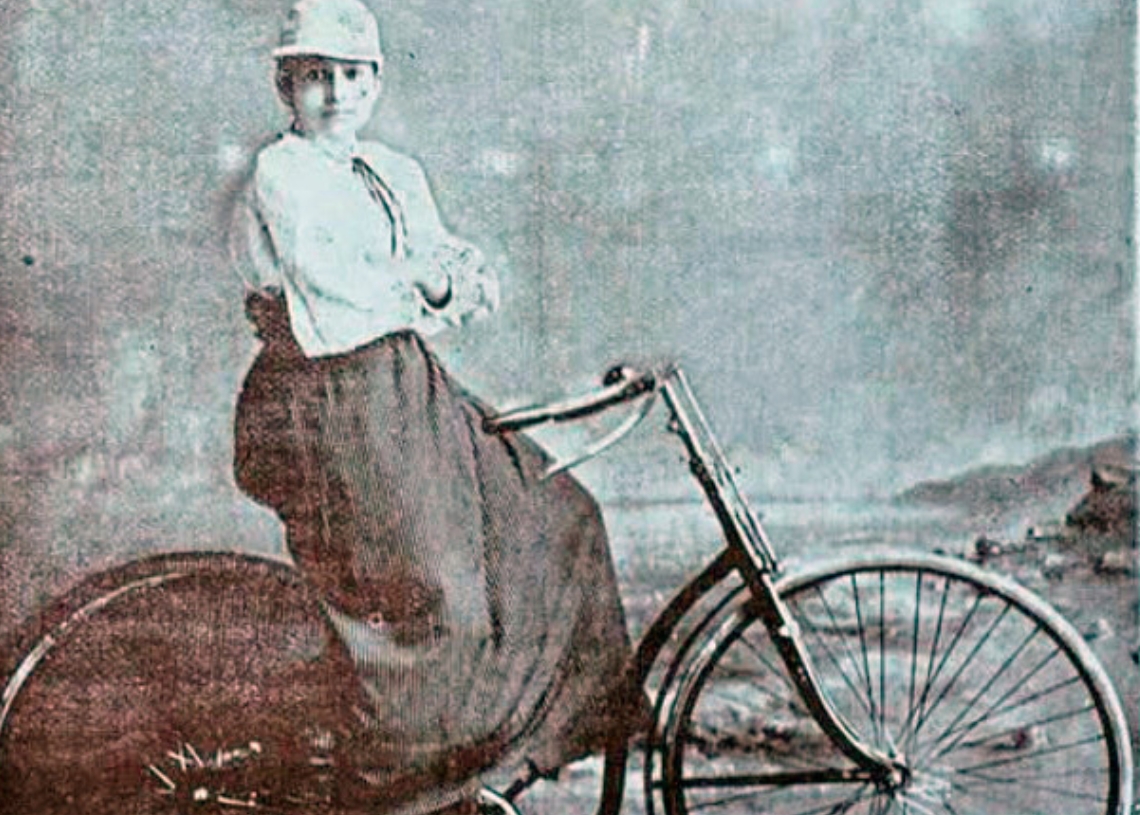
In other cities, such as Cienfuegos, Cárdenas, Sagua La Grande and Matanzas, in the 1890s cycling clubs were founded. One of the oldest photographs that is preserved on the use of the bicycle for women is that of Julia García Bosch, of Matanzas.
At the beginning of the century new clubs were formed; They have transcended the names of Baire and the arrow. In 1903, the National Cycling League “for the Champion The Figaroon November 12, 1899:
“The enthusiasm for sport From the bicycle it has grown among us in such an extraordinary way that it can be said that it is today the most popular. Rich and poor, cults and ignorant, the man by profession as the day laborer, everyone today figure his ambitions in possessing a good machine and giving the pedals with skill. ”
And the magazine Cuba and America He reaffirmed it in its February 20, 1900 edition:
“The increase that the machine rental industry has taken, and fans of them are hidden. Havana is invaded with cyclists of all sexes and conditions and is no longer the tip, it is any arranged street, an outdoor track.”
Sources consulted:
Cuba and America
Marina Diario
The Figaro