Cayo Digital is planned as a technological hub of up to 15,000 residents, with shopping centers, industrial plants, offices, and more.
Arequipa, Peru – such as the world’s largest innovation and technological development center, California Valley armchair, in the United States, houses giant companies such as Facebook, Google or Apple. Now, in the middle of the Caribbean Sea, Vladimir Putin intends to create his own Russian version with the complicity of the Castro regime of Cuba.
The project, which the state press of the Cuban Communist Party (PCC) has referred as the “Cuban Valley Sillicon” will carry, as a name (for the purposes of propaganda) Digital Cayo and will be located on the island of Youth.
Reports the medium Cubadebate that Moscow’s proposal lies in the creation of a ‘cluster’ (grouping) of companies from the Brics Plus countries, as well as the Eurasian Economic Union, mainly oriented to provide products and services to customers in Latin America and the Caribbean.
“The great promoter of the project is Russia, interested in enhancing the international expansion of its information and communication technologies sector,” says the Castro portal.
The project already has the green light of the Kremlin and the dome of the PCC. This same month of July, the issue was the center of attention at a meeting in Moscow, where both the Russian and the Cuban part, including businessmen, investors and government circles of the two countries.
The protagonist of the event was Alexandr Vólkov, general director of Genit, a Russian company focused on automation and software systems with a presence in Cuba since 2023.
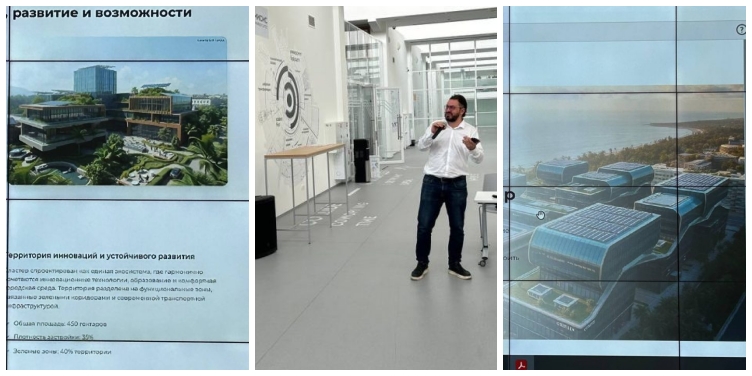
Cayo Digital is planned as a technological ‘hub’ with the ability to host up to 15,000 residents: 12,000 specialists and 3,000 students, says the official report.
“Its execution implies construction or rehabilitation of infrastructure works necessary for the life and work of its inhabitants: offices, laboratories, industrial plants, residences, stores, a mall, sports, cultural and recreation facilities, ”says the note.
Also, the “Cuban Valley Sillicon” would have university nursery, schools and subsidiaries. To that end, the project authors highlighted the importance of “ensuring good quality communication and services communication routes such as gas, water, electricity, sewerage and garbage collection”.
Because of its design, Cayo Digital would mean in the current context of the island as a kind of dystopian and anachronistic utopia, since Cubans lack more than ever of the services that the project considers “vital”. Electric blackouts exceed several regions of the country at 20 hours a day, thousands of families do not have access to water stable, the health system falls apart and The lack of fuel exacerbates the existing transport crisis.
Currently, it is in the design stage. The ‘cluster’ would occupy a space of 450 hectares and would have the first residential complexes between 2026 and 2028. The first scientific research centers and innovative plants would open before 2030.
Its authors estimate that the Cuba Valley Sillicon Estría completed by 2032. “Its functions would imply the development of artificial intelligence, virtual and augmented reality, digital art and sustainable technologies,” announced the parties involved.
Alexandr Vólkov explained that the choice of the island as the headquarters of Cayo Digital is due to “its historical and cultural closeness with Russia”; his willingness to cooperate with the Eurasian country; its connections and ease of access to neighboring markets; as well as “not being afraid of sanctions from the West.”
Cuba: The backyard of Russia
The “Cuban Valley Sillicon” reinforces Moscow’s geopolitical strategy to expand its presence in Latin America, particularly at a time of tension with Europe, the United States and most of the West.
In recent years, Russia has made Cuba axis of its operations, expanding its presence on the island from agreements in education, science, tourism, technology and also in military and intelligence spheres.
The Cuban regime has been directly involved in the war conflict between Russia and Ukraine. In fact, the second largest international contingent at the Moscow service in Ukraine, after North Korea, is the Cuban.
Last June, the governments of Russia and Cuba agreed to establish a joint logistics center in the port of Mariel – the most important of deep waters on the island, where the Mariel Special Development Zone (ZDEM) is located – as part of a strategy to facilitate trade between Moscow and Latin America.
The announcement took place in the context of the International Economic Forum of St. Petersburg (Spief 2025), held in Russia. According to Tatyana Mashkova, director of the Russian National Committee for Economic Cooperation with Latin American countries, Havana and Moscow are working “in parallel” to specify the project in the Cuban port.
“Our companies could benefit from this Cuban platform to deliver their assets more actively throughout the region,” Mashkova told Ria Novosti.
Located at the entrance of the Gulf of Mexico, the Puerto del Mariel has a container terminal, Free Zone, modern stores and rail connections. According to the state media RTfavorable fiscal conditions and customs incentives have been designed to attract investment and encourage local production. According to Mashkova, several Russian companies already operate in the area.
In addition to the logistics center, the Cuban regime offered to establish an industrial park for the Eurasian Economic Union (UEEA) in the ZDEM. According to the report, the park would cover 50 hectares and would be leased to the block for 50 years, with an extension option. The objective would be to allow member countries to locate production, directly invest and expand their presence in Latin American markets.
The UEEA is made up of five ex -soviet countries: Armenia, Belarus, Kazakhstan, Kyrgyzstan and Russia. Cuba, which has cooperated with the block for several years, obtained observer status in 2020.
In terms of educational agreements, last April the first subsidiary of the Federal University of the South (UFS) of Russia was inaugurated in the Cuban capital.
The official act, held in Havana, was attended by the Vice Primer Russian Minister Dmitry Chernyshenko, who said that “Cuban students will be able to access advanced programs for additional education in Russian and prepare to enter Russian universities,” According to the official Kremlin press.
In addition, last June about 68 young Cubans studied in 13 universities in Russia were graduated at the Embassy of the Island based in the Eurasian country
However, the Academic Freedom Observatory (OLA) He has denounced that these agreements respond to a Kremlin political strategy to ideologically influence Cuban education. In a statement issued in September 2024, the OLA warned that “academic exchanges are part of a project to implement a political agenda aimed at the revalidation of international polarization.”