The Cuban regime recognized in Las Tunas the diversion of agricultural productions against “better prices in the informal market.”
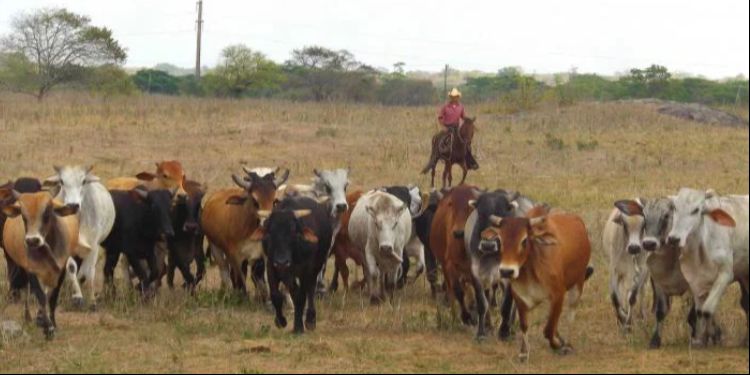
Arequipa, Peru – Livestock in the province of Las Tunas is going through 2025 marked by the crisis and breach of indicators, this year also exacerbated by other frequent flagella such as the diversion of productions, poor management and lack of resources.
A state report Newspaper 26 He summarized that the territory is affected by the insufficient water and food guarantee for cattle; as well as breach in the delivery of meat to the industry and the collection of milk.
On the particular of the milk, the Cuban regime recognized “the diversion of productions against better prices in the informal market and other objective reasons, such as that in areas of Amancio and Jobabo the collection is not fulfilled in some routes.”
The Cuban authorities complain, however, that the fundamental cause of the livestock crisis in the province is that most farmers, both owners – state or private – do not sow food for animals.
Despite the bad soils of many properties and the shortage of rain, the regime ensures that planting is possible. “It is demonstrated that in farms and units with Moringa, Morera, Tithonia, King Grass, sugar cane and other protein or fodder plants the productions are greater,” the report underlines.
This and other problems were afloat during a meeting between the first secretary of the Provincial Committee of the Communist Party of Cuba in Las Tunas, Osbel Lorenzo Rodríguez, specialists from the delegation of the Ministry of Agriculture and the directors of the business system, which includes municipal agribusiness companies.
The bump of the agricultural sector In the eastern province it is deep. At the meeting highlighted the insufficiency of the sown areas of sweet potato; the need to produce organic, entomophagous and entomopathogenic fertilizers; of the lack of beans and rice crops; and the lack of cassava, despite the “excellent conditions” that exist to plant them.
“It was also evaluated to obtain honey, the tobacco campaign, the delay in the payment to the peasants, the pig recovery, the illegalities in the use and control of the land and the breach of some lines of medicinal plants, so necessary in these times,” adds the state medium.
The opinion of the farmers
Livestock in Cuba “is wrong because we have been allowing it for many years,” said a farmer Interviewed by the Official Gazette Granma just in 2024 ..
The farmer in question, identified as Miguel Valdés Carmenate, is part of an agricultural cooperative in the community of Maniero, in Ciego de Ávila.
“Livestock areas have been destroyed; we cannot reach livestock with all medications, mineral salts that help cows metabolism,” said the peasant.
Despite mentioning the US “blocking”, frequent rhetoric of the state -state of the dictatorship in reference to Washington’s embargo, Valdés Carmenate dismissed that it was the main cause of The debacle in the fields.
“The blockade has existed the whole life, and I do not tell you that it has not affected, but with blockade and everything there was livestock in this country,” he said.
According to the farmer, that sector in Cuba is “Barranca below” and not to contain the deterioration in time, it will continue to sink. Only with water the animals do not produce milk, it warned, although the water is 87% of the milk.
“Today the milking do it at 9:00 am or 10:00 am. The calves remain in quarters until 11:00 pm or 12:00 PM. That is a crime. At that time they throw the cows for a place and the calves for a chiquero, No water and without food. There come parasitism and death, ”he explained.
He also noted that, “for an adult animal to be rumped, it must have no less than 45 or 50 pounds of fodder in the belly, and more than 70 liters of water is drink daily. More than half of the cowgirls do not have neither one nor the other.”
Faced with this panorama, recovering Cuban livestock will cost “a lot,” said Valdés Carmenate. Even when desire or will exists, the peasant believes that it is naive to believe that the process can take six months or a year.
The lack of food influences. The cow, to fall into jealousy, has to eat, be suitable. Livestock does not recover with feed ships downloading to the port. We will cost us a lot, a lot of work, recover it. That saddens the farmer and it is hard to say it, but it is the full reality, ”he lamented.