The government has already taken position. And it is not warm.
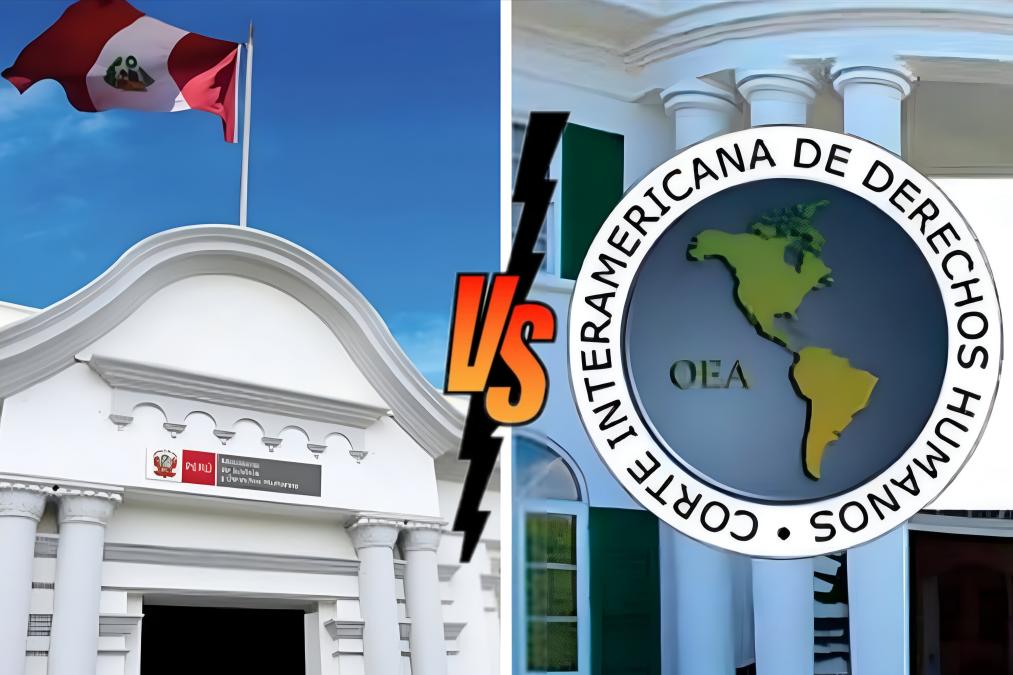
Through the Ministry of Justice and Human Rights (Minjus), the Executive sharply rejected the interference of the Inter -American Court of Human Rights (HDI Court) in the Legislative Debate on the Law of Amnesty to Military, Police and Self -Defense Committees that fought terrorism between 1980 and 2000.
The trigger? A resolution signed by the Presidency of the IdH Court on July 24, which orders to suspend the amnesty law for military and police.
The autograph is ready for promulgation by the Executive.
But the Government of Dina Boluarte responded firmly. “The State strongly rejects these provisions,” says the Ministry. And he doesn’t say it on the air. It bases it.
For the Minjus, the Court would be exceeding its powers, violating basic principles of international law such as subsidiarity and respect for national sovereignty.
Minjus statement.
That is, the Court would be assuming a role that does not correspond to it: decide before the State itself.
The Executive warns that this intervention is not only inadmissible, but dangerous.
In his opinion, he weakens the inter -American system when subtracting legitimacy and opening the door to decisions that do not know internal processes.
Even so, the Peruvian State will not marginalize the process.
He confirmed his participation in the Public Hearing on August 21, where his accredited representatives will defend the position of the country with legal basis and factual arguments.
It will not be any dialogue.
It will be a frontal care between the IdH court and the Peruvian state in one of the most sensitive issues of recent years.
And the message is already given: sovereignty is not negotiated.
A law, two wounds: high neighborhoods and the Cantuta return to the center of the debate
The cases of Altos and Cantuta neighborhoods remain two of the most serious violations of human rights that occurred during the Alberto Fujimori regime. In both members of the Colina group – a squad of death linked to the State – murdered civilians under the pretext of fighting terrorism.
These crimes were tried and convicted by the Inter -American Court of Human Rights (HDI Court), which established responsibility of the State and demanded justice for the victims. This has been documented by Peru21 over the years.
Public outrage growing again in 2017, when former president Pedro Pablo Kuczynski granted the pardon to Fujimori. For family members, it was a political act disguised as a humanitarian, which violated its right to justice.
Today, after Fujimori’s death, that is, outside the stage, a new alarm is turned on: the recent approval of an amnesty law that could benefit military, police and members of self -defense committees involved in similar cases. The measure has generated serious concern between human rights organizations.
Receive your Peru21 by email or by WhatsApp. Subscribe to our enriched digital newspaper. Take advantage of discounts.