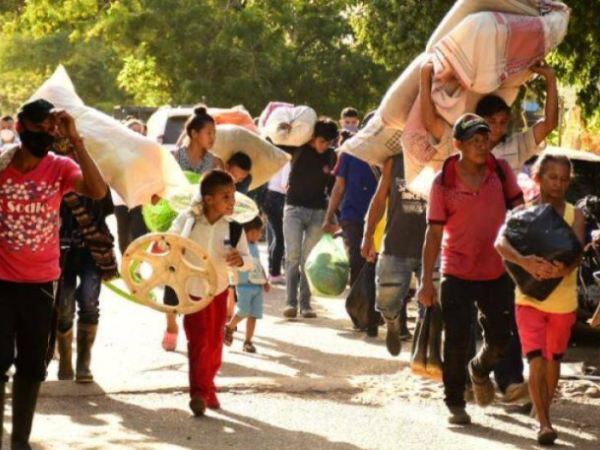
About 1.45 million people were affected by humanitarian emergencies in Colombia during the first semester of 2025, more than four times the number recorded in the same period of the previous year, the semiannual report of the United Nations Humanitarian Affairs Coordination Office (OCHA).
The document reveals that the armed conflict, natural disasters, forced displacement, confinements and the impact of extreme rains combined and led to an unprecedented humanitarian crisis in several regions of the country, especially in areas such as the Catatumbo (Northeast), El Pacífico, La Orinoquía (East) and the Border with Venezuela.
In addition, the FARC dissidentshe National Liberation Army (ELN) and other non -state armed groups were involved in more than 100 mass displacement events, which directly impacted more than 170,000 people.
(Also read: Another minor investigated for attack on Miguel Uribe appeared before the Prosecutor’s Office).
FARC dissidents
Departments like Norte de Santander (Northeast), Cauca (Southwest), Chocó (West), Bolívar (Norte), Antioquia (Northeast) and Nariño (Southwest) They were the most affected by this type of violence, according to the Ocha.
Regarding this, the report stressed that the internal displacement monitoring center (IMDC) pointed out this year that Colombia is “The first country of the Americas and the third at the global level with the highest number of displaced people, after Sudan and Syria“
(Further: Colombia is exposed to international commercial conflict due to coal veto towards Israel).
Likewise, the UN agency registered an increase in threats, cases of torture, use of explosive artifacts and fighting, and identified new foci of concern in the Amazon-Orinoquía regionwhere similar emergencies had not been reported in 2024, indicating a possible geographical expansion of humanitarian risk factors.

The rains affect several regions.
The community priority response plan of the Ocha, which articulates the efforts of humanitarian agencies, has only 16% financing for the yearwhich aggravates the gap between the needs and the response capabilities, as reported in the report.
Extreme climatic events
On the other hand, the report also highlights the impact of natural disasters, such as extreme rains and floods, which have especially affected regions that already face critical situations for armed conflict.
Departments like Antioquia, Nariño, Arauca (Este) and Amazonas (Southeast) They are among the most affected by this emergency overlap, as they registered more than 22,600 people affected by simultaneous events of natural disasters, displacements and confinements.
According to the National Unit for Disaster Risk Management (UNGRD)the rainy season left in the first half of the year 754 municipalities of 31 affected departments, with a direct impact on more than 168,500 families.
The phenomenon has also had great impact on areas such as La Mojanain the Colombian Caribbean, where the overflow of the Cauca River affected some 30,000 people, as the Ocha alerted in its report last month.
EFE