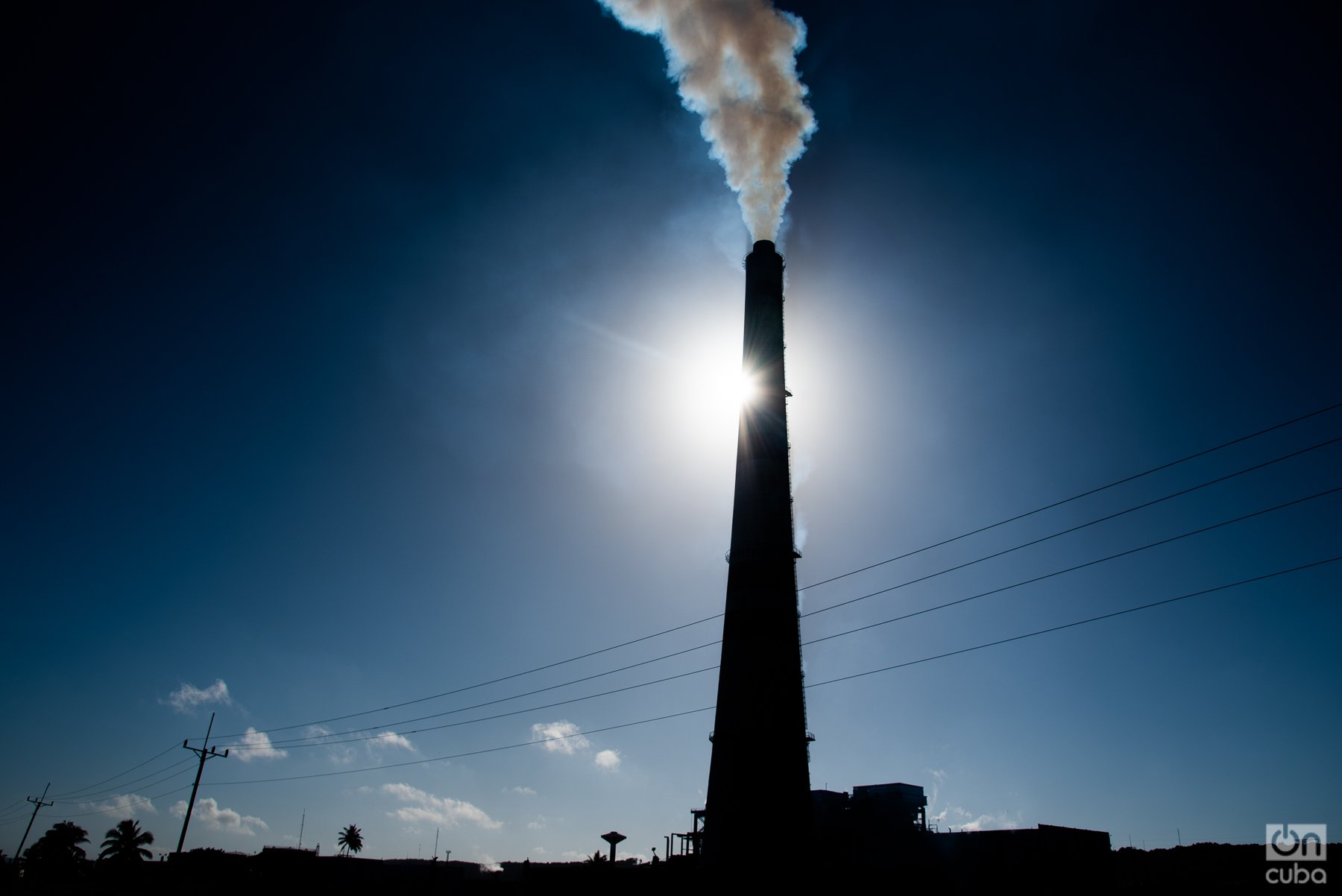
The Cuban government described this Friday as a “victory of the international community”, and especially for the “developing” countries, the legal opinion issued by the International Court of Justice (CIJ) in which it recognizes the responsibility of the states in the fight against climate change.
In a series of shared messages on platform X, the Insular Chancellor Bruno Rodríguez said that the opinion “constitutes a transcendental step” to “address the challenges derived from this global climate variation.”
“It is not possible to face the challenges imposed by climate change without the cooperation, priority and participation of all nations, taking into account their common but distanced responsibilities, and according to their respective capabilities and social and economic situation,” Rodriguez wrote.
1/ historical opinion issued by @Cij_icjin advisory opinion on states obligations regarding #Changeoclimaticconstitutes an international community victory, especially for developing states with greater vulnerability to climate change impact pic.twitter.com/bas5vmyaer
– Bruno Rodríguez P (@brunorguezp) July 25, 2025
The ICJ, based in The Hague (Netherlands), determined on Wednesday, after a specific consultation of the UN General Assembly, to breach the climatic obligations it is “an internationally illicit act” that can lead to “repairs” to the injured country, and considered that climate change treaties – as the Kyoto protocol or the Paris Agreement, among others – establish “binding obligations” to countries signatories.
The Court considers that countries must “prevent significant damage” to the environment and “use all means at their disposal to prevent activities within their jurisdiction or under their control cause such damages.”
The pronouncement of the Court also insists that the signatory countries of the United Nations Framework Convention on Climate Change have “the obligation to adopt measures to contribute to the reduction” of greenhouse gas emissions “of human origin”, as well as to adaptation.
Climate change has already bleached 84 % of the world’s corals, can they still be saved?
Failure to comply with these obligations can lead to legal responsibilities, such as the cessation of damage, guarantees of non -repetition and repairs to the affected states, if there is a direct “casual link”, although it will be necessary to evaluate “case by case”, says the opinion of the CIJ.
In this regard, the Cuban Chancellor said that “Cuba will continue to promote” the protection of the environment and remarked that it is developing countries that have “greater vulnerability to the impact of climate change.”