Filmmakers and professionals from the Brazilian audiovisual sector recently released a manifesto asking for streaming regulation in Brazil. Called Manifesto for a streaming regulation at Brazil and signed by thousands of industry professionals, the document argues that “the regulation of video on demand (VOD) is today the most urgent and strategic measure to ensure the future of Brazilian audiovisual”.
The Manifesto – which has already been signed by names such as Joel Zito Araújo, Lúcia Murat, Matheus Nachtergaele, Karim Aïnouz, Paulo Betti, Malu Mader and Marcos Palmeira – claim that streaming platforms are required to invest at least 12% of their gross revenue in the Brazilian market. Of this total, the idea is that 70% will be destined to the audiovisual sectoral fund, through the contribution to the development of the National Film Industry (Condecine), a tribute that focuses on the production, distribution and display of audiovisual works. According to the document, this would strengthen “transparent and decentralized public policies, with high potential for economic and tax return”.
The other 30% would be applied directly by the platforms in independent Brazilian works, through licensing or pre-licensing, which could also stimulate private production.
On the night of Friday (26), during the opening ceremony of the South American Film Festival of Bonito (Cinesur), held at the Bonito Convention Center (MS), several Brazilian actors defended the regulation of streaming in the country.
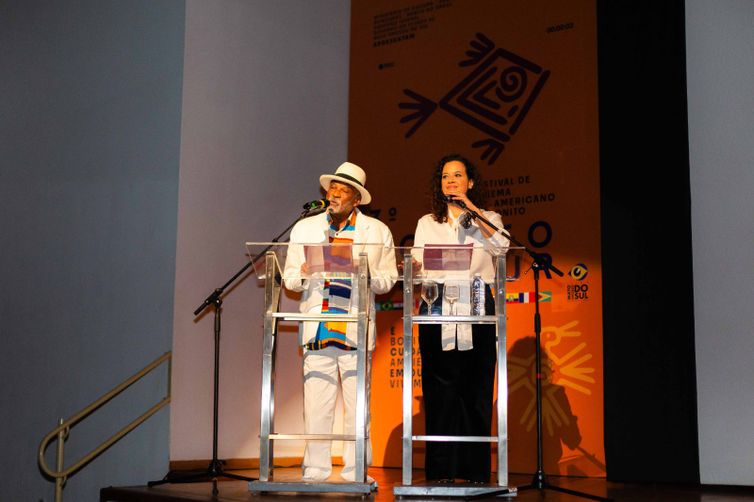
Antonio Pitanga and Maeve Jinkings feature the 3rd Bonito Cinesur – South American Film Festival – Diego Cardoso/Beautiful Photograph
In an interview with the report of Brazil agencyactor Antonio Pitanga, for example, said the current situation is worrying. “We have to be lit and linked with this discussion and put our faces in the showcase to discuss it and demand from the federal government, ministers, deputies and senators [a aprovação desse projeto]”, He argued.“ We are working with the taxation proposal of 12%, but the 6% [que estariam sendo pensados pelo governo] It would already contemplate us. We have to defend national cinema. This is an open discussion. Politics is the art of negotiating. And I think the Lula government would be able to approve [a proposta]”He added.
The same opinion has actress Maeve Jinkings. “As an actress who always circulates between streaming and television platforms, it is very evident the precariousness in the contracts of professionals in this chain and who are subjected to contracts, sometimes very leoninos. I think there is something fundamental: What are these platforms to give to this local chain here? Worldwide?
For her, it is necessary to broaden the discussions on this topic. “What I feel is widespread dissatisfaction. And I am very impressed that my colleagues, from the big producers, think that money is with small producers. Small producers think money is with big producers. My theater colleagues think money is all with cinema. But where is money? The problem. I miss we gather, with more listening, ”added Maeve. “The debate of ideas is not easy. But I think, more than ever, with democracies in crisis worldwide, we need to learn to organize these agendas.”
The actress and director Barbara Paz, who will present her new documentary Rua do Pescador Number 6 at Cinesur, is also in favor of regulating streaming platforms. “There is no way not to defend this. This is urgent. We are very late in that,” he said.
“We are Brazilians, we make movies, we make a cinema that matters to the whole world. Brazilian cinema, like Brazilian music and how Brazilian culture, interests everyone. People want to feed on our culture. We have a distinctive look and taste. So what we want is Brazilian movie in streaming. And that has to be paid,” he defended.
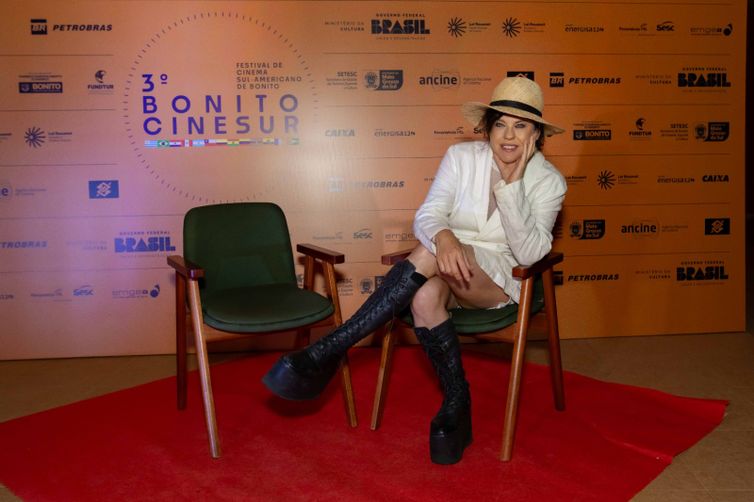
Barbara Paz will present your new documentary Rua do Fisador Number 6 at Cinesur, – Diego Cardoso/Beautiful Photograph
Discussion
The theme of streaming regulation has been widely discussed within the Ministry of Culture. In January this year, at the opening of the Tiradentes Film Festival, the National Secretary of Audiovisual, Joelma Gonzaga, said it is “urgent to resolve this year the regulation of Vod.”
One of the main issues, she said, is to ensure the protection of the national content. In other words, it means that platforms such as Netflix and Amazon Prime Video, for example, would have to ensure in the catalog available to the Brazilian public a minimum percentage of national productions.
Currently, the Ministry of Culture has defended the proposals present in the substitute bill presented by Deputy Jandira Feghali (PCdoB/RJ), rapporteur of PL 2,331/22, in the House of Representatives. The text proposes a quota of 10% of Brazilian content in streaming catalogs and a 6% Condecine tax rate on annual gross revenues.
At a meeting held last month with representatives of the VOD12 movement by Brazilian audiovisual, Minister Margareth Menezes said the regulation of platforms will represent not only a legal framework, but a symbolic step for Brazil on the international scenario. “This is not just an economic or technical agenda; it is a statement of cultural sovereignty. The regulation of streaming platforms will strengthen independent production and generate new opportunities for creators across the country,” he said at the time.
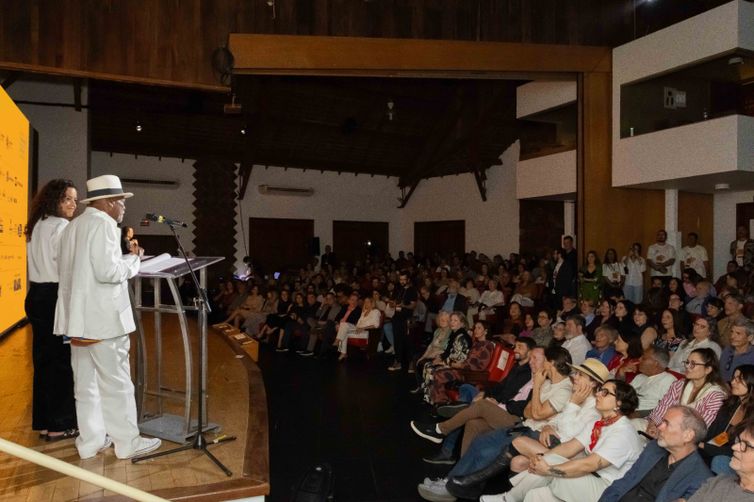
3 ° Bonito Cinesur- South American Film Festival- Diego Cardoso/Beautiful Photograph
Cinesur
Cinesur began last night, with a tribute to Paraguayan actress Ana Brun and the presentation of the film The heirsby which he won the silver bear of best female interpretation at the Berlin Festival in 2018.
In this year’s edition, the festival brings together 63 films Nine countries in South America. “The South American festival provides this space for discussion and interaction between the old and the new, the young and the old. And this discussion is that the light is born,” said actor Antonio Pitanga, who presented the opening ceremony of the festival. “Cinema is the lit podium so that we can interact, discuss and also consecrate, honor and celebrate,” added the actor.
According to Nilson Rodrigues, creator and director of the festival, in addition to film screenings, Cinesur has a great mission that is “contributing to the process of integration of South America”.
“We are over 400 million South Americans. And we want to help in this integration process,” he said during the opening of the event.
“We have so much to say and to learn from each other. So this place here feeds us and I think we have to enjoy these moments,” added actress Maeve Jinkings, who also presented the ceremony.
All activities promoted by Cinesur are free. More information about the festival, which will be held until August 2, can be obtained in the Event website
* The reporter traveled at the invitation of the Bonito Cinesur 2025 South American Film Festival