Russia appears as the great promoter of the Cayo Digital project, a kind of Silicon Valley that would be settled in the Youth Islandwith the aim of enhancing the international expansion of the Eslava nation in the sector of the Information and communication technologies.
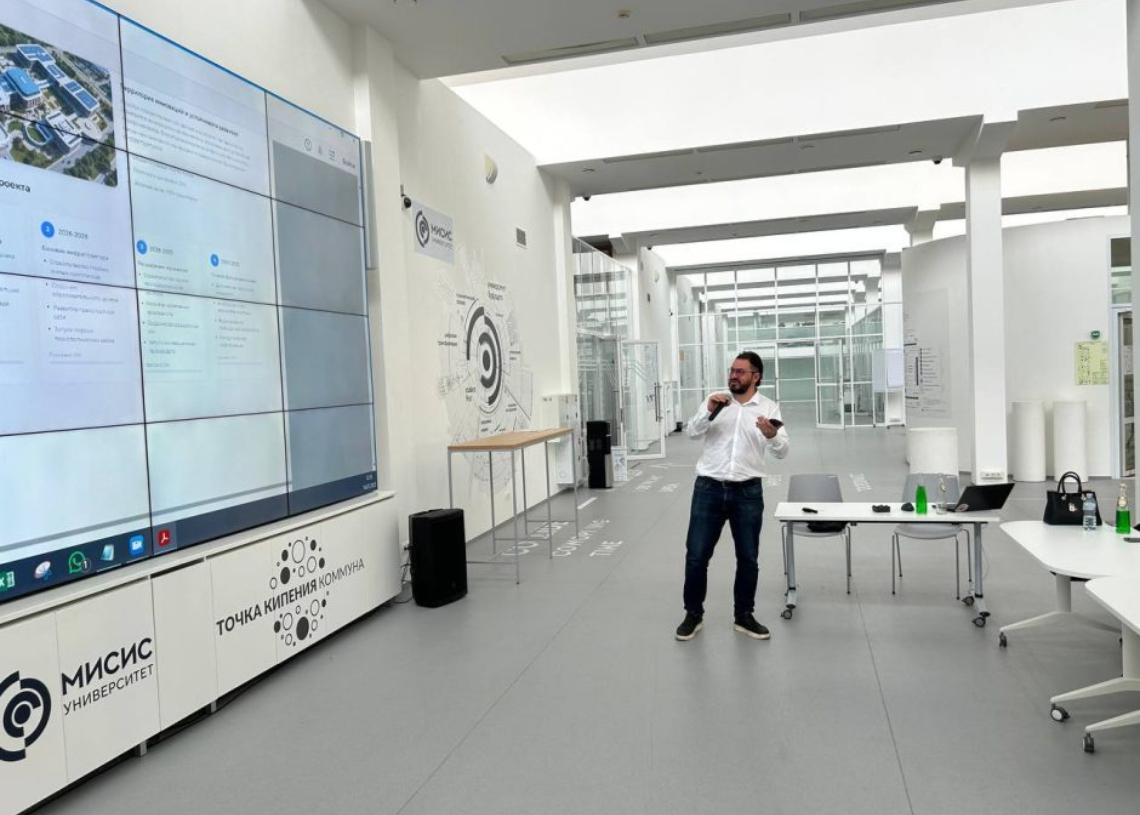
The practical steps necessary to specify this idea were addressed during a recently held meeting in Moscow, with the presence of government authorities and entrepreneurs from both nations, Inform The Cubadebate website.
Digital Cayo: Russia promotes a ‘Silicon Valley’ of Cuba. Cuba could have his own Silicon Valley. It will be called Digital Cayo and will be located on the island of Youth. Cubadebate and @Sputnikmundo.#Joctlubtrinidad pic.twitter.com/4hhhjpkqg5
– Young_club_trinidad (@trinidad_club) July 26, 2025
The proposal has as its axis the creation of a cluster of companies in the Brics Plus countries, as well as the Eurasian Economic Union, mainly oriented to provide products and services to customers in Latin America and the Caribbean.
This initiative would be supported by the Ministry of Industry and Commerce of Russia, and the Ministry of Digital Development, Communications and Media of the Eurasian country.
It also has the support of the Russian commercial office in Cuba and the Agency of Strategic Initiatives, created by the Russian Government to implement economic and social measures.
Two Cuba entities in the BRICS artificial intelligence alliances network
According to its design, Cayo Digital would become a technological hub with the ability to host up to 15,000 residents, divided into 12 thousand specialists and 3 thousand students.
These claims would demand the construction or rehabilitation of infrastructure works necessary for the life and work of its inhabitants, such as offices, laboratories, industrial plants, residences, stores, a shopping center, sports, cultural, recreational facilities and to guarantee other essential services.
In the meeting held in the Russian capital Alexandr Vólkov, general director of Genit, said that there is a great demand in Latin America and the Caribbean for the teams and solutions of the Information and Communication Technologies Sector of Russia
Expansion from Cuba
The manager of the Russian company focused on automation and software systems – with a presence in Cuba since 2023 – said that it is a rising trend, which responds to the grounded regional distrust in Western technological offers, since they usually have intentional vulnerability, including those destined to steal personal data or interfere with the management of electronic devices.
In addition, he highlighted the reasons for the choice of Cuba as the headquarters of Cayo Digital, including its historical and cultural closeness with Russia, its disposition to mutually beneficial cooperation with companies in the Euroasy country.
Cuba and Russia reinforce energy and technological cooperation in the St. Petersburg Economic Forum
He also highlighted the willingness of the island to face the sanctions imposed by the West, as well as its connections with other nations in the region, which facilitates access to neighboring markets.
Volkov stressed that Cuba has high preparation personnel in the digital and telecommunications sector, as well as the existence of Russian training programs in high studies on the island, such as the Technological University of Havana José Antonio Echeverría, in Havana.
In its opinion, the location of equipment and software production will create better adapted products to regional realities and needs, with emphasis on cybersecurity.
In that sense, he indicated that it is one of the sectors with the greatest demand for service in Latin America and the Caribbean, and in which Russian companies offer their customers a sovereign computer infrastructure, which can only be operated by the client.
According to the proposal, the cluster – still in the design stage – would occupy a space of 450 hectares and its first residential complexes would be ready between 2026 and 2028.
The first scientific research centers and innovative plants could be ready before 2030, two years before the date the entire project would be finished.
Its entry into operation would promote the development of artificial intelligence, virtual and augmented reality, digital art and sustainable technologies.