After a decade measuring economic behavior with the same parameters, Colombia prepares for a deep change in its statistical structure, after the Dane officially began the process to update the base year of national accounts and optimize the indicators that are currently measured.
Simple, this is equivalent to changing the thermometer with which the country measures its economic activity, from the Gross Domestic Product (GDP) to consumption, investment, savings and public spending; In order to, for example, take into account new aspects of the digital economy or associative markets.
More information: Monetary poverty dropped to 31.8% in 2024, the child in 13 years
As the accounts go, it is projected that the transformation is ready in 2030 and seeks That the figures reflect more accurately the economy that is lived today in the country, an economy where digital, collaborative and environmental have gained prominence, and that can no longer be analyzed with the lenses of the past.
A time ago
A recent report from the Anif Economic Studies Center was given the task of reviewing the issue and started explaining that currently, Colombia operates with a base year of 2015; Which means that a good part of their economic indicators are calculated with prices, products and consumption patterns ten years ago.
This new measurement model will allow to review new lines of the economy.
Courtesy – API
“The country has changed substantially since then. New forms of work, to produce and consume. What people buy, how they buy it, how it is transported, how it generates income and how it relates to the environment has evolved. Continue to use a outdated base It’s like making decisions with an old, discolored and unfocused photograph, ”they explained about it.
Based on this, they indicated that updating the base year is not only a technical adjustment but a fundamental step to design better public policies, projecting the economic course with greater certainty and making more informed decisions from the State, companies and citizenship.
Other news: Overwhelming response from the president of Cerrejón to Petro for coal to Israel
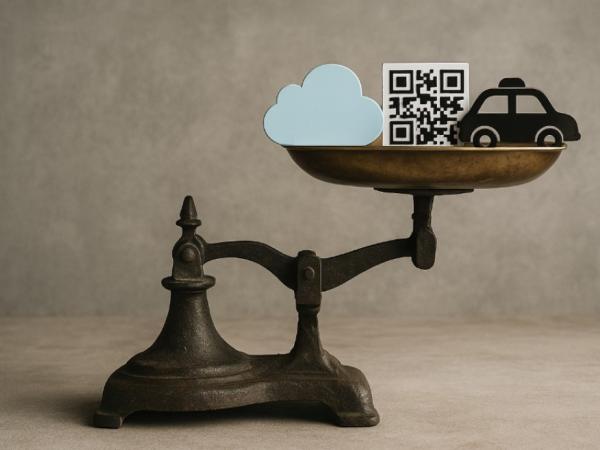
In this sense, they stressed that the new statistical structure will incorporate phenomena that until now are poorly represented or, in some cases, there are not even formally in national statistics; As the digital economy and cryptoactive ones will be integrated as part of the country’s productive apparatus.
Collaborative platforms such as Uber, Rappi or Airbnb will also be included, which intermediate services and use of forms that the previous system could not capture.

This new measurement model will allow to review new lines of the economy.
Courtesy – API
“One of the most important conceptual changes will be to consider digital data as productive assets. This implies that databases, algorithms and information systems will be counted as investment, since they generate economic value. In addition, for the first time, the country will incorporate the concept of net internal product (PIN), which unlike gross GDP, discounts from the depreciation of Assets, including environmental wear derived from production, ”they said in their report.
Adjust to standards
Entering this change that the DANE enlists, Anif stressed that the process is aligned with the new international standards, especially the 2025 National Accounts System (SCN 2025) and the Environmental and Economic Accounting System (SCAE). Updated versions of economic and products classifications, such as CIIU and CPC will also be adopted.
Also read: How was the agreement that ended the 11 -day rice strike
“Information sources will be expanded to include national economic census data Urban and agricultural, of the National Survey of Household Budgets and Administrative Registries from public and private entities. Traditional Surveys of Commerce, Industry and Services will also be redesigned to adjust to the new reality, ”they said.
However, they made it clear that this update is not immediate, since the DANE will implement it in seven phases, within a six -year process, following the international GSBPM model (Generic Statistical Business Process Model), used by organizations such as the UN, the IMF or the World Bank.
Currently, the country is in the first stage, which is identification and analysis of needs. In it, supplies of various users of economic information are being collected To know what demands are not being satisfied with current statistics.

This new measurement model will allow to review new lines of the economy.
Courtesy – API
“Once this phase is completed, the design of the new statistical structures will come, the construction of the necessary instruments, the collection of information, the processing, the analysis and finally, the dissemination of the new statistical system in 2030. It is a complex process, but fundamental for the decisions of the future to be taken based on a real radiography of the country,” they explained.
Said all of the above, these analysts pointed out that although for many this discussion It may seem technical or distant, it has concrete implications on the lives of people, since if the country measures its economy badly, it misses its resources and if the figures do not reflect the current structure of employment, income or consumption, it is likely that public policies arrive late or where they are not needed.
See here: COopidrogas aims to grow 12.1% in 2025; Its manager reveals the strategies
Similarly, if environmental deterioration is not measured, a real cost is hidden that compromises future generations. Do not forget that decisions as transcendental as the formulation of the national budget, the design of subsidies, the investment plans or the reform evaluation are based on macroeconomic figures and if those figures are outdated, everything else will also be.
On the other hand, the delay in statistical update is not an exclusive phenomenon of Colombia, but it does begin to mark a disadvantage, given that countries such as Chile, Mexico or Ecuador have already updated their statistical frameworks In recent years, incorporating recent dynamics that are not yet well captured in Colombia.

Dane
Therefore, the process that now begins is an opportunity to modernize the economic language of the country; ensure that the figures used to measure development speak the same language and that the thermometer with which the heat or cold of the economy is really calibrated with the reality of every day and the people on foot is measured.
Daniel Hernández Naranjo
Portfolio journalist