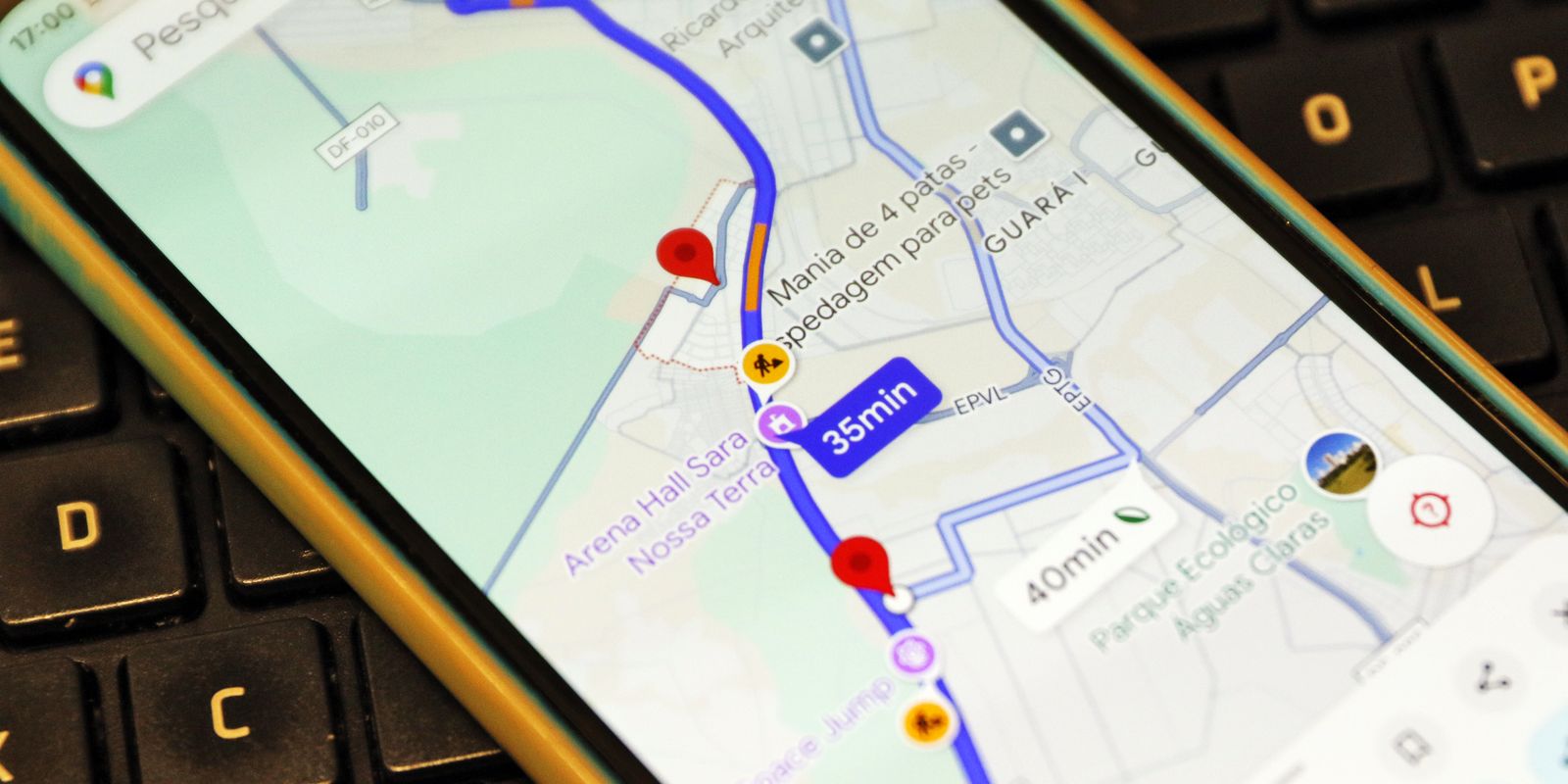
A group of experts will study the viability of Brazil to develop its own satellite geolocation system, a very high complexity and cost venture. Formed by representatives of ministries, aeronautics, agencies and federal institutes and the Association of Aerospace Industries of Brazil, the technical group must diagnose any consequences of the country depend on positioning systems, navigation and time controlled by other nations.
The group was created earlier this month, through the Resolution No. 33of the Brazilian Space Program Development Committee. Signed by the Minister of the Institutional Security Office (GSI) of the Presidency of the Republic, Marcos Antonio Amaro dos Santos, the resolution establishes a period of 180 days from July 14, so that the group delivered to the minister a report with its conclusions and suggestions.
“The group is still organizing itself,” he explained on Monday (21), in an interview with Agência Brasil, Rodrigo Leonardi, Portfolio Management Director of the Brazilian Space Agency (AEB), one of the 14 bodies and entities that will compose the group, which may invite representatives of other institutions able to contribute to the group’s strategic objectives.
“We will try to understand the bottlenecks, the difficulties, the pros and cons developing such a system,” added Leonardi, highlighting the importance of the current satellite navigation systems – among which, the best known is the US GPS (English, global positioning system), operated by the United States space force.
“In Brazil, we historically prioritize the debate about other spatial aspects, such as the need for satellite terms for territorial monitoring. Now we will discuss whether or not we want to have our own navigation system; the investment needed to do so and, if applicable, the national need to have a global system or a regional system, capable of covering our entire territory. Investments will have to be often larger than that currently invested in the Brazilian space program, ”concluded Leonardi, admitting the complexity of the contract, which requires technological capacity to design, manufacture and launch satellites capable of transmitting, from land space, precise signs.
Noise
The technical group was created a week before the president of the United States, Donald Trump, announce that, from August 1, Brazilian products will pay a 50% rate to join US territory. And two weeks before social networks are taken by the debate on the possibility of the United States, if a trade war, they turn off or restricted the sign of their system, GPS (from English, global positioning system) for Brazil.
“This is a typical case of noise emerged on social media, capable of generating anxiety. And a coincidence, because we had been discussing the issue for a long time, so that the creation of the group had nothing to do with what happened later,” said Leonardi.
“First, because there was no statement, from any US authority, about the remote possibility of the US restricting the use of GPS in Brazil. Then because, even if it happened-which would be a very drastic and unlikely situation-there are alternatives to GPS,” said the director of the Brazilian Space Agency.
>> Follow the channel of Brazil agency on WhatsApp
GNSS
According to Leonardi, most people make a mistake by using the GPS acronym as synonymous with GNSS, from the global satellite navigation system, a correct term to refer to any satellite set (or constellation) used to provide global positioning, navigation and timing services.
“GPS is the US owned system, but there are others, global, such as Glonass [russo]; The Galileo [União Europeia] And the beidou [ou BDS]from China. These have global coverage and can be used, including in and by Brazil. And there are also some nations that have regional systems, such as India [NavlC] and Japan [Qzss]”Pointed out Leonardi.
“With that in mind, it is logical to consider that, in theory, the US could degrade or even restrict the sign of its GPS to certain regions, but this would be such a drastic measure that, in my view, it would only be justified if the US National Security was being threatened,” said the AEB director.
“First, because the US companies operating in Brazil, such as transportation and delivery applications, would be affected. Other nations would also be harmed, as there is no way to limit the signal for an entire territory without affecting border countries. Other than that could cause accidents, for example, in civil aviation, including lives, including those of Americans. Not to mention the commercial repercussions, as other countries would continue to continue if they should continue if they should continue if they should continue if they should continue if they should continue if they should be asked if they should continue if they should continue if they should continue if they should continue if they should be asked if they should continue if they should continue to be asked Trusting the US system or migrating to others, ”said Leonardi.
Multiconstellation
Professor at the University of Brasilia (UnB), where he coordinates Automation and Robotics Laboratory (LARA), Geovany Araújo Borges, agrees that the US could technically interrupt the GPS signal or even make the system less effective for a particular region, but it does not believe it will occur.
“If they did this without notice, the Americans would take the risk of counteracting their own interests in Brazilian territory,” Borges endorsed, adding that most modern electronic systems and equipment are able to receive the signal from more than one geolocation system. In general, the satellite signs that are part of the different systems in operation are captured by vehicle -embedded receivers, aircraft, spacecraft, ships, precision ammunition, applications and mobile phones, as well as industrial, civil and military monitoring equipment.
“Most mobile phones, for example, are already multiconstellation, ie it is able to automatically receive the sign of different systems. So that, in terms of location, our cell phones would continue to function normally if we cease to receive the GPS signal. The same logic goes for many other systems. [dependente de serviços de posicionamento, navegação e temporização global]: If the synchronization system is redundant, the impact will be limited, ”said Borges, advocating the importance of a country having his own technologies in this sector.
He recalls that, regardless of US intentions or with alternatives to GPS, today Brazil depends on other nations in this strategic field.
“Several areas lose with this. Not only because an independent country has to have a strong aerospace defense sector, but because the development of aerospace technologies benefits other segments, such as medicine, industry and agriculture,” said the teacher, ensuring that Brazil has skilled labor and ability to develop its own system in the long run.
“Our problem is not HR [recursos humanos]. It’s money. We have trained staff. The question is whether we are able to play a project of this wingspan. Mainly because, anything in this sense we start today will take revenge. Even because some countries will not accept exporting certain essential components. So we will have to develop our microelectronics industry, invest more in basic education and ensure that this project is a state policy. In this sense, albeit late, it is positive the creation of a group of experts to discuss the theme ”, concluded Borges.