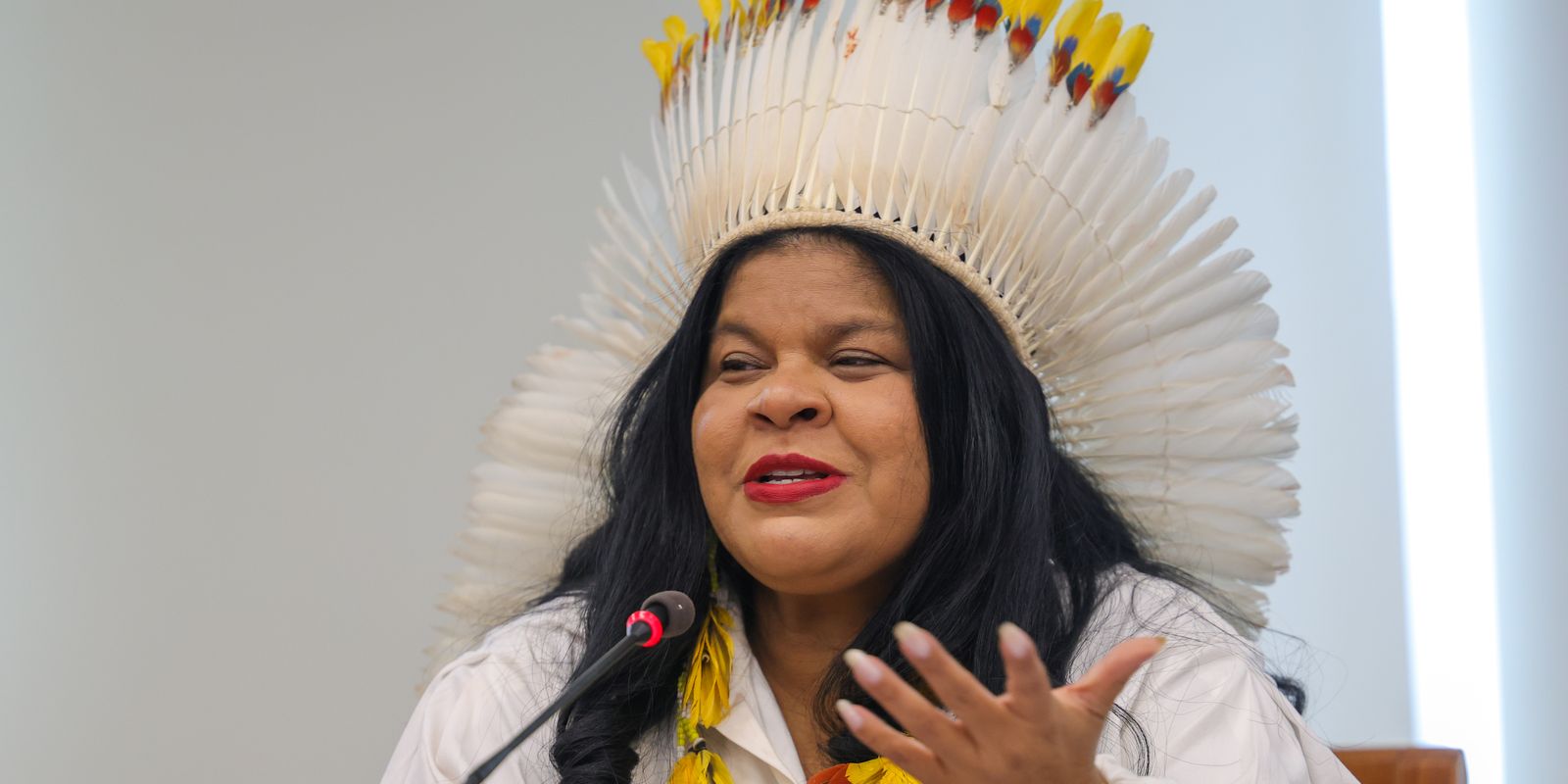
The Minister of Indigenous Peoples, Sonia Guajajara, said on Saturday (19) that the portfolio is doing an unprecedented work in the construction of actions to value indigenous peoples in the country. In a post on social networks, the minister celebrated the day of indigenous peoples, celebrated today.
Sonia pointed out that over 27 months of government, she had the challenge of “standing” a ministry to run after demands that were neglected.
“It is not always easy, but I have no doubt of the need and urgency of what we are doing. Every April 19, I reinforce my certainty that what we are doing here is unheard of,” he said.
The minister also thanked President Luiz Inacio Lula da Silva for a strong, representative and active ministry.
“The existence of a ministry for indigenous peoples was something we could dream of, but it was difficult to think that it would be realized. The result of our struggle and recognition of President @lulaoficial.” completed the minister.
Challenges
In a statement issued today, the Ministry of Indigenous Peoples pointed out challenges for the protection of indigenous peoples. The folder directs efforts to hold the 30th United Nations Conference on Climate Change, which will be held in November in Belém.
The ministry intends to bet on ambitious negotiations to consolidate multilateralism and the implementation of actions to protect the environment and social segments impacted by climate change.
“The MPI and the presidency of COP30 have been creating ways for indigenous voices to be more heard and their demands can be incorporated more speedly in COP’s agendas and referrals. The reason is that COP 30 needs to provide legacies beyond just an event in the Amazon,” says the folder.
The search for financing to support organizations acting in the defense of indigenous people is also the target of the Ministry’s actions.
“In the action agenda, the Brazilian MPI and the government are engaged in announcing new financial mechanisms, such as the Forever Forest Fund (TFFF) and the renewal of the promise, where countries and philanthropy sectors commit to support indigenous organizations and indigenous policies,” the ministry said.