And yes, we are in Holy Week. Holy Week returns my own image of an 11 -year -old boy standing in front of the door of the bus that would take him to the adventure of his first voluntary work. It also returns me the sound of my father’s words, which very short and in the ear he said: “If you ride in that bus, you have to return in it and with everyone.”
It was a very version of him of that phrase of the Roman soldiers when they marched to their wars of conquest: “with the shield or on the shield.” Needless to say, I returned in the bus with all my teammates.
I make the anecdote because it was in that first voluntary work where for the first time I had a personal exchange with Marabú. Our task was to clean land that were destined for intensive rational grazing, technology that recommended a French scientist of the voisin surname and that seemed to be the solution of livestock in our country.
I did not imagine that Marabú and Vacas would accompany me throughout my life, and not because I have dedicated myself to being botanical or cowboy.
With 11 years I checked how hard it was Marabú. Some time later and for my disenchantment, I saw how cows did not understand Voisin’s ideas. I also found that Marabú was not only hard, but also very resistant. Hardness has allowed him to be an ideal plant for coal production.
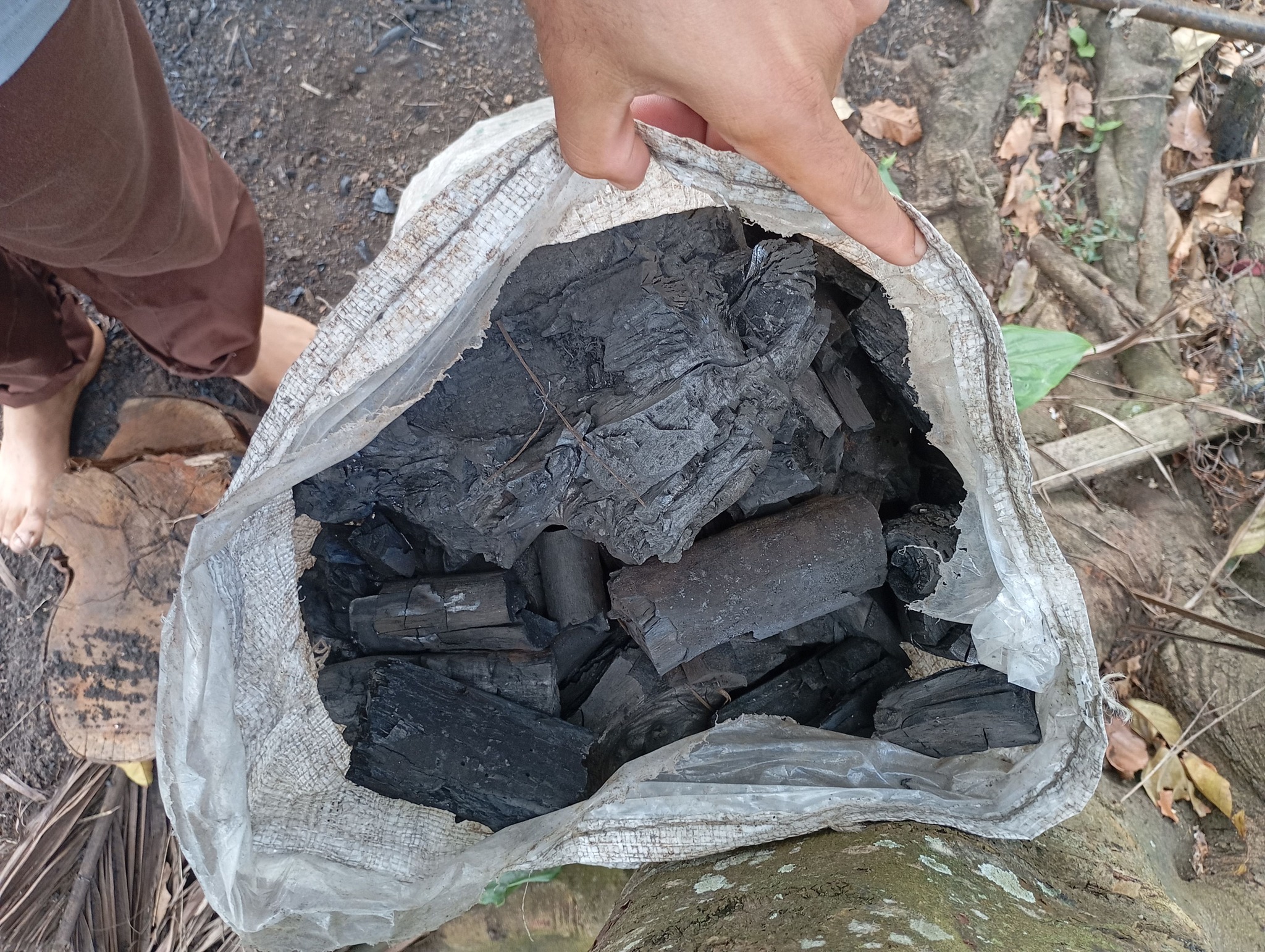
Marabú coal has become a very precious good because, at the same time to be exportable, it is today an essential resource for cooking food in Cuban homes that electricity visits from time to time, and that only occasionally have the liquefied gas service.
Today, a coal sack (Marabú, Guásima, Almácigo and even iPil iPil – more invasive plants than Marabú himself – is sold in the first ring of Havana between 1700 and 2000 CUP.
Once I heard that one hectare of Marabú “well sown” and with “sufficient maturity” can produce between 20 and 40 tons of dry matter. If the production process (pyrolysis) reaches an efficiency of 25 %, could be obtained between 5 and 10 tons of marabu coal per hectare. How many hectares planted from Marabú do we have today in the country?
Let’s say half a million; Thus, calculating about 8 tons per hectare, we have a productive potential of 4 million tons of coal, of which a part – perhaps 70 % to be optimistic – reaches exportable quality. We would have about 280 million potential tons.
But of course there is no way to reap all those hectares. If we “harvest” annually 20 % (100 thousand hectares), we would have 800 thousand tons with about 560 thousand exportable quality. If the international price is for the USD/T 300, the account gives us revenues of 168 million dollars. In our conditions today that is a lot of money and calls more than attention.
And then resolution 25 of the 2025 of the MEP arises with “with the objective of increasing and controlling the income in foreign exchange to the country due to the export of the vegetable coal, which constitutes one of the exportable items with the greatest potential to increase its production, commercialization and diversification, (therefore, JT) it is necessary to implement a currency financing scheme for said activity”.
We already talk about the potential for the production of charcoal. Let us now identify the instruments for the incentive of production and export and the “order” of the activity that is the purpose of the new resolution that allows “coal” to access a closed scheme of currency financing.
- A currency financing scheme for state export entities that are part of the financial scheme for carbon marketing is approved. Thus, they will not require subsidies and with it a distortion is eliminated.
- “The state export entities of plant coal begin to operate a new real account in the banking system.” That is, translated into the old terms, it is an account that has liquidity or liquidity support (RL). It is also very important that it is explained that the export state entities, with the currency they retain, cannot carry out operations in foreign exchange that are not related to the necessary supplies and insurance for the production and marketing of the vegetable coal. Commercial banks will retain operations that do not meet these characteristics.
- “Payment to the producer is made to a Real Currency Account With which you have access to the purchase options in the network of wholesale and retail markets, including the USD payment of the fuel it requires.
Export income is distributed as follows. Of every hundred export cents:
- 70 cents are received by the state export entity.
- 30 cents go to the central financing account. That 30 % is returned to the producer in Cuban pesos to the “established rate.” It is striking that coal exporters have increased the export entry tax by 10 %, which is clearly a discouragement that could be compensated if that “established rate” were something close to the reality to which the coalmen and their families live.
The 70 cents held by the state export entity are distributed as follows:
- 54 % goes to the producer (coal). That is, it receives 37.8 cents, or what is the same, almost 38 % of the total income (100 cents).
- 46 %, that is, 32.8 cents (33 % of the 100 cents of total income) in the value chain for use in the hiring process with the rest of the entities that participate in the process of marketing the vegetable coal, as well as to ensure the material or financial resources required to maintain the value chain.
Adding the cents, go to the producer 38 cents, while, in the hands of the State, either via export or retention tax of the export entity, 62 cents remain.
Let’s return to 30 cents that are returned in CUP to the producer, deposited in a bank account. The rate that will be used is not explicit in the resolution. Today, in our country, we have managed to have at least two official rates: 25 CUP for 1 dollar and 120 CUP for 1 dollar. We all know, however, that in everyday life we live with another rate that devalues the CUP much more.
- i) At a rate of 25 Cup per dollar, those 30 cents, become 7.5 Cup.
- ii) Meanwhile, at a rate of 120 cup per dollar those 30 cents become 36 CUP.
Those same 30 cents sold in the informal market at a rate of 320 CUP become 96 CUP.
Depending on the rate used, the producer (coal) for each dollar of export loses 87.5 cents for the case (i); and 60 cents of CUP for the case (II).
If that producer exports 50 tons of coal at 300 USD/T, how much does it lose due to tax retention and exchange rate? In the case (i) the producer (coal) loses 1 312 500 Cup, and in case (ii) 900 000 cup.
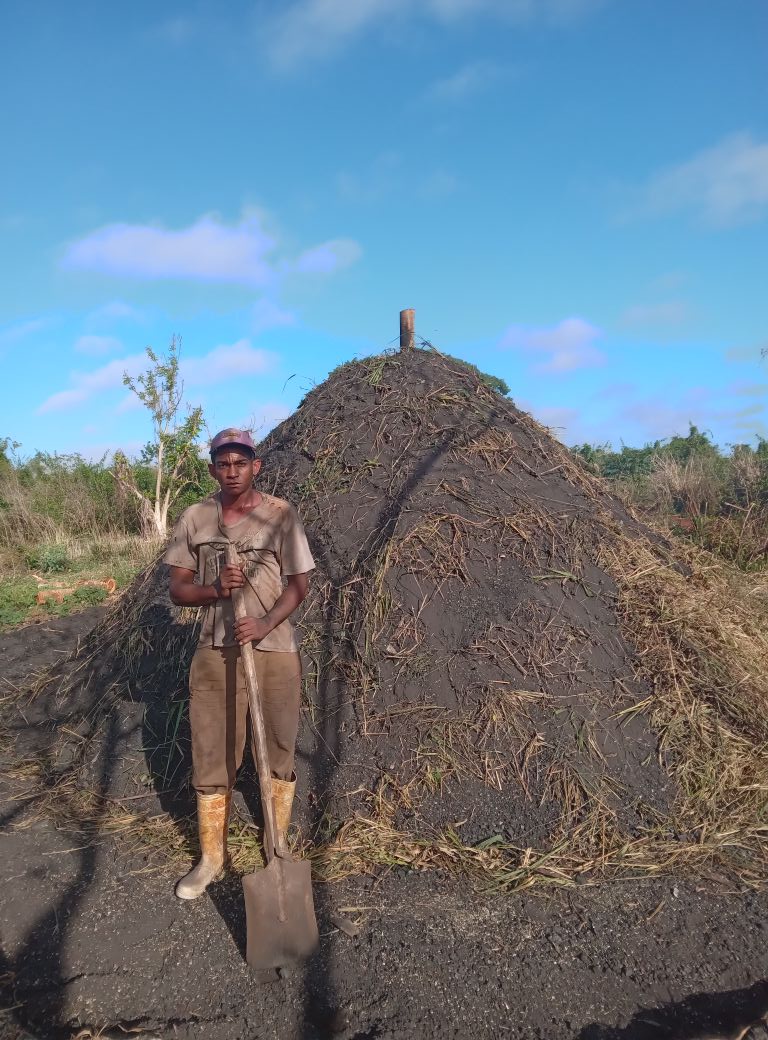
Marabú is very hard; The coal that is taken is as hard as Marabú. In Cuba, coal production is practically manual. Who has ever been inside a Marabú field knows it perfectly. Who has seen taking care of a coal oven also knows perfectly how much effort and bad nights it requires. We do not know how much of those 38 cents it reaches the one that wields the machete and to the one in charge of the oven.
Once we had a cow that gave sugar and managed to dry it; Then we had another that gave income for tourism and also dried it. Later a new one appeared that gave biotechnological medications and it seems that we are not feeding it as it needs; We still have one that produces income from professional services, which we do not feed well. The jeans know it: when more milk is extracted from due, the cows are dried.
At all, the need for income that the country has; There is no real money, let’s say it as it is, but if the culture of the extraction bomb remains, we will continue to dry all cows, even those that, like Marabú, do not need special care, rather the opposite.