The Axios portal in the reported report How the “crazy Cubans” of Congress pressed Trump to cancel the oil agreementrecounts the intrígulis of the deliberations to revoke the LG41 and replace it with the LG41B. The recurring factors in all this tinglado of multiform aggressions have internally have been an important segment of the opposition that represents and defends the interests of commercial, industrial and financial bourgeoisies. The children of that bourgeoisie are the ones who have assumed the leading role in economic suffocation against the population that today to planetary dimensions, Peter Navarro through, with the White House strategy of the commercial war of Donald Trump.
The other factor is the lobby of the congressmen of the Republican Party of Cuban origin led by the current Secretary of State, Marco Rubio. The Rubio clan is added a series of lieutenants acting in several strata in defense of the business of the deep state. That band is known as “The Crazy Cubans”(Los Cubanos Locos in English).
The original name we owe it to the Republican congressman Mike Johnson, current president of the House of Representatives, who referred to María Elvira Salazar, Mario Díaz Balart and Carlos Giménez, such as “The three crazy Cubans”At a fund collection meeting for that party, held in a mansion of the Millionaire Iván Herrera, entrepreneur of the insurance sector.
Two Family Free Surnames
Fidel Castro suffered, throughout his life, a total of 638 attacks of various kinds. This is recorded by theGuinness record book and safely, the archives of the US Central Intelligence Agency (CIA). Commander Castro was able to overcome the multiform attempts to kill him to end the Cuban revolution, but could not avoid having in his political family a consistent operator in promoting the criminal block to the island.
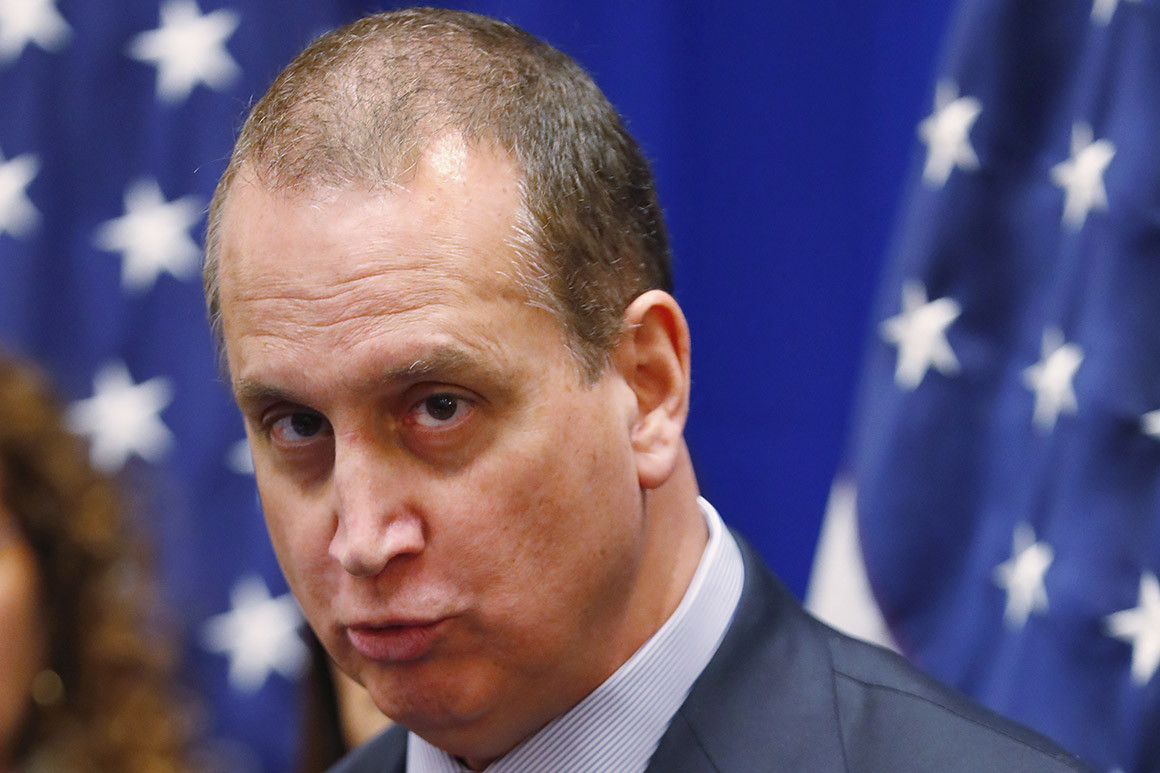
Mario Díaz-Balart is a political nephew of Fidel. His father was the brother of Mirta Díaz-Balart who was the first wife of the commander and the mother of Fidel Ángel Castro Díaz-Balart, eldest son of Mario’s Cuban leader and cousin of Mario. The Díaz-Balart family has a long history of connections with US interests in Cuba. At the time of the Fulgencio Batista dictatorship, Mario’s father, Rafael Lincoln Díaz-Balart, was a high-level official in the then House of Representatives-obsess the similarity with the US legislative-between 1954 and 1958. He was also Deputy Minister of the Interior, repressor apparatus of the dictator Fulgencio Batista.
The Batista Cuba
In the 50s, the American mafia had a significant role in Cuba, especially in Havana, which became an entertainment center with nightclubs and casinos. Notable figures of the mafia such as Sam Giancana, Frank Costello, Lucky Luciano, Bugsy Siegel and Meyer Lansky frequented the city. These gangsters had close links with the Fulgencio Batista regime, who allowed their operations in exchange for bribes and political support.
The mafia controlled much of the game industry and entertainment on the island. The casinos, such as those of the National Hotel and El Capri, were managed by mafia who also had influence in local politics. The corruption was prevailing, and the senior government officials, including the police chief, charged casinos protection taxes.
My dad the terrorist
Díaz-Balart Father flees to Europe in December 58 and in January 1959 arrived in New York. From that there and with the approval of the Government of Dwight D. Eisenhower, he begins to operate with other slender and torturers of the Batista government who had also left the island before the Cuban revolution. Díaz-Balart has in its record the being the founder of the first counterrevolutionary terrorist group: The white rose. The first actions of this group led by Díaz-Balart were, the military intervention and the application of sanctions to Cuba.
The White Rose was responsible for a series of violent acts and terrorist attacks against Cuba during the 1960s. Among its most notorious actions are the fires of the stores and the charm, emblematic shopping centers of Havana. These attacks not only caused significant material losses, but also sought to sow terror among the civilian population.
In addition to their direct participation in these acts, members of the Blanca Rose were intensely used as informants for the intelligence services of the United States, particularly the CIA. This collaboration allowed US agencies to obtain strategic information about Cuba and coordinate undercover actions against the Cuban government.
Rafael Lincoln Díaz-Balart continued to conspire from Miami until the time of his death in 2005, but left a perverse legacy in his descendant Mario Díaz-Balart who has been subject to debate and analysis for the family connection with the white rose. It has been suggested that some members of the organization maintained links with Cuban American politicians who supported violent actions against the Cuban government. These ties reflect the role of certain sectors of the Cuban diaspora in the promotion of activities against the people of Cuba and recently against Nicaragua, Bolivia and Venezuela.
Mario Rafael Díaz-Balart and Caballero
He was born on September 25, 1961 in Fort Lauderdale, Florida, is an American congressman in the House of Republican Party representatives. From 2003 to 2010 he has consecutively represented the 25th District of Florida in the House of Representatives. Between 2011 and 2013 it represented the 21st district of the same state.
Díaz-Balart has been a stubborn promoter of the economic embargo against Cuba. In 2007, he promoted a proposal to condition Cuba’s departure from the list of sponsoring states of terrorism, demanding that the Cuban government free to alleged political prisoners and call free and fair elections.
In 2019, he participated in a media delegation that visited Cúcuta, Colombia, within the framework of the tension between the United States and Venezuela. This visit was part of the efforts to deliver an alleged “humanitarian aid” to Venezuela, in what was a coup attempt against the government of Nicolás Maduro.
The hands that rude the crib
Mario Díaz-Balart has received support from various interest groups and lobbies throughout his political career. These groups usually finance campaigns and promote legislative agendas aligned with their interests.
Some of the main lobbies and sectors that have supported them are:
The energy sector consisting of companies and organizations related to the energy industry, including oil and gas, have been significant donors of Díaz-Balart. These groups usually support legislation favorable to the exploration and exploitation of natural resources, as well as to the reduction of environmental regulations. Among the companies related to the support of their political career is the Exxonmobil, today illegally exploiting oil in non -delimited water between Venezuela and Guyana.
Lobbies linked to the pharmaceutical and medical insurance industry have also contributed to their campaigns. The management that Díaz-Balart assures them is the promotion of policies that benefit these industries, such as the reduction of price controls or the expansion of private insurance programs. Some of the companies that finance it are Pfizer, Johnson & Johnson and UnitedHealth Group.
Díaz-Balart’s efforts for Human Rights Foundation, the organization that Thor Halvorssen, cousin of the fugitive Leopoldo López are also frequent.
Mario Díaz-Balart actions against Venezuela
1. Economic and political sanctions
- Díaz-Balart has supported the imposition of sanctions against Venezuelan government officials and entities related to the government of President Maduro. These sanctions seek to economically isolate the government and press changes in that way.
- He has supported laws such as the Law for the Defense of Human Rights and Civil Society in Venezuela, a parapet that extends sanctions to individuals and organizations based on supposed human rights and corruption violations.
2. Juan Guaidó recognition
- Díaz-Balart was an active defender of Juan Guaidó’s recognition as an interim president of Venezuela, in line with the foreign policy of the United States in the first government of Donald Trump.
- He promoted initiatives to strengthen international support for Guaidó and his interim government, including coordination with regional and global allies.
3. Support to the Venezuelan opposition
- He has advocated financial and political support for Venezuelan violent opposition groups, under the mask of the delivery of humanitarian aid and resources to strengthen their organizational capacity.
- He has also promoted assistance programs for opposition leaders who are evaded from Venezuelan justice with the excuse of being persecuted politicians.
4. International and diplomatic pressure
- Díaz-Balart has worked to coordinate efforts with international allies, such as the European Union and Latin American countries, to increase diplomatic pressure on the Venezuelan government.
- He has promoted resolutions in the United States Congress that condemn alleged human rights violations in Venezuela and demand free and fair elections.
5. Protection to Venezuelans abroad
- He has promoted initiatives to protect Venezuelans who have left the country due to the crisis generated by US sanctions, including the extension of the temporal protection status (TPS) for Venezuelans in the United States, a promise that was already blocked by the Trump administration.
- He has also advocated the allocation of additional resources to meet the needs of Venezuelan refugees in the region. These resources do not appear in any accountability and their beneficiaries could be among the leaders of the violent opposition who have been indicated to receive that money via USAID.
The other lieutenant
Mario Díaz-Balart represents a paradigmatic case of how the “dark Cuban-American dream” has influenced the foreign policy of the United States, especially towards Cuba and Venezuela, but also towards other Latin American countries. His career, marked by a firm support for the embargo against Cuba and his participation in pressure actions against Venezuela, reflects an agenda aligned with the interests of American conservative and corporate sectors. Its family connection with Cuban political history, from the time of Batista to its role in promoting sanctions and destabilizing actions, makes it a key figure in the economic war and diplomatic pressure strategy that the United States has exercised in the region.