On Wednesday, less than a week after the entry into force of “Reciprocal tariffs” taxes by Donald Trump to all business partners of the United States – and after mocking that these “are kissing her butt” to negotiate tailored agreements – the president authorized a 90 -day break and a reduced reciprocal tariff of 10% during this period.
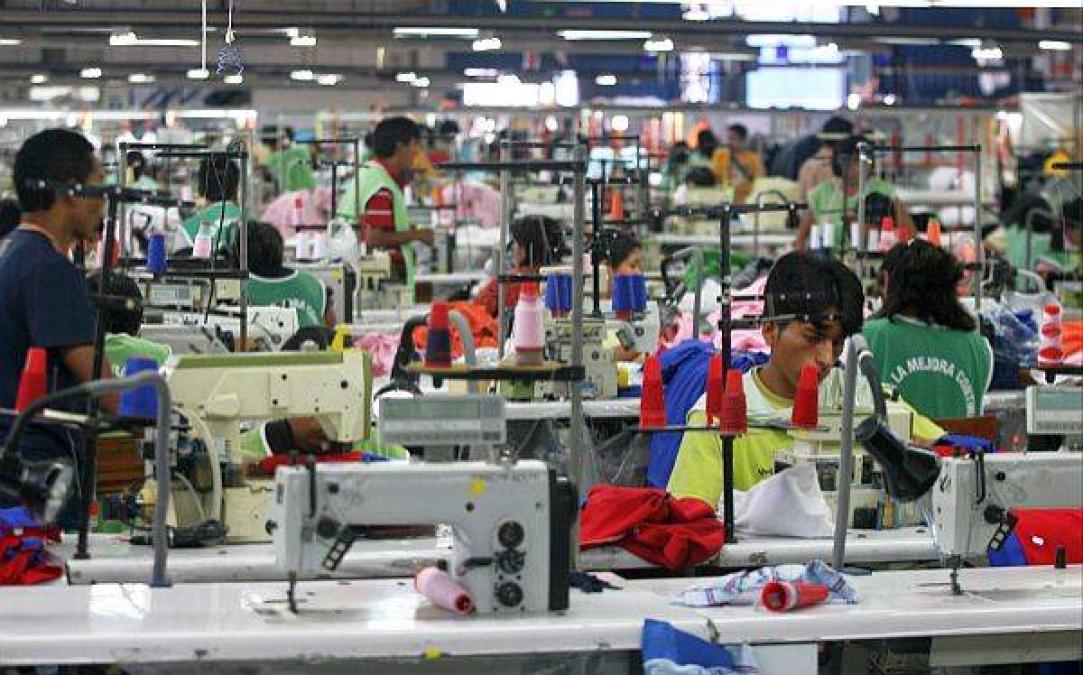
This established a 10%universal tariff, which already included most Latin American countries, such as Peru. This situation has generated great concern in the Textile and Peruvian clothing industry due to the possible implications that a reallocation of trade could have in the sector, in the event that tariff barriers prevent the entry of products from highly industrialized countries to the US market.
According to Ricardo Márquez, employer of the sector and former president of the National Society of Industries (SNI), when tariffs prevent countries such as China, Bangladesh and Thailand selling their garments to the United States, they will turn around countries like Peru to place their surpluses.
And although this may sound advantageous for Peruvian consumers, because they can access garments at lower prices and even think that it would promote competition, it would cause damage to all business families and workers who participate in the industry. This is because a good part of the garments that come from these countries enter the Peruvian market with prices that do not cover their production costs.
Martín Reaño, manager of the Textile Committee and SNI clothing, told Peru21 that much of the import of clothing that arrives in our country is in this situation. According to Reaño, the guild has identified that, for example, they arrive in our country shirts at a price well below the cost of production despite the fact that inputs such as cotton, threads and dyes have international prices that cannot be influenced.
And while one might think that the price is due to greater productivity, he said that it is not necessarily true because this variable also has a limit.
“When you incorporate all these variables, you realize that even the prices reached by these products do not reflect what they should cost, not even considering a high efficiency scenario. That already represents a problem. And if, in addition, there is a new wave of imports as a result of the situation of tariffs, the impact could be very serious, especially for micro and small business,” said Reaño.
To this is added, according to the union representative, that tariffs on the importation of clothing in Peru are barely 11 % as a result of their commercial opening policy. In contrast, countries such as Colombia, Mexico, Brazil and Ecuador currently apply tariffs greater than 30 % for that same type of products, according to Reaño.
Positive aspects
However, one of the positive aspects that can be rescued in the midst of chaos and Trump promoted, and that recognize both Márquez and Reaño, as well as other experts in the sector, is that the highest level of tariffs applied to other textile export countries compared to that which is imposed on Peru gives our country a certain competitive advantage.
An additional advantage that, according to Reaño, adds to the one that Peru already owns. At present, Peruvian companies in the textile sector have identified niches in the US market, offering high -value products. This has allowed more than half of its sales abroad to be allocated to that country, at very competitive prices. For example, in 2024, the average price of an exported Peruvian garment was US $ 17.57, while the US market reached US $ 41.13.
Reaño points out that the success of the companies has also contributed the Law to improve the productivity and competitiveness of the textile sector that, among other measures, promotes the reinvestment of profits in physical capital, as well as the creation of new jobs.
“The big chains of American clothing have realized the problem in Asia and China, and they know that this has for a while. Then, they will look for an alternative in South America and we must know how to take advantage of it,” said Márquez.
The search for measures
Although the final effect that Trump driven on the sector could have, the SNI considers that the Executive is prepared to apply the measures contemplated in the World Trade Organization (WTO) in order to deal with a possible oversupply of garments that reach the country is not yet known.
Everything indicates that exporting companies will benefit, but the truth is that only 100 of them concentrate 97% of total textile exports in an industry where around 45,000 companies participate.
Reaño proposes the application of safeguard measures, contemplated by the WTO, before the unusual increase of imports of a certain good. Until last year, garments per kilo grew at a rate of 14.5 % in the case of China, 25.5 % in India and 116 % in Thailand.
Faced with these figures, it is appropriate to observe the evolution of imports of clothing and evaluate whether or not there is the need to apply measures. For this, a rigorous technical analysis is required that considers all the elements before taking protectionist positions, as is the case with the Trump government, and that in the past already generated difficulties for the country.
Take advantage of the new experience, receive by WhatsApp our enriched digital newspaper. Peru21 Epaper.
Now available in Yape! Find us in Yape Promos.
Recommended video