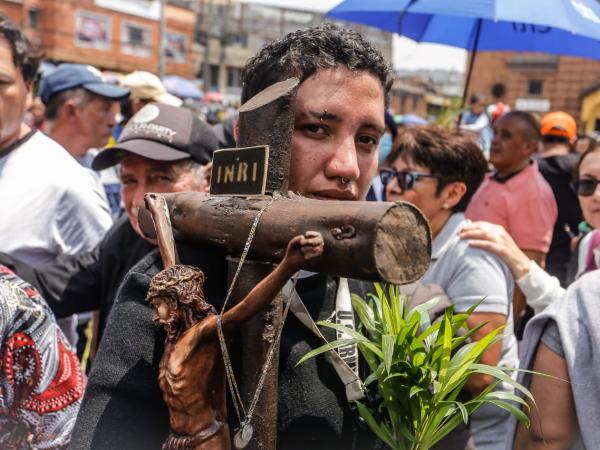
Holy Week is not only one of the most significant religious celebrations of the Colombian calendar, it is also a temporary engine of the national economy. During this season, millions of people mobilize inside and outside the country, generating a positive effect in sectors such as tourism, transport, commerce, gastronomy and services. This is highlighted by a recent Analysis of the Anif Economic Studies Center, which reveals the true economic weight of the major week.
According to this Center for Economic Studies, in March 2024 the monitoring indicator (ISE) grew by 5.5% compared to the same month of the previous year, thanks in large part to the impact of Holy Week and for the calendar effect, since in 2023 this holiday fell in April.
Also read: End of rationing: ‘Bogotá has overcome the most serious water crisis in its history’
For them, this seasonal phenomenon demonstrates how religious dynamics They also move the real economy, while for this year they expect a similar effect, with an impulse in monthly growth figures.
How does it impact?
According to the Anif study, the tourism sector is the great beneficiary in this season, since the hotel occupancy is estimated above 70% nationwide, with peaks of up to 90% in beach destinations and 80% in main cities.
For example, lodging searches on platforms such as booking and take off evidence this high demand, highlighting destinations such as Cartagena (40%of searches), Bogotá (15%) and Medellín (12%). In this case they cite Falabella trips, who report that reserves increased 88% compared to the same 2024 season.
Travel – Holy Week
Source: Istock
In this context, Cartagena is positioned as one of the star destinations, with a projection of more than 216,000 visitors, which represents a 44% growth compared to last year. The majority will arrive by air (108,000 people), followed by road (66,000) and cruises (18,000), the latter with an economic impact greater than US $ 1.9 million.
Bogotá, meanwhile, has strengthened its offer in religious tourism after integrating to the World Network of Religious Tourism, with activities such as sacred concerts and historical routes. The capital is expected to receive 220,000 tourists, 4% more than in 2024.
Other news: Colombia already filed the petition against the USA per 10% tariff
Other regions have also opted to diversify their offer. Antioquia promotes the campaign “Live the passion in Antioquia”, promoting destinations such as Jericho and Santa Fe de Antioquia. The arrival of more than 1.5 million vehicles is calculated and the visit of more than 40,000 foreigners, with a hotel occupancy of 60%.
Meanwhile, in the Atlantic routes of faith and gastronomy have been activated, while in Norte de Santander The demand for transport, religious products and typical dishes has dynamized the regional economy.

GDP
Istock
On the other hand, land transport also plays a key role. The mobilization of 3.3 million passengers is estimated, an increase of 3.6% compared to March of the previous year. Companies such as Express Brasilia and Express Bolivarian have reported sales growth of 15% and 12%, respectively.
In addition, vehicle rentals and aerial demand are rising. Wingo and Jetsmart project more than 185,000 passengers mobilized with occupations close to 97%. The most requested routes connect to Bogotá, Medellín, Cartagena, Cali and Santa Marta. Internationally, Forwardkeys reported 47,000 reservations to Colombia, 11.4% more than in 2024.
Outstanding news: The 4×1.000: the ‘curiosities’ of this tax that perhaps did not know
Finally, gastronomy is also dynamic strongly. Fish consumption, for religious reasons, grows significantly. Fedeacua projects a 50% increase in the commercialization of aquaculture products compared to the average of the rest of the year, while Corabastos reported a 35% rise in fish sales during this season.
In conclusion, as Anif points out, Holy Week is not only a time of spiritual reflection, but also a key opportunity to reactivate the national economy. Its transverse impact on multiple sectors confirms that, in Colombia, faith also moves the economy.